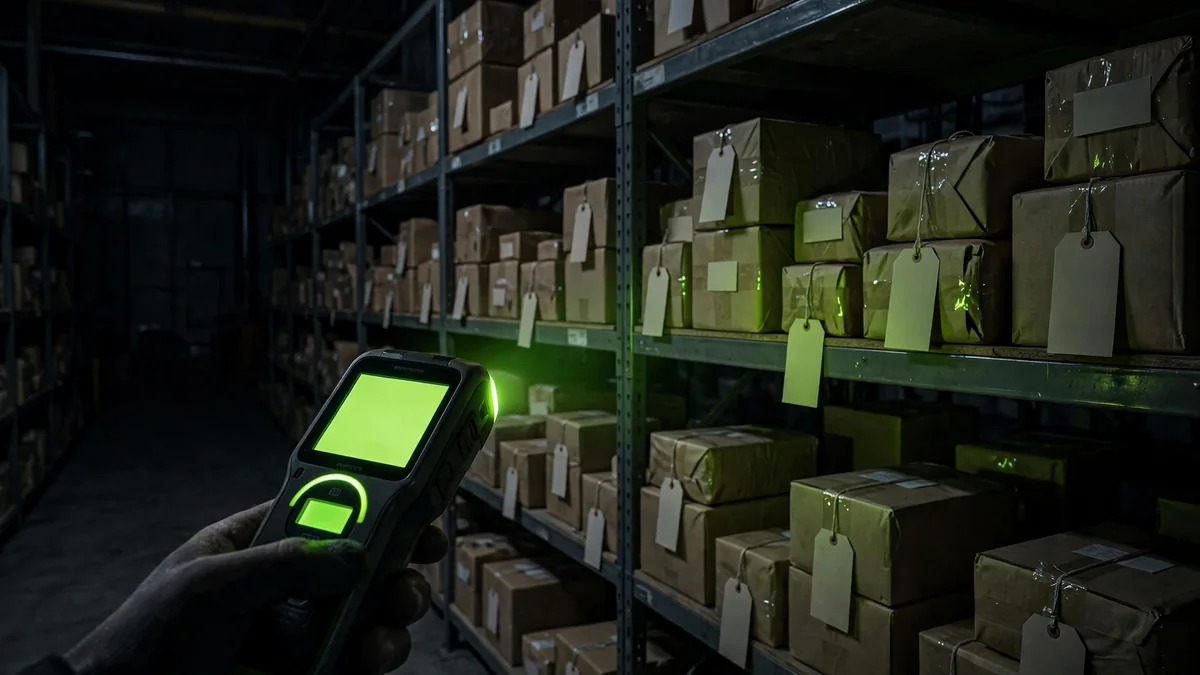
RFID explained in plain terms means a way of identifying objects with radio waves, so a tag stuck to a parcel, a pallet, or a passport can be read without being seen, touched, or lined up with a scanner. The central question is how a tiny chip with no battery and no screen can carry an identity at all, and the short answer is that the reader does the work: it sends out radio energy, the tag answers with its stored number, and a computer looks that number up.
Think of a name badge that introduces itself. A barcode needs a clear line of sight and a careful aim, like reading a name badge across a dark room. An RFID tag is a badge that speaks when spoken to, so a reader can greet a whole shelf of items at once, through boxes, dust, and darkness.
The idea is older than it looks. Radio identification grew out of wartime systems that distinguished friendly aircraft from hostile ones, and the first commercial tags appeared in the 1970s and 1980s for tracking livestock, vehicles, and access cards. Today the same principle follows clothes through shops, medicines through hospitals, and luggage through airports.
Key takeaways
- RFID identifies objects with radio waves, so tags can be read without line of sight.
- A tag holds a chip and an antenna; a reader supplies the energy and asks for its identity.
- Passive tags have no battery and are cheap; active tags have batteries and read further.
- Tags work at low, high, and ultra-high frequencies, each suited to different jobs.
- RFID speeds up stock checks and tracking, but it raises cost and privacy questions.
What RFID is
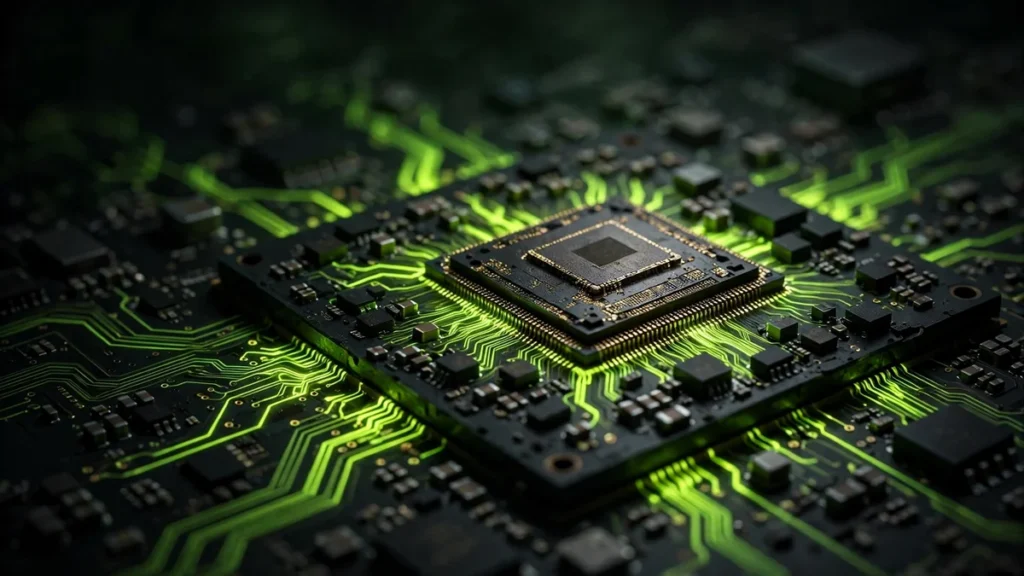
RFID stands for radio-frequency identification, a system in which small electronic tags attached to objects broadcast a unique identifier when a reader interrogates them. The tag itself is simple: a microchip that stores an identity number, joined to an antenna that receives and transmits radio signals. The reader is the active partner, sending out radio waves and listening for the replies.
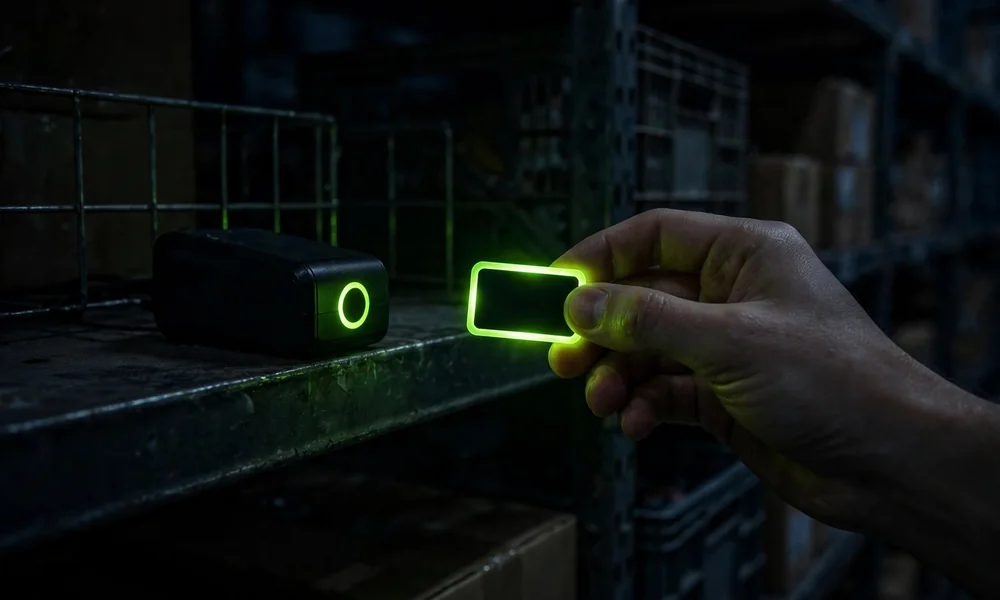
There are three kinds of tag, defined by how they get their power. Passive tags carry no battery at all; they harvest energy from the reader’s signal, which is enough to wake the chip and send its number back. They are cheap, thin, and long-lived, which is why they appear on clothing labels, library books, and shipping cartons by the million.
Active tags carry their own battery, so they can broadcast further and more often, and they can carry sensors that record temperature or movement. They are larger and costlier, and they suit containers, vehicles, and expensive equipment that must be found across a yard or a warehouse. Semi-passive tags sit between the two, using a battery to run the chip while relying on the reader’s signal to transmit.
The system only makes sense as a whole. A tag on its own is just a number, so readers must be placed where objects pass, at doors, on shelves, or along conveyor belts, and the numbers they collect must be matched against a database that knows what each number means. Our guide to the Internet of Things explains the wider world of connected objects that RFID tags feed into, giving physical things a voice in digital systems.
How RFID works
It begins with the reader, which emits a radio signal in a chosen frequency band. When a passive tag enters that field, its antenna captures some of the signal’s energy, and that tiny charge wakes the chip. The chip then modulates its own reflection of the signal, encoding its stored identifier in the returning wave, and the reader decodes it in a fraction of a second.
Because radio passes through most packaging, the reader does not need to see the tag. A worker can wave a handheld reader past a shelf, or push a trolley through a gateway reader, and dozens or hundreds of tags answer in one sweep. Anti-collision routines sort out the replies so that tags answering at the same moment do not drown each other out.
Frequency decides the character of the link. Low-frequency tags work at around 125 kilohertz and read over a few centimetres, which suits animal identification and access cards. High-frequency tags work at 13.56 megahertz and read over a few tens of centimetres, which suits library books, tickets, and contactless cards. Ultra-high-frequency tags work in the 860 to 960 megahertz range and can read over several metres, which suits pallets and cases moving through a warehouse.
Once read, the identifier travels to software that gives it meaning. The reader reports a number; the system looks it up and learns that this number belongs to a particular shirt, size, and colour, or to a particular patient’s wristband. That lookup is where RFID becomes useful, turning a silent radio exchange into stock levels, locations, and histories that people can act on.
Comparing RFID with barcodes
| Aspect | RFID | Barcodes |
|---|---|---|
| How it is read | By radio, no line of sight needed | By light, needs a clear view |
| Speed | Many tags at once | One item at a time |
| Cost per item | Higher, needs a chip | Almost nothing, printed ink |
| Data held | A unique identity, sometimes more | A shared product code |
| Durability | Hidden inside labels, hard to damage | Wears off or smudges |
Where RFID is used
Retail is the most visible user. Shops tag garments so staff can count a whole rail in seconds, find a size without searching, and spot theft at the door. The same tags follow goods from the distribution centre to the shop floor, so a retailer knows what it owns and where it sits without counting by hand.
Logistics runs on the same idea at larger scale. Pallets and cases pass through gateway readers at warehouse doors, updating stock as they move, and parcels are sorted without being turned to face a scanner. Airlines tag luggage so bags can be tracked through sorting halls and reunited with their owners when a connection goes wrong.
Access and identity are quieter uses. Office passes, hotel key cards, transport cards, and passports all carry RFID chips that prove who holds them with a tap. Hospitals use wristband tags to match patients with medicines and records, reducing the risk of a mix-up at a busy ward.
Industry and farming use tougher versions of the same technology. Tags follow tools around a factory floor, record the history of a part as it moves down a production line, and identify livestock from birth to market. The spread of fast wireless networks has made these deployments easier to connect, and our guide to 5G explains how the networks that carry tag data from readers to systems have grown faster and more reliable.
Strengths and limits
The greatest strength of RFID is speed at scale. Counting a thousand tagged items takes seconds, where a barcode count takes an hour, and the count happens without unpacking anything. Tags are also durable: hidden inside a label or a card, they survive dirt, moisture, and handling that would ruin a printed code.
It also gives each item its own identity. A barcode says what kind of product this is; an RFID tag says which individual item it is, so a shop can tell one shirt from another and a hospital can tell one patient’s dose from another’s. That individual identity is what makes tracking, rather than just counting, possible.
The limits start with cost. A tag costs far more than a printed barcode, and readers, installation, and software add more, so the maths only works where the labour saved or the errors avoided are worth it. Metal and liquid also interfere with radio signals, so tags on metal parts or water-filled goods need careful design and placement.
Privacy is the other concern. A tag that answers any reader can be read by the wrong reader too, which is why passports and payment cards add shielding and encryption. There is also the question of what happens after sale: a tag in a garment keeps answering unless it is removed or disabled, so retailers increasingly kill or detach tags at the till.
RFID checklist
- Choose passive tags for cheap items and active tags for long-range tracking.
- Match the frequency to the job: low for animals, high for cards, ultra-high for pallets.
- Test tags on the real product, especially metal and liquid goods.
- Place readers where items naturally pass, such as doors and conveyor belts.
- Link every tag number to a database that gives it meaning.
- Plan for tag collisions when many tags answer at once.
- Encrypt or shield tags that carry personal or payment data.
- Decide what happens to tags after sale, and disable them at the till.
- Count the full cost: tags, readers, installation, and software.
Frequently asked questions
What is RFID?
RFID is radio-frequency identification, a system in which small tags attached to objects broadcast a unique identity when a reader sends out a radio signal. It lets computers identify physical things without seeing or touching them.
How is RFID different from a barcode?
A barcode must be seen by a scanner, one item at a time, and it identifies a product type. RFID works by radio through packaging, reads many tags at once, and identifies each individual item.
Do RFID tags need batteries?
Passive tags do not: they harvest energy from the reader’s signal. Active tags carry a battery so they can broadcast further, while semi-passive tags use a battery to run the chip but not to transmit.
How far away can an RFID tag be read?
It depends on the type and frequency. Low-frequency tags read over a few centimetres, high-frequency tags over tens of centimetres, and ultra-high-frequency passive tags over several metres, while active tags can reach much further.
Is RFID the same as NFC?
No, though they are related. NFC is a short-range form of high-frequency RFID, designed for a tap between two devices, such as a phone and a payment terminal, while RFID covers a much wider range of distances and uses.
Can RFID tags be read by anyone?
A basic tag will answer any compatible reader, which is why sensitive uses add protection. Passports and payment cards use encryption and shielding, and retailers often disable garment tags at the point of sale.
The bottom line
RFID explained in one line is this: small radio tags that introduce themselves to readers, giving physical objects a digital identity that computers can count, find, and follow.
Use it where counting by hand is slow, where items must be tracked individually, and where the savings justify the cost of tags and readers. It will not replace the barcode everywhere, but wherever speed and individual identity matter, it is quietly doing the work.
This article is general information about how radio-frequency identification works, not advice about choosing a tagging system for a particular business.