Post-quantum cryptography explained in plain terms means new methods of encryption designed to stay secure even when powerful quantum computers exist. The central question is whether the encryption that protects messages, banking, and online shopping today will still work tomorrow, and the short answer is that some of it will not, so replacements are being prepared now.
Almost everything you do online depends on encryption. When you log in, send a message, or pay for something, your data is scrambled so that only the intended recipient can read it. That protection rests on mathematical problems that ordinary computers find too hard to solve in any useful time.
Understanding post-quantum cryptography matters because the changeover is slow and wide-ranging. It affects websites, phones, banks, hospitals, and governments, and the work of replacing vulnerable encryption has to start years before quantum computers become powerful enough to break it.
Key takeaways
- Post-quantum cryptography is a set of encryption methods designed to resist attacks from quantum computers.
- Today’s public-key encryption relies on problems that a powerful quantum computer could solve, while symmetric encryption is less affected.
- The new methods use different mathematical problems that are believed to be hard for both ordinary and quantum computers.
- Standards bodies have chosen the first post-quantum methods, and organisations are now planning how to adopt them.
- Data encrypted today could be stored and broken later, which is why the move to new methods cannot wait.
What post-quantum cryptography is
Post-quantum cryptography is the name for encryption algorithms that are designed to remain secure against an attacker with a quantum computer. The word post-quantum does not mean that quantum computers already exist at the needed scale, but that the new methods are meant to survive them when they do.
It is important to separate it from quantum cryptography, which is a different idea. Quantum cryptography uses the physics of quantum systems to share keys, and it usually needs special hardware. Post-quantum cryptography, by contrast, runs on ordinary computers, using new mathematical problems instead of new physics.
The methods are also called quantum-resistant or quantum-safe, although no method can be proven safe against every future discovery. The aim is to choose problems that have been studied for years, that resist the best known quantum attacks, and that can be used in the systems people already rely on. Our guide to cryptography explains the basic ideas of encryption, keys, and ciphers that these new methods build upon.
Post-quantum cryptography is not a single algorithm. It is a family of methods, including approaches based on lattices, on hash functions, and on error-correcting codes. Each one suits different uses, and standards bodies have been testing them to find the best balance of security, speed, and size.
How quantum computers threaten encryption
Most public-key encryption today depends on two mathematical problems: factoring large numbers into primes, and the discrete logarithm problem. Ordinary computers would need an impractical amount of time to solve these for the key sizes in use, which is why the encryption is trusted.
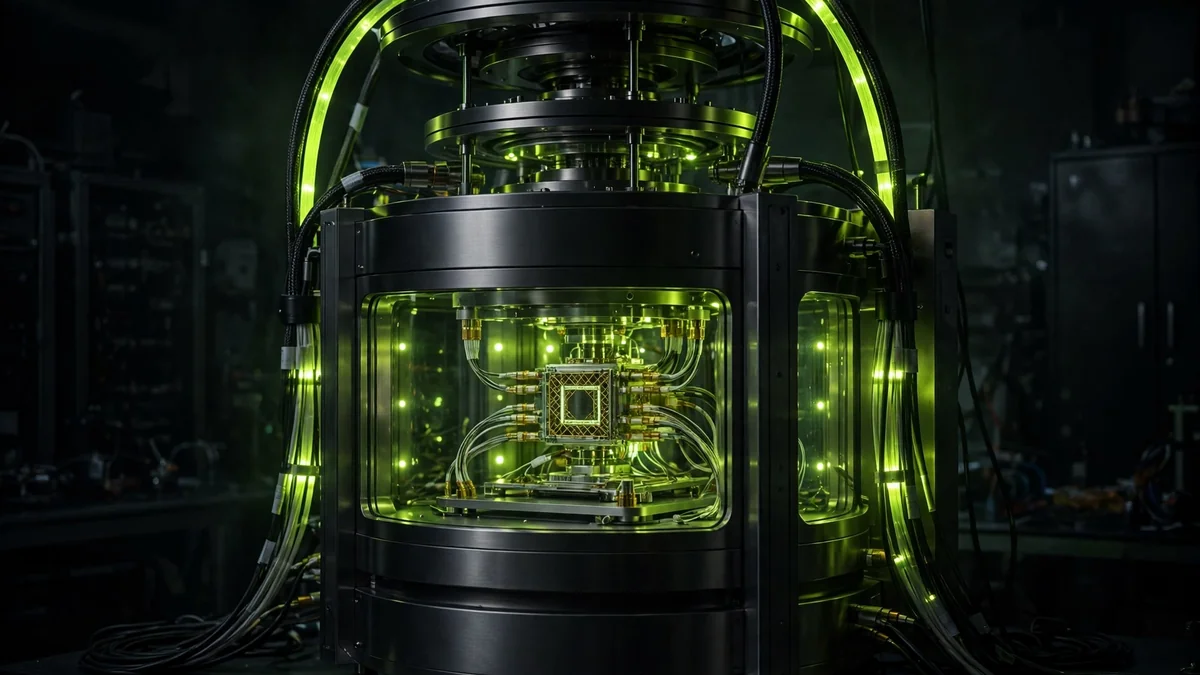
A quantum computer works differently. It uses quantum bits, or qubits, which can hold combinations of states in ways that ordinary bits cannot. For certain problems, a quantum computer can follow a different route to the answer, and for factoring and discrete logarithms that route is dramatically faster.
The key result is an algorithm published by Peter Shor in 1994. Shor’s algorithm shows that a quantum computer with enough stable qubits could factor large numbers and solve discrete logarithms far faster than any ordinary computer. That would break the public-key methods used to agree keys and to sign digital certificates.
Symmetric encryption, where the same key scrambles and unscrambles data, is less affected. A quantum algorithm called Grover’s algorithm can speed up searching for a symmetric key, but the effect is much smaller, and it can be handled by using longer keys. The main danger is therefore to public-key encryption, not to every form of encryption at once.
There is also a timing problem. An attacker can record encrypted traffic today and keep it, then break it years later when a powerful quantum computer becomes available. This is often called harvest now, decrypt later, and it means that secrets with a long life, such as medical records or state secrets, are already at risk even though no such computer exists yet. Our guide to quantum computing describes how qubits and quantum algorithms work, and why building a large stable machine remains so difficult.
Comparing current and post-quantum methods
Current and post-quantum methods both aim to keep data private and to prove that messages and software are genuine, but they rest on different mathematical foundations. The older methods are well tested and efficient, while the newer ones trade some of that efficiency for resistance to quantum attack.
The table below sets out the main contrasts.
| Aspect | Current public-key methods | Post-quantum methods |
|---|---|---|
| Security basis | Factoring and discrete logarithms | Lattices, hashes, codes, and other hard problems |
| Quantum risk | Broken by a large stable quantum computer | Designed to resist known quantum attacks |
| Key and signature size | Compact, with small keys and signatures | Often larger keys, signatures, or both |
| Speed | Fast and well optimised on ordinary hardware | Often fast, but some methods are slower or heavier |
| Maturity | Used for decades and widely understood | Newer standards, still being adopted and tested |
Where post-quantum cryptography is used
The first uses are in systems where data must stay secret for a long time. Governments, banks, and healthcare providers hold records that remain sensitive for years or decades, so they are among the earliest to plan the changeover, even before any quantum computer can break current encryption.
Web browsers and online services are also preparing. The encryption that protects a website visit is agreed when the connection starts, and newer versions of that process can use post-quantum methods alongside current ones. This hybrid approach protects the connection now, while keeping compatibility with systems that have not yet changed.
Software updates and digital signatures are another early use. A signature proves that an update really came from its maker, and if that proof could be forged, an attacker could push fake updates. Post-quantum signatures aim to keep that trust in place when quantum computers arrive.
Everyday devices will follow more slowly. Phones, routers, smart devices, and older systems have limited memory and processing power, and some post-quantum keys and signatures are larger than the ones they replace. Fitting the new methods into small devices, and updating systems that are hard to reach, is one of the largest practical challenges.
Strengths and limits
The greatest strength of post-quantum cryptography is that it runs on ordinary hardware. Unlike quantum key distribution, it needs no special physics, no new cables, and no laboratory equipment. It can be added to existing software through updates, which is why it is the main route most organisations are taking.
Another strength is that the methods have been through years of open study. Standards bodies invited researchers around the world to propose and attack candidate algorithms, and the ones chosen have survived that scrutiny. That open process is itself a reason to trust them more than a secret or untested design.
The main limit is size and cost. Some post-quantum keys and signatures are far larger than current ones, which can slow down connections, use more storage, and strain small devices. Engineers must balance security against performance, and for some uses the trade may need a different method from the standard choice.
There is also a limit in certainty. The new methods are believed to be hard for quantum computers, but that belief rests on current knowledge, and a new mathematical discovery could change it. This is true of all cryptography, yet it matters more here, because the new methods have had less time in real use than the ones they replace.
Post-quantum cryptography checklist
- List where your organisation uses public-key encryption, from websites and email to VPNs and backups.
- Find which data must stay secret for years, and treat that data as the highest priority for change.
- Follow the standards published by recognised bodies, rather than adopting an untested method.
- Plan for hybrid encryption, using post-quantum and current methods together during the changeover.
- Check that your software and hardware suppliers have a post-quantum plan and a clear timetable.
- Test the new methods in a small system first, watching for slower connections and larger messages.
- Keep your systems updated, so post-quantum support arrives through normal updates where possible.
- Protect long-lived data now, since encrypted traffic recorded today could be broken in the future.
- Review your plan each year, as standards, guidance, and quantum progress continue to change.
Frequently asked questions
What is post-quantum cryptography in simple terms?
It is encryption designed to stay secure against quantum computers. It uses new mathematical problems that are hard for both ordinary and quantum computers, so it can replace methods that a quantum computer could break.
Will quantum computers break all encryption?
No. They threaten public-key encryption based on factoring and discrete logarithms, but symmetric encryption with long enough keys is much less affected, and post-quantum methods are designed to replace the vulnerable public-key methods.
Do I need to do anything as an individual?
For most people, no action is needed yet. The change will arrive through updates to browsers, phones, and services, and your part is to keep your devices updated and to use services that keep their security current.
When will quantum computers break current encryption?
Nobody knows the date, and estimates vary widely. Building a large stable quantum computer remains very difficult, but the uncertainty is itself a reason to prepare, because replacing encryption across the world takes many years.
Is post-quantum cryptography the same as quantum cryptography?
No. Quantum cryptography uses quantum physics and special hardware to share keys, while post-quantum cryptography uses new mathematics on ordinary computers. The two ideas are related, but they are not the same thing.
Why start changing encryption before quantum computers exist?
Because data encrypted today can be stored and broken later, and because replacing encryption in every system takes years. Starting now protects long-lived secrets and avoids a rushed change when a powerful quantum computer finally appears.
The bottom line
Post-quantum cryptography explained in one line is this: new encryption based on problems that quantum computers cannot easily solve, replacing the public-key methods that a large stable quantum computer could break.
The trade is clear. You gain protection against a future threat, and you pay for it with larger keys, heavier signatures, and a long, careful changeover across every system that relies on encryption.
This article is general information about how post-quantum cryptography works, not advice about securing a particular system or organisation.