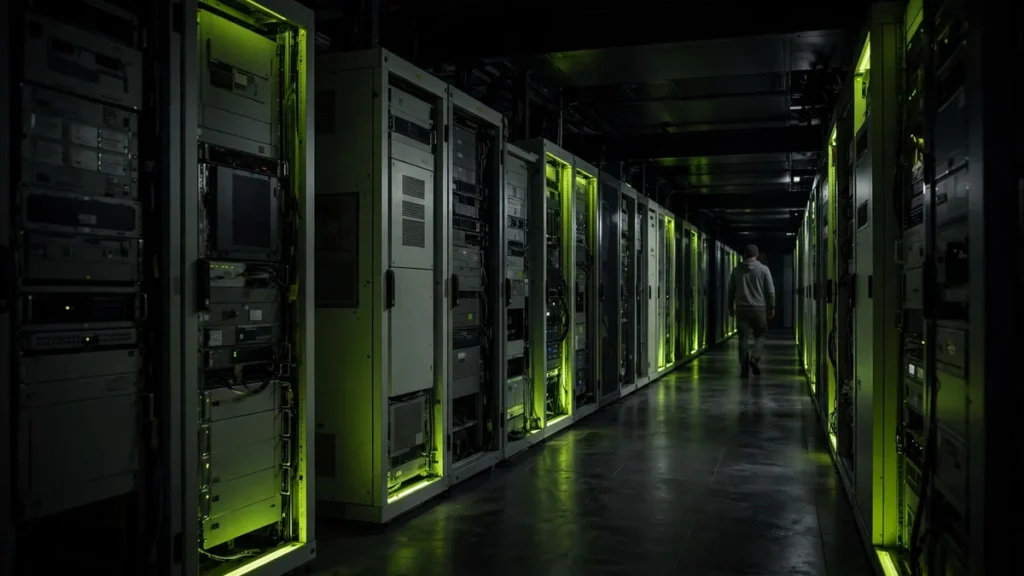
Quantum computing explained in plain terms means a computer that uses the strange rules of quantum physics to solve certain problems in a fundamentally different way. The central question is what makes it different from the computer on your desk, and the short answer is that it works with qubits, which can hold many possibilities at once, instead of bits, which are always either zero or one.
Think of an ordinary computer as a person searching a maze by trying one path at a time, backtracking whenever a path fails. A quantum computer, in the ideal picture, explores many paths at once, and the wrong ones cancel out while the right one stands out. The difference is not speed in the usual sense, but a different way of searching.
Quantum computers are real machines, built by research labs and technology companies, and they already run small problems that ordinary computers struggle with. They are not about to replace your laptop, but they point at a future where some of the hardest problems in science and industry become solvable.
Key takeaways
- A quantum computer uses qubits, which can hold many possibilities at once.
- It is not a faster ordinary computer, but a different way of computing.
- Superposition and entanglement are the two quantum effects it relies on.
- It suits certain problems, such as simulation and optimisation, far better than others.
- Today’s quantum machines are early, delicate, and still error-prone.
What quantum computing is
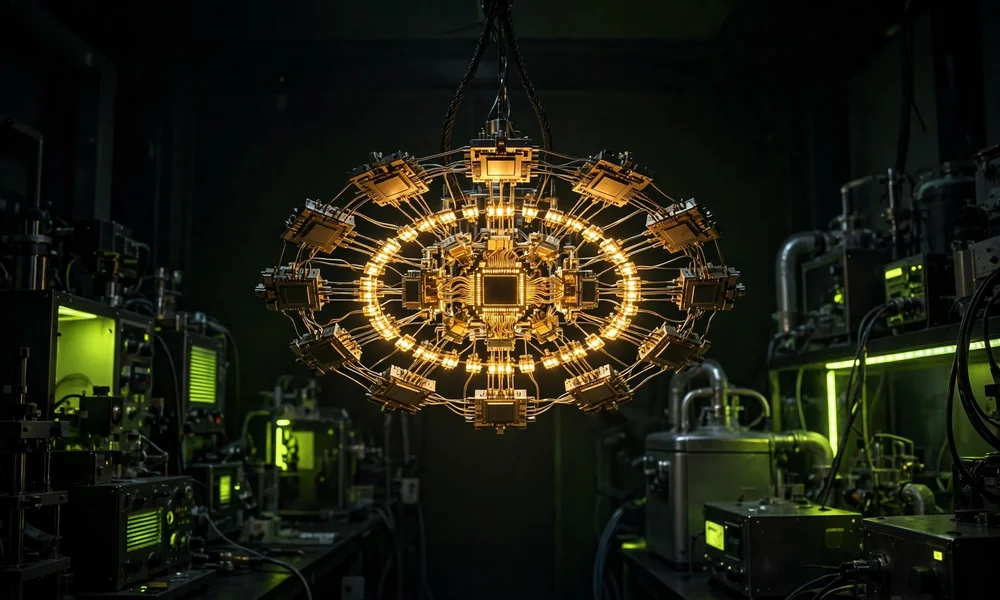
Quantum computing is computing built on quantum mechanics, the physics of the very small. Ordinary computers store information in bits, each of which is either zero or one. Quantum computers store information in qubits, which can exist in a combination of zero and one at the same time, a state called superposition.
A single qubit is not very useful on its own. The power comes from combining many of them. A group of qubits can represent an enormous number of possibilities at once, because each added qubit doubles the combinations the system can hold. That is why quantum computers are described as exploring many answers in parallel.
A second effect, entanglement, links qubits together so that the state of one depends on the state of another, even though they are separate. Entangled qubits let a quantum computer coordinate its work in ways that ordinary computers cannot copy, and it is this coordination that makes the difference.
None of this makes quantum computers good at everything. They are specialists, designed for problems where the answer hides among many possibilities. Our guide to machine learning explains the technology that quantum computing is sometimes paired with, in early experiments that combine the two approaches.
How a quantum computer works
A computation begins by preparing the qubits in a known state, usually all zero. Then a sequence of operations, called quantum gates, is applied, each one changing the qubits in a precise way. Unlike ordinary logic gates, which flip bits, quantum gates rotate the possibilities the qubits hold, building up a pattern that encodes the problem.
The clever part is interference. As the gates are applied, the possibilities that lead to wrong answers are made to cancel each other out, while the possibilities that lead to the right answer reinforce each other. It is a little like waves in water: where two waves meet out of step, they flatten; where they meet in step, they grow taller.
At the end, the qubits are measured, and measurement forces each one to settle on zero or one. A single run gives one answer, which may be wrong, so the computation is repeated many times and the most common result is taken as the answer. The art of quantum programming is designing gate sequences where the right answer emerges most often.
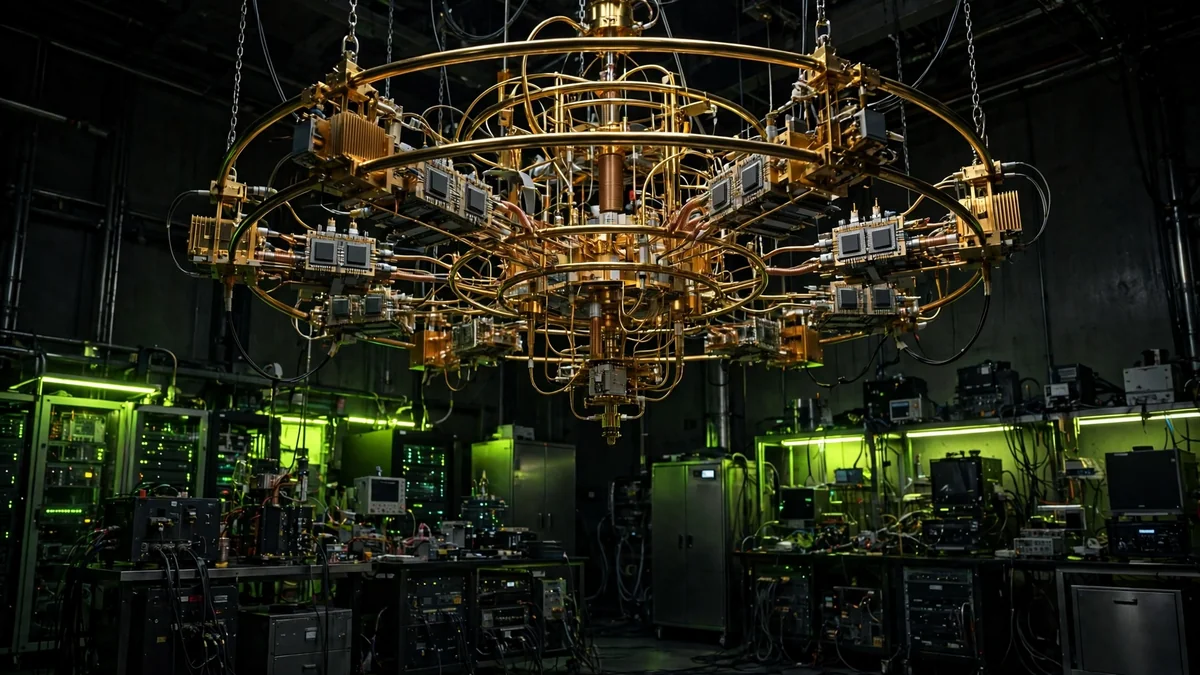
All of this happens in extreme conditions. Most quantum computers must be cooled to temperatures colder than outer space, because heat disturbs the delicate quantum states. They are shielded from vibration and electrical noise, and even then the qubits lose their state quickly, which is why errors are the field’s central challenge.
Comparing quantum and ordinary computing
| Aspect | Ordinary computer | Quantum computer |
|---|---|---|
| Basic unit | Bit, always zero or one | Qubit, a mix of both at once |
| How it searches | One possibility at a time | Many possibilities together |
| Operating conditions | Room temperature | Near absolute zero, heavily shielded |
| Best for | General work of every kind | Certain simulation and search problems |
| Maturity | Decades of refinement | Early, error-prone machines |
Where quantum computing is used
Simulating nature is the most promising use. Molecules and materials follow quantum rules, so a quantum computer can model them directly, in a way that ordinary computers can only approximate. Chemists hope this will speed up the search for new medicines, better batteries, and more efficient fertilisers.
Optimisation is another natural fit. Many business problems, from planning delivery routes to scheduling flights, involve choosing the best option from a vast number of combinations. Quantum computers can explore those combinations in ways that suit the problem, and early trials with logistics and finance companies are testing whether the advantage is real.
Cryptography sits on both sides of the story. A powerful quantum computer could one day break some of the encryption that protects the internet today, which is why researchers are already designing encryption that quantum computers cannot break. Our guide to encryption explains the technology at stake, and why the shift to quantum-safe methods has already begun.
For now, most quantum computing happens in research labs and in the cloud, where companies rent time on a quantum machine to test ideas. It is a field of experiments and prototypes, not yet of everyday products.
Strengths and limits
The greatest strength of quantum computing is that it can tackle problems where the number of possibilities grows so fast that ordinary computers give up. For those problems, the quantum approach is not a small improvement but a different scale of capability, which is why the field attracts so much attention and investment.
Its limits are severe today. Qubits are fragile, errors are common, and the machines are enormous, expensive, and cold. A quantum computer with a few hundred qubits can only solve small problems, and many of the headline results are demonstrations rather than useful work.
Quantum computers are also narrow. They will not make spreadsheets faster, stream video better, or replace the ordinary computer for everyday work. Their value lies in a small set of hard problems, and for everything else the ordinary computer remains far better.
Finally, the timeline is uncertain. Experts disagree about when, or even whether, quantum computers will become practical tools rather than research instruments. Progress is real, but so are the obstacles, and honest accounts of the field say both things at once.
Quantum computing checklist
- Learn the difference between a qubit and a bit before judging claims.
- Ask which problem a quantum computer solves better, not whether it is faster.
- Treat announcements of breakthroughs with care until they are repeated.
- Remember that most quantum machines are rented in the cloud, not owned.
- Follow the move to quantum-safe encryption if you handle sensitive data.
- Do not expect quantum computers to replace ordinary ones.
- Watch error rates, not just qubit counts, when comparing machines.
- Separate research demonstrations from useful, everyday applications.
- Keep expectations honest: the field is promising, and still early.
Frequently asked questions
What is quantum computing?
Quantum computing is a way of computing that uses qubits, which can hold many possibilities at once, instead of bits, which are always zero or one. It uses quantum effects called superposition and entanglement to explore many answers together, which suits certain hard problems.
Will a quantum computer replace my laptop?
No. Quantum computers are specialists for particular problems, such as simulating molecules and searching vast combinations. Ordinary computers remain far better for everyday work, and that will not change.
What is a qubit?
A qubit is the basic unit of quantum information. Unlike a bit, which is zero or one, a qubit can exist in a combination of both at once. Groups of qubits can represent many possibilities together, which is where the power comes from.
Why do quantum computers need to be so cold?
Heat and vibration disturb the delicate quantum states that qubits rely on. Most machines are cooled to temperatures colder than outer space and shielded from noise, so the qubits hold their state long enough to compute.
Can quantum computers break encryption?
In theory, a large and reliable quantum computer could break some widely used encryption. No machine today can do so, but the risk is taken seriously, and new encryption methods designed to resist quantum attacks are already being adopted.
When will quantum computing be useful?
It already is, for small research problems, and companies rent time on quantum machines to test ideas. When it becomes useful for large, practical problems is uncertain, and experts give a wide range of answers.
The bottom line
Quantum computing explained in one line is this: a computer that holds many possibilities at once in qubits, and uses quantum effects to make the right answer stand out.
It is a specialist tool for a small set of hard problems, not a replacement for the ordinary computer. The science is real, the machines are early, and the honest view is excitement tempered by patience.
This article is general information about how quantum computing works, not advice about investing in it or building with it.