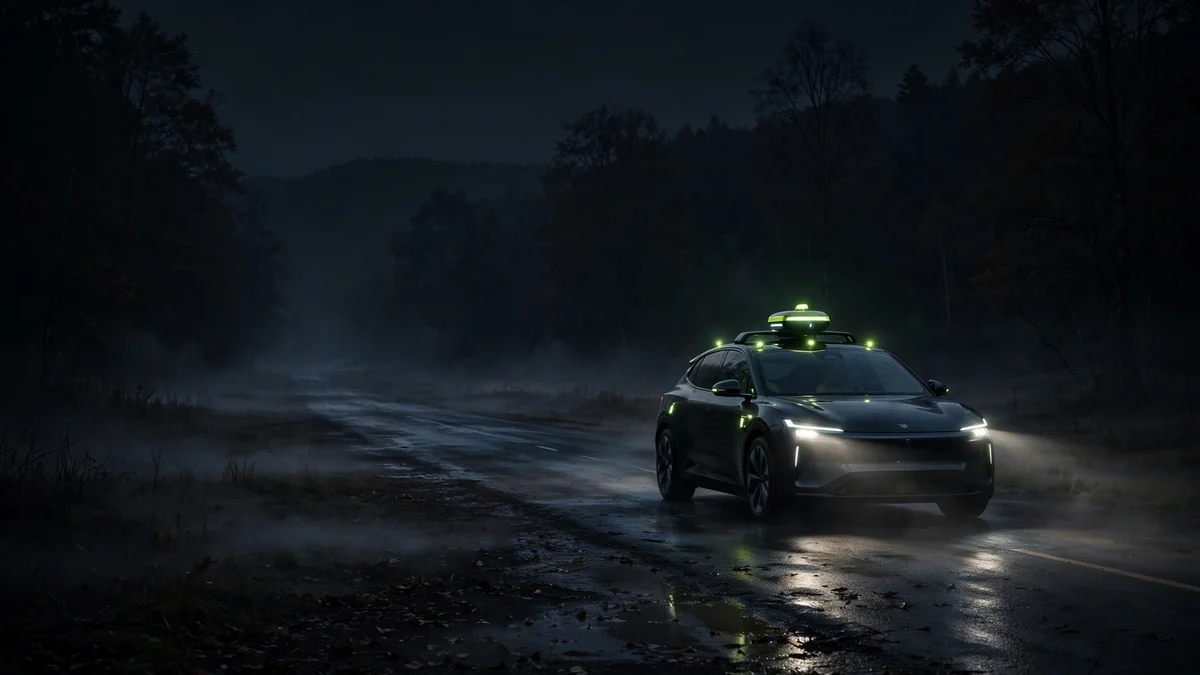
Autonomous vehicles explained in plain terms: a self-driving car is a vehicle that can sense its surroundings, decide how to move, and drive itself without a human controlling the steering, brakes, or accelerator. The central question is how a machine can do what a human driver does — watch the road, judge distances, predict what other road users will do, and react safely — and the short answer is that it combines sensors, maps, and software that together build a live picture of the world and choose the safest action many times a second.
These vehicles already operate on public roads in limited settings. Driverless taxis carry passengers in some cities, delivery vehicles run fixed routes, and lorries are being tested on motorways.
This article explains what autonomous vehicles are, how they sense the road and make decisions, how the different levels of automation compare, and where the technology is used today. It also covers the strengths and limits of self-driving systems, so you can understand both what they can do now and what still stands in their way.
Key takeaways
- An autonomous vehicle senses its surroundings, decides how to move, and drives itself without human input.
- Cameras, radar, and lidar work together to build a live three-dimensional picture of the road.
- Software predicts the behaviour of other road users and plans a safe path many times a second.
- Most cars today offer driver assistance, not full autonomy, and the human driver stays responsible.
- Weather, unusual road layouts, and unpredictable human behaviour remain the hardest problems.
What autonomous vehicles are
An autonomous vehicle is a car, lorry, bus, or shuttle that can drive itself. It uses sensors to observe the road, software to interpret what those sensors report, and control systems to steer, accelerate, and brake. Unlike a remote-controlled vehicle, it makes its own decisions on board; there is no human operator guiding it moment by moment, although some fleets have remote staff who can help when a vehicle gets stuck.
Automation is described in levels, from zero to five. Level zero means no automation at all, while level one and two cover assistance features such as adaptive cruise control and lane keeping, where the driver must stay alert and ready to take over at any moment. Level three allows the car to drive itself in specific conditions, such as a motorway traffic jam, but still expects the driver to be ready to resume control when asked.
Level four is full self-driving within a defined area and set of conditions — a driverless taxi operating in one city, for example — with no expectation that a passenger takes over.
The distinction matters because the phrase self-driving is used loosely. A car that keeps itself centred in a lane on a motorway is impressive, but it is still a driver assistance system, not an autonomous vehicle.
How autonomous vehicles work
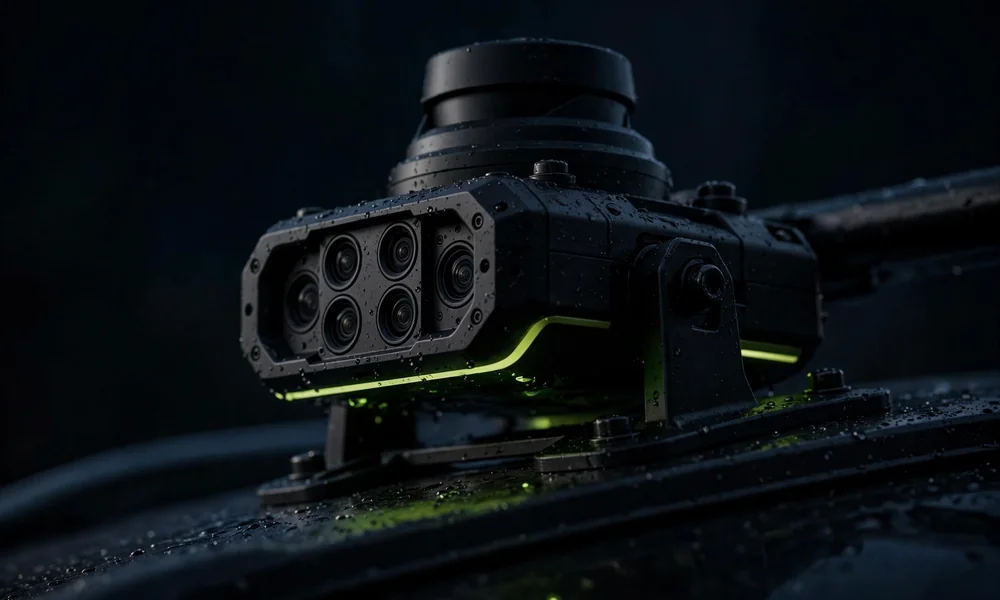
The driving task begins with sensing. Cameras watch the road, read signs and traffic lights, and track lane markings. Radar measures the distance and speed of nearby objects using radio waves, which work well in rain and fog. Lidar fires pulses of laser light and measures how long they take to return, building a detailed three-dimensional map of everything around the vehicle.
Next comes perception, where software interprets the raw sensor data. Using computer vision, the system identifies what each object is: another car, a cyclist, a pedestrian, a traffic cone, a dog. It also works out where each object is, how fast it is moving, and in which direction. Modern perception systems use machine learning models trained on vast amounts of driving data, which lets them recognise objects in many different positions, lighting conditions, and states of wear.
The vehicle also needs to know where it is. Satellite navigation alone is not precise enough to keep a car in its lane, so autonomous vehicles match what their sensors see against detailed high-definition maps that record lane boundaries, kerbs, signs, and road furniture to within a few centimetres.
With the world mapped and located, the software predicts what will happen next. It estimates whether the pedestrian on the pavement is about to cross, whether the car ahead is slowing to turn, and whether the cyclist will hold a straight line. This is one of the hardest parts of self-driving, because people behave in ways that are hard to predict.
Finally, the planning and control systems choose a path and follow it. The planner weighs the route, the speed limit, the position of other road users, and the rules of the road, then picks a smooth, safe trajectory. The control system translates that plan into steering, braking, and acceleration, adjusting many times a second as new sensor data arrives. The whole loop — sense, perceive, predict, plan, act — repeats continuously for as long as the vehicle is driving.
Comparing levels of driving automation
The automation levels describe who is responsible for driving and when. The table below summarises what each level means for the person in the driving seat.
| Level | Who drives | What it means |
|---|---|---|
| Level 0 | Human driver | No automation, warnings only |
| Level 1 | Human driver | One aid, such as cruise control |
| Level 2 | Human driver | Steering and speed aids together |
| Level 3 | System, sometimes | Car drives in set conditions |
| Level 4 | System, in an area | No driver needed in that area |
Where autonomous vehicles are used
Driverless taxis are the most visible use of the technology. In a small number of cities, fleets of level four vehicles carry paying passengers without anyone in the driving seat, operating within mapped areas and usually in fair weather. These services have expanded gradually, adding new neighbourhoods as the operators gain confidence and regulators grant permission. They are a real, working service, but they remain limited to a handful of places.
Delivery is another early use. Small autonomous vehicles carry groceries and parcels along pavements and quiet streets, while larger self-driving lorries are being tested on long motorway routes, where the driving task is simpler: steady speeds, few junctions, and predictable traffic.
Controlled environments have adopted autonomy even more quickly. Driverless shuttles carry people around airports, business parks, and university campuses at low speeds on fixed routes. Mines and ports use autonomous trucks and carriers, where the routes are private, the traffic is managed, and removing drivers from hazardous areas is a clear safety gain.
Meanwhile, driver assistance features have spread through ordinary cars. Automatic emergency braking, blind-spot warnings, and lane keeping are now common, and they already prevent crashes even though a human remains in charge. Some of these features rely on the same sensors and software as full autonomy, and 5G connectivity is being tested to let vehicles share information about hazards and traffic with each other and with roadside infrastructure.
Strengths and limits
The strongest argument for autonomous vehicles is safety. Human error contributes to the great majority of road crashes, through distraction, tiredness, drink, and speeding, and a machine does not get tired, bored, or drunk. A self-driving system watches in every direction at once, reacts in fractions of a second, and follows the rules consistently. If the technology works as intended, it could reduce crashes substantially, though proving that claim requires far more miles of real-world driving than have been covered so far.
Autonomy also promises access and efficiency. It could give independent travel to people who cannot drive, make better use of road space through smoother traffic flow, and free up the time people currently spend behind the wheel.
The limits are considerable, however. Self-driving systems still struggle with bad weather, roadworks, faded markings, and situations that were never in their training data. Edge cases like these are the long tail of the problem, and they are why progress has been slower than early predictions suggested.
There are also hard questions beyond the technology. Who is responsible when an autonomous vehicle crashes? How should a system choose when every option carries risk? How much data should a car collect about the people and places it passes? Regulators are still working through these questions, and the answers differ between countries. Until they are settled, the rollout of autonomous vehicles will remain cautious and uneven.
Autonomous vehicles checklist
- Check which automation level a car actually offers before believing a self-driving claim.
- Remember that driver assistance still requires you to watch the road at all times.
- Learn how to take over quickly if the system asks you to resume control.
- Keep sensors and cameras clean, since dirt and snow can block their view.
- Check local rules before using a driverless service in a new city or country.
- Ask how the service handles bad weather and what happens if the vehicle stops.
- Review what personal data the vehicle collects and how it is stored.
- Never rely on automation on roads or in conditions the maker says it does not support.
- Stay sceptical of launch dates and promises until vehicles are operating in public.
Frequently asked questions
What is an autonomous vehicle?
An autonomous vehicle is a vehicle that can drive itself using sensors, maps, and software, without a human controlling the steering, brakes, or accelerator. The most advanced examples operate as driverless taxis in limited areas, while most cars today offer only driver assistance.
How do self-driving cars see the road?
They use cameras, radar, and lidar together. Cameras read signs and lights, radar measures distance and speed in poor weather, and lidar builds a detailed three-dimensional map. Combining the three covers the weaknesses of each sensor on its own.
Are self-driving cars safer than human drivers?
The honest answer is that we do not know yet. Machines avoid the distraction and tiredness that cause many crashes, but they still struggle with unusual situations.
Can I buy a fully self-driving car today?
No. Cars on sale today offer driver assistance up to level two, and a few offer limited level three features in specific conditions. No manufacturer currently sells a car that can drive itself everywhere without a driver, which would be level five autonomy.
What happens if a self-driving car breaks down?
A well-designed system detects the fault and brings the vehicle to a safe stop, usually at the side of the road, then alerts a control centre.
When will autonomous vehicles be common?
Driverless taxis and delivery vehicles are already operating in limited areas, and that footprint is growing slowly. Widespread use on all roads in all weather is still years away, because the hardest problems — unusual situations, bad weather, and regulation — remain unsolved.
The bottom line
Autonomous vehicles explained at their simplest are machines that sense the road, predict what other road users will do, and choose a safe path many times a second. Cameras, radar, and lidar supply the senses, maps and software supply the judgement, and control systems supply the hands on the wheel.
The technology already works in limited settings, from driverless taxis to mining trucks, and its driver assistance features are making ordinary cars safer today.
This article is general information about how autonomous vehicles work, not advice about buying, using, or investing in self-driving technology.