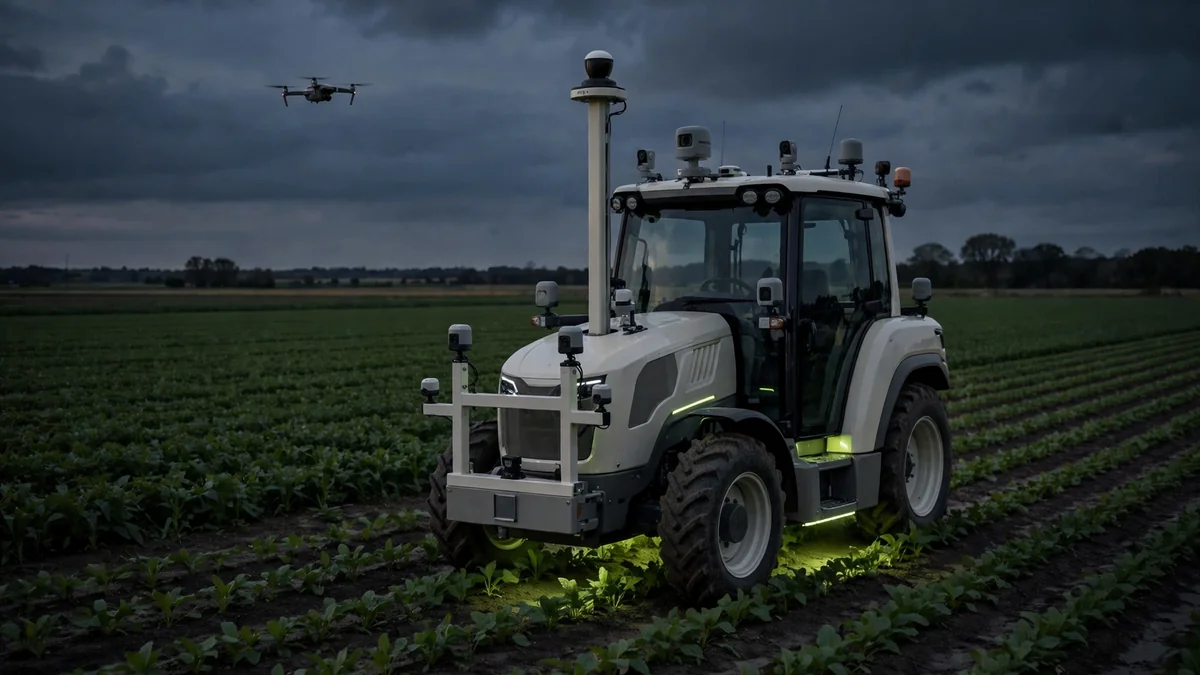
AI in agriculture explained simply is this: artificial intelligence helps farmers grow more with less by monitoring crops and animals, predicting disease and weather risks, and targeting water, feed and fertiliser where they are actually needed. The central question is whether it genuinely improves yields and incomes, and the short answer is that it can, when it is built on accurate field data and local knowledge, and when farmers stay in charge of the decisions that matter.
Farming has always depended on close observation. A good farmer walks the field, notices a patch of yellowing leaves, feels the soil and knows which part of a field dries out first. AI extends that observation: satellites, drones and sensors watch every part of a farm, every day, and flag changes a person might miss. This guide explains what AI does in agriculture today, where it helps and where it does not.
Key takeaways
- Precision farming is the most proven use: AI targets water, fertiliser and spray to the parts of a field that need them.
- Image-based crop monitoring spots disease, pests and stress early, when treatment is cheapest and most effective.
- Weather and yield forecasting help farmers plan planting, irrigation and harvest, but forecasts still go wrong.
- Livestock monitoring tracks health, feeding and breeding, yet it needs reliable sensors and connectivity.
- Poor connectivity, messy field data and high upfront cost are the common reasons projects stall.
What AI in agriculture actually means
Most farm AI runs on machine learning, trained on data farmers already collect or can now gather cheaply. Satellite images show how a crop is growing across a whole field; soil sensors measure moisture and nutrients; weather stations record rain, temperature and wind; farm records show what was planted, when, and what it yielded. A model learns the patterns in that data, then predicts what is likely to happen next.
That is different from farming by calendar or by average. A traditional approach might spray a whole field on the same date, or irrigate every section for the same length of time. AI looks at each part of a field separately, because soil, slope and shade vary within a single field, and suggests treating each part according to its actual condition.
The technology also includes computer vision, robotics and connected sensors. Cameras on a tractor can tell a crop plant from a weed; a robot can pick fruit or weed a row without disturbing the crop; sensors in a barn can track an animal’s movement and temperature. Our guide to edge AI explains why much of this processing happens on the farm itself, where internet connections are often slow or unreliable.
Precision farming and soil
Precision farming is where AI saves the most money and reduces the most waste. Fertiliser, water and crop protection products are expensive, and applying them evenly across a field means some parts get too much and others too little. AI maps the variation within a field, then guides machinery to apply exactly what each part needs.
Soil is the foundation of that map. Sensors and soil samples show where nutrients are low, where moisture holds and where drainage is poor, and satellite images reveal how the crop responds over the season. A farmer can then vary seeding rates, fertiliser and irrigation across the field, rather than treating it as one uniform block.
The savings are real, but they take time to appear. A farmer needs several seasons of data to build a reliable map, and the equipment to vary application rates is an investment. The best approach is to start with one field, learn how it varies, and expand only when the results justify the cost.
Crop health, disease and pests
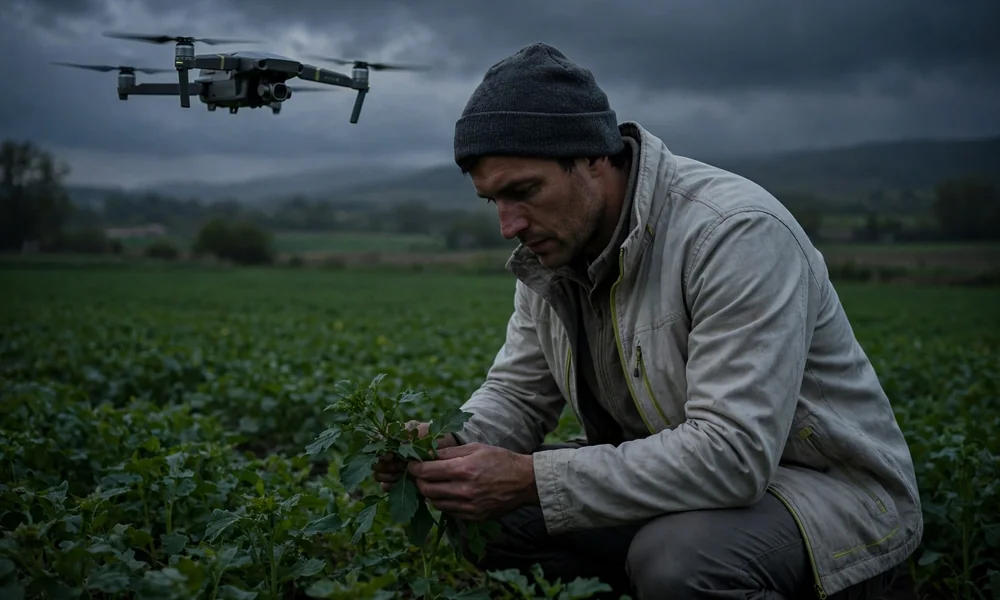
Crop monitoring is the second major use. A drone or satellite image can show stress in a crop before it is visible to the eye, because unhealthy plants reflect light differently from healthy ones. A model trained on images of known diseases can flag a patch of blight, rust or mildew early, when treatment is cheapest and most likely to work.
Early warning matters because disease spreads quickly. A problem caught in one corner of a field can be treated locally, while the same problem found a week later may need the whole field sprayed, at far greater cost and with more chemical use. The same applies to pests: cameras and traps can track insect numbers and alert the farmer before damage becomes serious.
The system is only as good as its training data. A model trained on wheat in one region may not recognise disease in another crop or climate, and a model trained on clear images may fail on a cloudy day. Farmers should check alerts in the field before acting, and keep records of what the model got right and wrong, so it can be corrected over time.
Weather, yield and harvest planning
Weather is the largest uncertainty in farming, and AI helps farmers plan around it. By combining local weather data with forecasts, soil moisture and crop growth stages, a model can suggest the best window for planting, spraying or harvesting, and warn when frost, drought or heavy rain is likely. That helps a farmer protect a crop rather than losing it to a predictable event.
Yield forecasting is a related use. By tracking how a crop has grown through the season, a model can estimate the harvest before it happens, which helps with storage, transport, labour and sales. A farmer who knows roughly how much grain is coming can book transport and storage in advance, rather than scrambling at harvest time.
Forecasts are still wrong sometimes, especially for weather, and a farmer should treat them as guidance rather than certainty. Keeping a margin for error, watching the sky as well as the screen, and having a plan for a bad outcome are still essential parts of farming. AI improves the odds; it does not remove the risk.
Comparing the main uses of AI on farms
| Use | Main benefit | Main risk | Best for |
|---|---|---|---|
| Precision application | Less waste, lower input costs | Needs several seasons of data | Large fields with varied soil |
| Crop monitoring | Early disease and pest warnings | Models may not suit local crops | High-value and disease-prone crops |
| Weather planning | Better timing for key jobs | Forecasts still go wrong | Planting, spraying and harvest |
| Yield forecasting | Earlier storage and sales planning | Estimates vary with the season | Arable and horticultural farms |
| Livestock monitoring | Earlier signs of illness | Sensors fail or lose connection | Dairy and housed livestock |
Livestock and animal welfare
Livestock farming benefits from AI in a different way. Sensors on a cow, for example, can track movement, feeding, rumination and temperature, and flag an animal that is eating less, moving differently or running a fever. That early warning lets a farmer check the animal before a problem becomes serious, which improves welfare and reduces losses.
Breeding and feeding also benefit. AI can identify the best time for breeding based on an animal’s behaviour, and can adjust feed rations to each animal’s needs and stage of production. That reduces waste and improves health, but it depends on sensors that stay attached, stay charged and stay connected, which is not always easy in a barn or a field.
Animal welfare must stay at the centre. Monitoring should be used to care for animals better, not to push them harder, and farmers should be wary of systems that promise more output without considering the animal’s health. A system that flags a sick animal early is genuinely useful; one that only counts litres or kilos is not enough.
Cost, connectivity and data
Cost is a real barrier, especially for smaller farms. Drones, sensors, variable-rate machinery and software subscriptions all add up, and the return may take several seasons to appear. Many farmers start with a free or low-cost tool, such as satellite imagery or a weather app, and add equipment only when the benefit is clear.
Connectivity is the other barrier. Many farms have poor mobile signal or no broadband, which limits cloud-based tools. Our guide to multi-cloud is less relevant here than the practical point: tools that work offline, store data locally and sync when a connection is available are far more useful on a farm than tools that need constant internet.
Data ownership matters too. Farm data is valuable, and farmers should know who holds it, who can see it and what it is used for before signing up to a service. A tool that locks a farmer’s own field data behind a subscription, or shares it without clear permission, is a poor choice. Our guide to sustainable AI covers the wider environmental questions, including the energy and resource costs of the technology itself.
Farm checklist
- Pick one clear problem first, such as disease in one crop, and measure the baseline.
- Start with one field, learn how it varies, then expand.
- Check alerts in the field before spraying or treating a crop.
- Keep records of what the model got right and wrong, and correct it over time.
- Choose tools that work offline and sync when a connection is available.
- Check who owns your farm data, and what a service can do with it.
- Use livestock monitoring to care for animals earlier, not to push them harder.
- Keep a margin for error in weather and yield forecasts.
- Talk to neighbouring farmers about what worked and what did not.
Frequently asked questions
What is AI in agriculture?
It is the use of machine learning and related tools on farms, mainly for precision farming, crop monitoring, weather and yield forecasting, and livestock care. It learns from satellite images, soil sensors, weather data and farm records to predict problems and target treatment.
Will AI replace farmers?
No. AI extends a farmer’s observation and helps with timing and targeting, while the farmer handles judgement, local knowledge, animal care and the many decisions that depend on the land itself. Farming remains a skilled, hands-on job.
How much does AI in agriculture cost?
It varies widely, from a free satellite imagery tool to variable-rate machinery and sensor systems. Most farmers start small, with one field or one crop, and expand only when the savings on inputs or the gains in yield justify the spend.
What data does farm AI need?
It needs field maps, soil and moisture data, satellite or drone images, weather records and farm history. Clean, local data matters more than the choice of model, and a model trained elsewhere may not suit a particular farm.
Can small farms use AI?
Yes. Satellite imagery, weather apps and simple soil sensors are available at low cost, and a small farm can benefit from early disease warnings and better timing without buying large machinery. Starting with one problem is the safest approach.
Is farm data safe with AI tools?
It depends on the service. Farmers should check who owns the data, who can see it, how long it is kept and whether it is shared, before signing up. A tool with clear, fair terms is worth more than a cheaper one with vague ones.
The bottom line
AI in agriculture explained in one line is this: it turns satellite images, soil sensors and weather data into earlier warnings and more targeted treatment, but only when the data is local, the tools work offline and the farmer’s own knowledge stays in charge. Start with one field, prove the result, and build from there.