
AI in media explained simply is this: artificial intelligence now helps decide what stories get written, which headlines you see, what you watch next and even how a programme is made. The central question is whether it makes media better or just faster and cheaper, and the short answer is that it does both, improving discovery and production while raising serious questions about accuracy, originality and trust.
Media companies were early adopters of AI because their work is data-rich and deadline-driven. Newsrooms use it to sort tips, draft summaries and personalise homepages, while streaming services use it to recommend shows, subtitle programmes and target advertising. This guide explains how AI works across media, where it helps audiences and where it creates problems.
Key takeaways
- AI now shapes what you read, watch and hear, from recommendations to automated summaries.
- Newsrooms gain the most from drafting, transcription and data analysis, not from replacing reporters.
- Personalisation can improve discovery but can also narrow what audiences ever see.
- Synthetic images, voices and video make verification harder for publishers and audiences alike.
- Transparency about AI use is becoming a basic expectation for trustworthy media.
What AI in media actually means
AI in media covers a wide range of tools, and they do very different jobs. Some analyse text, some generate it, some recognise images and speech, and some predict what an audience will like. A newsroom might use one tool to transcribe an interview, another to summarise a long report, and a third to choose which story leads the homepage for each reader.
Most of these tools run on machine learning, trained on large amounts of text, images, audio or viewing data. A recommendation system learns from what people watched before, a language model predicts likely words in a summary, and a speech tool converts spoken words into text. None understands a story the way a journalist or editor does, but all can process far more material far faster than a human team.
AI in newsrooms
Newsrooms use AI first for the routine work that eats up a reporter’s day. Transcription turns an hour-long interview into searchable text in minutes, translation opens up foreign-language sources, and summarisation turns a long court filing or government report into a short brief a reporter can read quickly. None of this writes the story, but all of it leaves more time for reporting.
Some publishers also use AI to draft short items, such as market reports, sports results and weather updates, where the facts come from structured data and the wording follows a template. A human editor still checks the result before publication, because a wrong number in a market report is a serious error. The best-known examples include financial news services that have published data-driven market summaries for years, with editors reviewing the output.
AI also helps journalists find stories. It can scan thousands of documents, spot patterns in public records, and flag unusual entries in a dataset that a human would take weeks to read. Investigative teams use these tools to work through leaks and archives, and our guide to AI in healthcare shows a similar pattern, where AI handles the heavy scanning and humans make the judgement calls.
How recommendations shape what you see
Recommendation systems are the most powerful AI in media, and the least visible. Streaming services, news apps and social platforms all use them to decide what appears on your screen. They learn from what you watched, read, clicked or skipped, and from what similar users enjoyed, then rank the options and show you the ones you are most likely to choose.
The problem is that the same system can narrow your view. If it only shows you what you already like, you stop encountering new ideas, new voices and new subjects. News apps face this most sharply: a feed tuned only for clicks can turn into a stream of similar stories, and the reader never sees the reporting that challenges their assumptions. Publishers are beginning to mix in editorial choices, so that human judgement still shapes part of what each reader sees.
AI in streaming, film and music
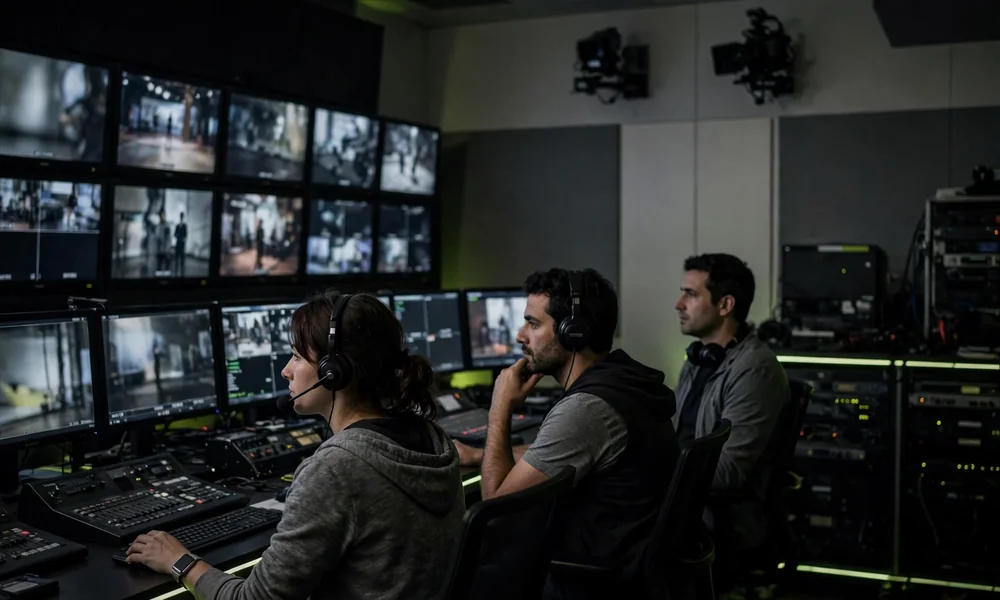
Streaming services use AI well beyond recommendations. Subtitles and dubbing are now produced far faster, with AI generating a first draft that human translators refine. Content is tagged automatically, so a viewer can search for a mood, a setting or a plot element rather than just a title. Trailers can be cut automatically from a film’s most dramatic scenes.
Film and television production uses AI for editing, visual effects and restoration. Old footage can be cleaned up and sharpened, rough cuts can be assembled from hours of material, and visual effects that once needed weeks of manual work can be drafted in hours. The director and editor still decide what stays.
Synthetic media and the trust problem
The hardest problem AI creates for media is synthetic content: images, audio and video that look and sound real but were generated by a machine. A convincing fake video of a public figure can spread faster than any correction, and a fabricated image from a news event can mislead thousands of people before anyone checks it.
Publishers are responding in several ways. Some add labels to AI-generated images and video, some embed invisible watermarks or content credentials that record how a file was made, and some have verification teams whose whole job is to check suspicious material before it is published.
Comparing the main uses of AI in media
| Use | Main benefit | Main risk | Best for |
|---|---|---|---|
| Transcription and summarising | Hours of work in minutes | Errors in names and quotes | Research and first drafts |
| Recommendations | Surfaces hidden content | Narrows what audiences see | Large catalogues and feeds |
| Data-driven reporting | Finds patterns in huge datasets | False leads from bad data | Investigations and finance |
| Subtitling and dubbing | Faster access in more languages | Awkward or wrong translations | Global streaming audiences |
| Synthetic images and video | Cheap visuals and effects | Fakes that mislead audiences | Clearly labelled creative work |
Advertising and audience analytics
Advertising is where AI in media is most commercially advanced. Advertisers use AI to choose which audiences see an advert, when to show it, and which version of the message is most likely to work. Publishers use it to predict which stories will attract subscribers, which headlines will be clicked, and when readers are most likely to cancel.
That targeting is effective, but it depends on audience data, and the rules around that data are tightening. Privacy laws in Europe and elsewhere limit what can be collected and how it can be used, and browsers and devices increasingly block the tracking that targeted advertising relied on. Media companies are adapting by asking readers to sign in, offering subscriptions, and using first-party data they collect directly.
The risks media companies must manage
Accuracy is the first risk. AI tools can invent facts, misquote sources and garble names, and a confident-sounding summary can hide a serious error. Newsrooms that publish AI output without checking it have been caught out publicly, and the damage to trust lasts far longer than the time saved. Human review before publication is not optional for anything presented as fact.
Copyright is the second risk, and it is still being argued in courts and parliaments. AI models were trained on large amounts of published material, including news articles, books and photographs, often without the permission of the people who made them. Publishers are negotiating licences, and some are suing, while regulators consider new rules, as our guide to AI regulation explains. The outcome will shape how media is funded for years.
Jobs are the third risk. AI can already do some of the routine work that junior staff once learned on, from writing short reports to cutting simple video. Media companies that use AI only to cut staff lose the people who would have become their senior reporters and editors. The wiser approach is to use the time saved to do reporting that machines cannot do.
Bias is the fourth risk. Recommendation systems and moderation tools learn from past data, and they can amplify existing patterns, promoting some voices and suppressing others. A moderation system can also remove legitimate content by mistake, particularly in minority languages or on sensitive topics. Regular checks on what the systems promote and remove are part of running them responsibly.
What good practice looks like
Good practice starts with transparency. Publishers should tell audiences when AI was used to make something, whether that is a summary, an image or a recommendation. Some newsrooms publish AI policies that explain what they will and will not use AI for, and how human editors stay in charge. That openness is becoming a marker of trustworthy media.
Editorial control is the second pillar. AI can draft, suggest and sort, but the final decision on what is published, and the responsibility for it, should stay with a human editor. That means keeping a clear record of what AI produced, who checked it, and what was changed, so mistakes can be traced and corrected.
Media checklist
- Label AI-generated images, video and audio clearly, every time they appear.
- Keep a human editor in charge of anything published as fact, and check AI output before it goes live.
- Tell audiences when and how AI is used, and publish a clear AI policy.
- Mix editorial choices into recommendation feeds so audiences see more than what they already like.
- Check what recommendation and moderation systems promote and remove, and look for bias.
- Use AI to save time on routine work, and spend that time on reporting machines cannot do.
- Keep records of AI-generated content so errors can be traced and corrected.
- Respect copyright and licensing when training data or publishing AI output is involved.
- Give audiences control over recommendations, including the ability to reset them.
Frequently asked questions
Is AI writing the news?
AI drafts some short, data-driven items such as market reports and sports results, and it helps reporters with transcription and summaries. Most news is still written by journalists, and responsible publishers keep a human editor in charge of anything presented as fact.
How do streaming recommendations work?
They learn from what you and similar users watched, read or clicked, then rank the catalogue and show you the options you are most likely to choose. Good systems also mix in new and varied suggestions so the feed does not become too narrow.
Can AI-generated video be trusted?
Not on its own. Synthetic video can look very convincing, so check the source, look for labels or content credentials, and see whether reputable publishers have verified the material before sharing it.
Will AI replace journalists?
It is replacing some routine tasks, not the core of journalism. Finding sources, earning trust, judging what matters and holding power to account still need human reporters and editors.
Why do some publishers label AI content?
Because audiences deserve to know how something was made, and because labelling protects trust. A publisher that is open about AI use gives its audience a reason to believe its reporting.
What is the biggest risk of AI in media?
Loss of trust. Errors, fakes and hidden AI use all damage the credibility that media depends on, and once lost, that credibility is very hard to rebuild.
The bottom line
AI in media explained in one line is this: the technology makes media faster, more personal and more productive, but its value depends on how it is used, with human editors in charge, synthetic material clearly labelled, and audiences told what is happening. Media that keeps those standards will gain from AI; media that does not will lose the trust it cannot do without.