AI in energy explained simply is this: artificial intelligence helps generate, move and use electricity more efficiently by forecasting demand and renewable output, balancing the grid in real time, and cutting waste in homes, offices and factories. The central question is whether it genuinely makes energy cheaper and cleaner, and the short answer is that it can, when it is built on accurate metering and weather data, and when operators keep control of the decisions that affect safety and supply.
Energy systems are becoming harder to manage. Wind and solar output changes with the weather, electric vehicles and heat pumps add new demand at unpredictable times, and millions of homes now generate as well as consume power. AI helps by predicting those changes and adjusting the system in response. This guide explains what AI does in energy today, where it helps and where it does not.
Key takeaways
- Demand and renewable forecasting is the most proven use: AI predicts how much power is needed and how much wind and solar will produce.
- Smart grids balance supply and demand in real time, reducing waste and the risk of blackouts.
- Predictive maintenance spots faults in turbines, panels and grid equipment before they fail.
- Smart buildings and factories cut energy use by heating, cooling and running equipment only when needed.
- Bad metering data, cyber-security risks and over-reliance on forecasts are the common reasons projects stall.
What AI in energy actually means
Most energy AI runs on machine learning, trained on data operators already collect. Smart meters record how much power homes and businesses use and when; weather stations and satellites track wind, sun and cloud; sensors on turbines, panels and transformers report temperature, vibration and output; grid systems record flows, faults and prices. A model learns the patterns in that data, then predicts what is likely to happen next.
That is different from running a grid on fixed schedules and averages. A traditional approach might assume demand follows last year’s pattern, or run a power station at a steady output whatever the weather. AI looks at the day’s weather, the time of year, the day of the week and live demand together, then adjusts its forecast hour by hour as conditions change.
The technology also includes optimisation and control tools. AI can decide when to charge a battery, when to run a heat pump, or when to ask a factory to reduce demand briefly, always within limits set by the operator. Our guide to observability explains how operators watch these complex systems, so they can see what the AI is doing and why.
Forecasting demand and renewables
Forecasting is where energy AI earns its keep. A grid operator must match supply to demand every second, and a mismatch can cause a blackout or waste power. With coal and gas, output could be adjusted on demand, but wind and solar depend on the weather, so the operator needs to know in advance how much they will produce.
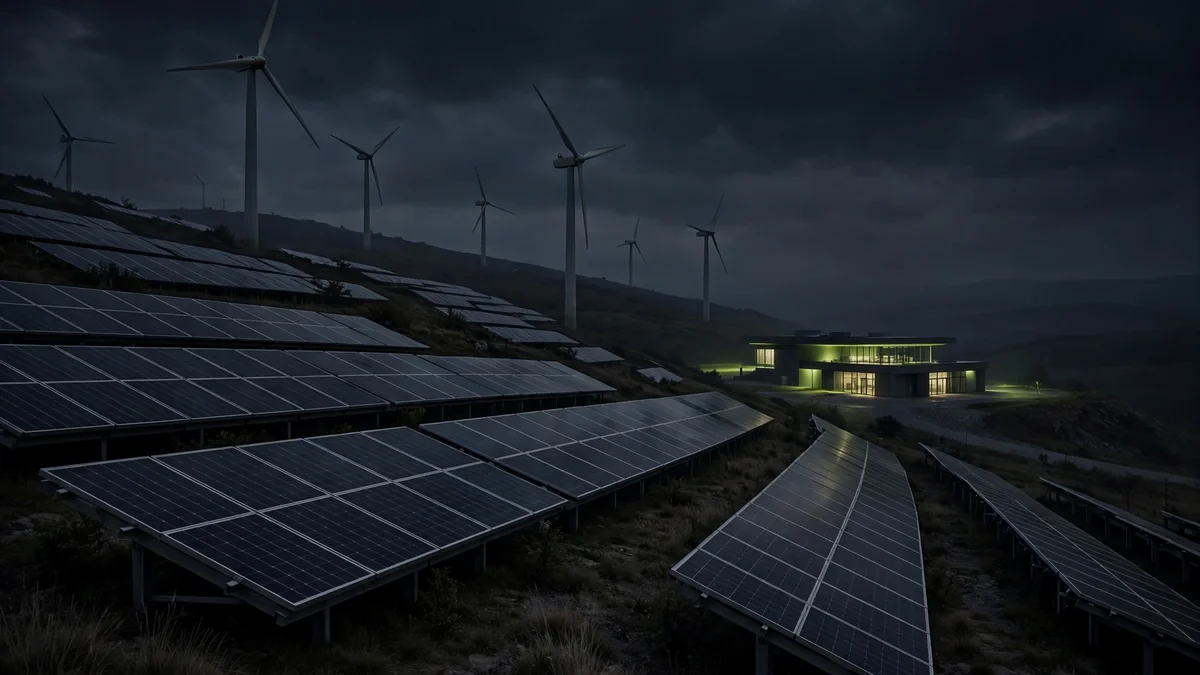
AI forecasting combines weather models with historical output from each wind farm and solar site, taking account of local terrain, panel angle and turbine condition. The result is an estimate of renewable output for the next hours and days, which lets the operator plan which other sources to run, when to charge storage and when to buy power from elsewhere.
Demand forecasting works the same way. By combining past use with weather, time of day, holidays and the growing number of electric vehicles and heat pumps, a model can estimate how much power will be needed and when the peak will come. The forecast is still wrong sometimes, especially when the weather changes suddenly, so operators keep a margin of spare capacity and update the forecast as new data arrives.
Smart grids and storage
A smart grid is a power network that can sense, communicate and respond, rather than simply delivering power in one direction. Sensors report flows and faults, smart meters report demand, and control systems adjust voltages, reroute power around a fault and bring storage online when it is needed. AI helps by making those decisions faster than a human operator could, across thousands of points at once.
Storage is a key part of that flexibility. Batteries can charge when renewable output is high and prices are low, then discharge when demand peaks, smoothing out the ups and downs of wind and solar. AI decides when to charge and discharge, based on forecasts, prices and the battery’s condition, while staying within limits that protect the battery’s life.
Small-scale generation adds another layer. Homes with solar panels and batteries, and businesses with their own generation, can now feed power back into the grid or use it themselves. AI helps coordinate these many small sources, so the grid benefits from them rather than being destabilised by them. The household or business still controls its own system, but the grid operator can see the overall picture.
Energy efficiency in buildings and industry
Efficiency is the use most people will notice first. A smart building can learn when rooms are occupied, how long they take to heat or cool, and how the weather affects them, then adjust heating, cooling, lighting and ventilation to match actual need rather than running on a fixed timer. That cuts energy use without making the building uncomfortable.
Factories benefit in the same way. AI can tune heating, cooling, compressed air and motors to actual production needs, spot equipment that is wasting energy, and suggest when to run energy-hungry processes at times when power is cheaper or cleaner. Our guide to sustainable AI covers the wider question of AI’s own energy use, which operators should weigh against the savings it delivers.
The savings depend on good data and good controls. A building with faulty sensors, poor insulation or a heating system that cannot be adjusted finely will not benefit much from AI, however good the model is. The best projects start by fixing the basics, such as insulation, draughts and controls, then add AI to optimise what remains.
Comparing the main uses of AI in energy
| Use | Main benefit | Main risk | Best for |
|---|---|---|---|
| Demand forecasting | Better planning for peaks | Forecasts still go wrong | Grid operators and suppliers |
| Renewable forecasting | More wind and solar used | Weather changes suddenly | Wind and solar operators |
| Smart grids | Faster response to faults | Cyber-security risks grow | Networks with many small sources |
| Battery storage | Smooths renewable output | Batteries degrade if misused | Grids with high renewable share |
| Building efficiency | Lower bills, less waste | Needs good sensors and controls | Offices, schools and factories |
Predictive maintenance and safety
Energy equipment is expensive and often hard to reach, so predicting failure matters. A wind turbine with a failing bearing, a solar panel with a cracked cell, or a transformer that is overheating can all be spotted early from sensor data, before they fail and cause an outage or a costly repair. AI learns the normal pattern for each piece of equipment, then flags anything unusual.
Inspection is changing too. Drones with cameras can inspect turbines and power lines without sending a person up a tower or along a live line, and AI can review the images for cracks, corrosion or damaged insulators. That makes inspection safer and more frequent, but a human engineer must still confirm any serious finding before work is planned.
Safety is the hard limit in every energy system. AI can suggest, warn and optimise, but it must never override the safety systems that protect people and equipment. Operators should keep clear rules about what AI can and cannot do, test the system thoroughly, and make sure a human can take over at any time. Our guide to AI agents in production explains how autonomous systems are monitored so that a human can step in when they go wrong.
Cost, security and fairness
Cost is a real consideration. Sensors, meters, software, integration and training all add up, and the return may take years to appear for a grid project. Many operators start with forecasting, which needs mainly data and software, before investing in hardware such as batteries or grid sensors. Measuring the result in outages avoided, energy saved and renewable power used is essential.
Cyber-security is the other major risk. A smart grid is a connected grid, and every sensor, meter and control system is a potential entry point for an attacker. Operators must protect these systems with strong access controls, regular updates and monitoring for unusual activity, and must plan for what happens if a system is compromised. The guidance in our data breach response guide is relevant here, though energy systems have their own specialist standards as well.
Fairness matters too. Smart tariffs that reward shifting demand to off-peak hours can help those who can choose when to use power, but can penalise those who cannot, such as shift workers or people with medical equipment. Regulators and suppliers should design tariffs and support so that the benefits of AI in energy are shared, and vulnerable customers are protected.
Energy checklist
- Pick one clear problem first, such as peak demand or renewable curtailment, and measure the baseline.
- Check metering, weather and sensor data quality before buying any AI software.
- Start with forecasting, prove the result, then add storage and grid controls.
- Keep safety systems separate from AI, and make sure a human can take over at any time.
- Protect every connected device, and have a plan for a cyber incident.
- Fix insulation, draughts and basic controls before adding AI to a building.
- Track energy saved, outages avoided and renewable power used, not only the model’s scores.
- Design tariffs fairly, and protect vulnerable customers who cannot shift demand.
- Review forecasts against reality, and keep a margin of spare capacity.
Frequently asked questions
What is AI in energy?
It is the use of machine learning and related tools in power systems, mainly for forecasting demand and renewable output, balancing smart grids, managing storage, maintaining equipment and cutting waste in buildings and factories. It learns from metering, weather and sensor data to predict and adjust.
Will AI replace grid operators?
No. AI handles fast, routine balancing and forecasting, while operators handle safety, judgement calls and the rare events no model has seen before. People remain in charge of the system, especially when something goes wrong.
How much does AI in energy cost?
It varies widely, from a forecasting tool that needs mainly data to a grid or storage project that needs hardware. Most operators start with forecasting, measure the result, and expand only when the savings or reliability gains justify the spend.
What data does energy AI need?
It needs accurate metering, weather and sensor data, plus records of past demand, output and faults. Clean, current data matters more than the choice of model, and poor data is the most common reason projects fail.
Can AI make energy cheaper for households?
It can help, by cutting waste in the system and by letting households use power when it is cheaper and cleaner, for example by charging a car or running a heat pump off-peak. Whether savings reach the bill depends on tariffs and regulation as well as technology.
Is AI in energy safe from hackers?
No connected system is fully safe, so security must be built in from the start. Operators use strong access controls, regular updates and monitoring, and keep safety systems separate from the AI that optimises the grid.
The bottom line
AI in energy explained in one line is this: it turns metering, weather and sensor data into better forecasts, steadier grids and less wasted power, but only when the data is sound, security is built in and people stay in charge of safety and supply. Start with forecasting, prove the result, and build from there.