AI in logistics explained simply is this: artificial intelligence helps move goods faster and cheaper by planning better routes, forecasting demand, running warehouses and tracking deliveries in real time. The central question is whether it genuinely improves reliability, and the short answer is that it can, when it is built on accurate location, stock and traffic data, and when people stay in charge of the exceptions no model can handle.
Logistics has always been a problem of timing and coordination. A parcel must be collected, sorted, loaded, driven, unloaded and signed for, often across several companies and countries. AI helps by weighing far more options than a human planner could, then updating the plan as conditions change. This guide explains what AI does in logistics today, where it helps and where it does not.
Key takeaways
- Route planning is the most proven use: AI finds efficient routes and replans them when traffic or delays intervene.
- Demand forecasting helps warehouses hold the right stock in the right place, cutting both waste and late orders.
- Warehouse robots and vision systems speed up picking and checking, but they need careful setup and maintenance.
- Real-time tracking gives customers accurate delivery estimates, yet it depends on reliable data from every carrier.
- Bad address, stock and traffic data is the most common reason logistics AI disappoints.
What AI in logistics actually means
Most logistics AI runs on machine learning, trained on data operators already collect. Delivery records show where parcels went and how long each leg took; warehouse systems record stock levels and picking times; vehicles send location, speed and fuel data; customers provide addresses and delivery preferences. A model learns the patterns in that data, then predicts what is likely to happen next.
That is different from a fixed schedule. A fixed route sends the same driver down the same roads in the same order every day, whatever the traffic or the order list. AI looks at the day’s orders, the available vehicles, road conditions and delivery windows together, then builds a route for that day alone. When a road closes or a customer changes a time slot, it can rebuild the plan in minutes.
The technology also includes computer vision, language tools and connected sensors. Cameras can read labels and check parcels for damage; chatbots can answer delivery questions; sensors in a lorry can report temperature for chilled goods. Our guide to edge AI explains why some of this processing happens in the vehicle or warehouse itself, close to where the decision is needed.
Route planning and fleet management
Route planning is where logistics AI earns its keep. A planner with twenty vans and two hundred drops faces far more possible routes than any person could compare by hand, and the best route changes with traffic, weather, roadworks and the order in which customers are available. AI can compare many options quickly and suggest the set of routes that balances distance, time, fuel and delivery promises.
Live replanning is just as valuable. When a driver is delayed, a customer cancels or a road closes, the system can reassign stops between vehicles and update arrival estimates for customers waiting at home. That keeps promises realistic rather than leaving customers guessing, and it helps the next driver avoid the same delay.
Fleet management benefits too. AI can flag driving patterns that waste fuel, predict when a vehicle needs servicing based on mileage and sensor readings, and suggest which vehicle suits a particular load. As with factory maintenance, the alerts are only useful if they are accurate and specific, and if the workshop acts on them.
Warehousing and fulfilment
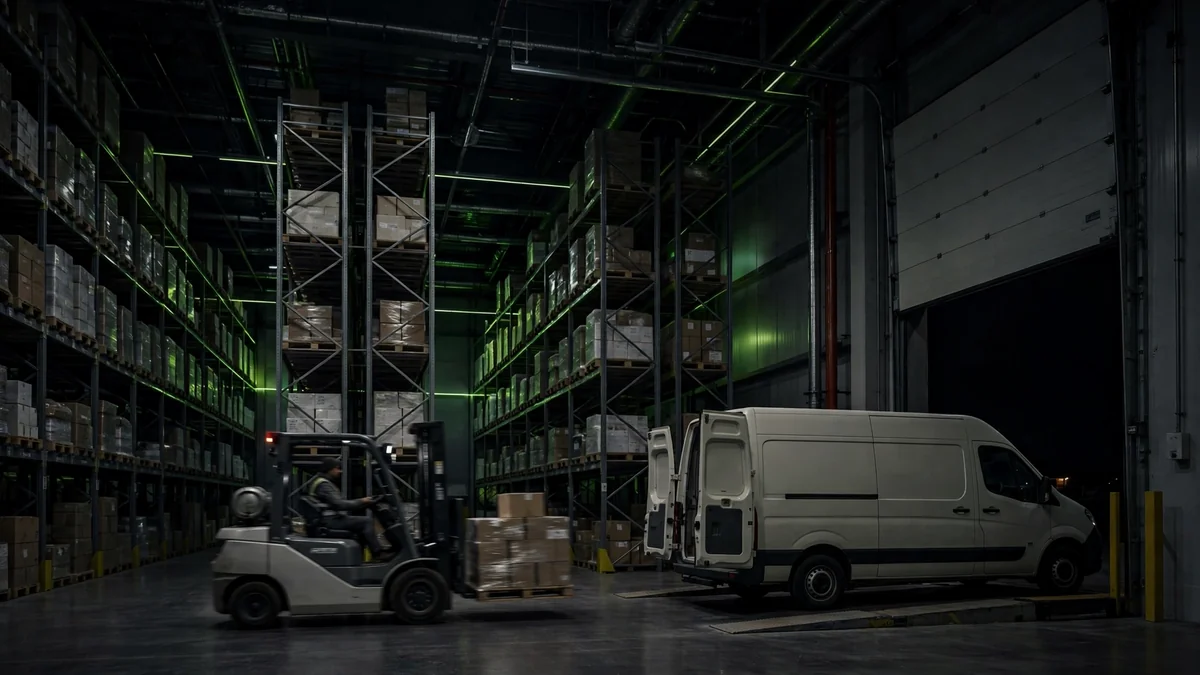
Warehouses are the second major use. AI forecasts which products will sell, where, and in what quantity, so stock can be placed in the warehouse nearest the customers who will order it. That shortens delivery times and reduces the need for expensive express shipping, but it depends on forecasts that are reviewed and corrected regularly.
Inside the warehouse, AI guides picking and packing. Robots and automated systems can bring shelves to a picker, or carry completed orders to the packing area, cutting walking time and speeding up the work. Vision systems check that the right item went into the right box, catching errors before the parcel leaves. These systems work best for standard, predictable items, and less well for fragile, irregular or high-value goods that need human care.
Layout and staffing also benefit. By analysing order patterns, AI can suggest where to store fast-moving items, how many pickers are needed on a given shift, and when to schedule maintenance on conveyors and sorters. The warehouse manager still decides, but the decision is based on the day’s actual orders rather than last month’s average.
Last-mile delivery and tracking
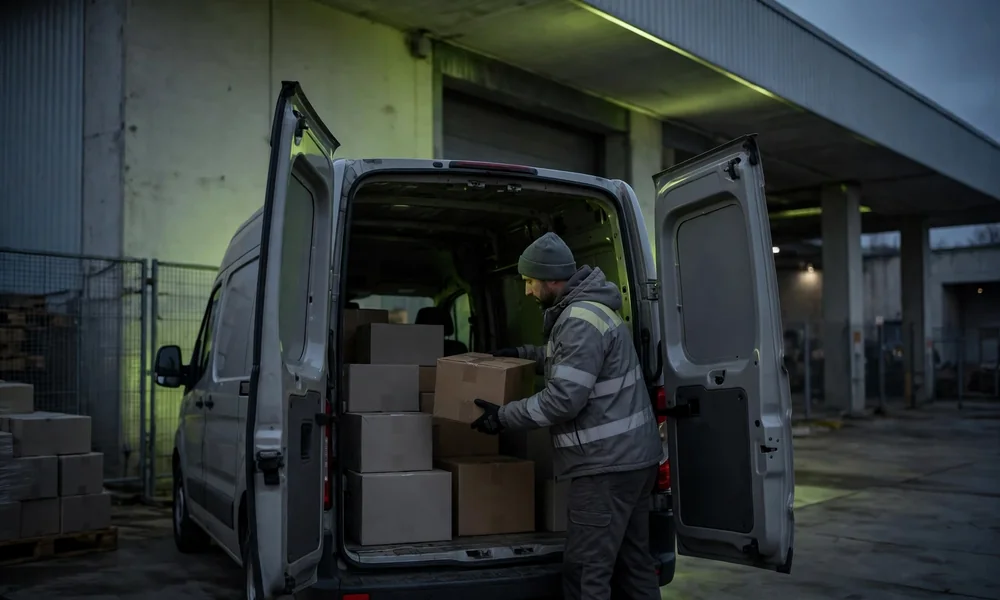
The last mile, from a local depot to the customer’s door, is the most expensive and most visible part of delivery. It involves many small stops, narrow streets, flats, missed deliveries and redelivery attempts, all of which cost time and fuel. AI helps by grouping stops sensibly, choosing the order that minimises backtracking, and giving customers a realistic time window rather than a vague promise.
Tracking has changed customer expectations. Shoppers now expect to see where a parcel is and when it will arrive, and to change a delivery slot or redirect a parcel while it is on its way. AI turns location, traffic and route data into an estimated arrival time that updates as the driver moves, and flags parcels that are likely to miss their promised window early enough to act.
Failed deliveries remain a problem no model can solve alone. A customer who is out, an address that is incomplete, or a building with no clear entrance will defeat even the best route. The best operators combine AI routing with clear customer communication, safe-place instructions and nearby collection points, so a missed delivery becomes a minor inconvenience rather than a failed order.
Comparing the main uses of AI in logistics
| Use | Main benefit | Main risk | Best for |
|---|---|---|---|
| Route planning | Shorter, cheaper routes | Bad traffic or address data | Multi-drop delivery fleets |
| Demand forecasting | Right stock in the right place | Forecasts still go wrong | Seasonal and fast-moving goods |
| Warehouse automation | Faster picking and packing | High setup and maintenance cost | Standard, high-volume items |
| Delivery tracking | Accurate arrival estimates | Depends on every carrier’s data | Customer-facing parcel delivery |
| Fleet maintenance | Fewer breakdowns on the road | False alerts if sensors are poor | Large fleets with telematics |
Data, cost and sustainability
Data quality decides whether logistics AI works. Addresses must be accurate and complete, stock records must match what is actually on the shelf, and traffic data must be current. A model trained on clean data will plan well; one trained on records that list a parcel as delivered when it was returned will learn the wrong lessons. Operators who audit their data first get far better results.
Cost is a real consideration, especially for smaller operators. Routing software, warehouse systems, sensors and integration work all add up, and the return may take months to appear. Many firms start with one depot or one fleet, measure fuel, time and failed deliveries before and after, and expand only when the numbers justify it. Cloud-based routing tools have lowered the entry cost for smaller fleets.
Sustainability is a growing reason to adopt AI in logistics. Better routes mean less fuel and fewer miles, fuller vehicles mean fewer trips, and better forecasting means less wasted stock. Our guide to sustainable AI covers the wider question of AI’s own energy use. For logistics, the savings from fewer miles usually outweigh the computing cost, but operators should measure both.
People, safety and the limits of automation
Drivers and warehouse staff remain central to every successful system. A driver knows which streets are hard to park in, which customers need extra time, and which building entrances are misleading, and a route that ignores that knowledge will frustrate the person who has to drive it. The best operators collect driver feedback, let drivers flag bad routes, and update the system with what they learn.
Safety must come first. AI can monitor driving, warn about tiredness and flag risky behaviour, but it must be used openly, with drivers told what is monitored and why. It should support safe driving, not punish drivers for delays caused by traffic or customers. In warehouses, robots and people must be separated or carefully coordinated, with clear rules about who goes where and when.
There are also limits to what AI can do. It cannot negotiate with a customer, calm an angry recipient, or make a judgement call about a damaged parcel that falls between the rules. Those decisions belong to people, and a logistics operation that tries to automate them away will lose the trust of its customers and its staff. Our guide to AI agents in production explains how autonomous systems are monitored so that a human can step in when they go wrong.
Logistics checklist
- Pick one clear problem first, such as late deliveries on one route, and measure the baseline.
- Audit address, stock and traffic data before buying any AI software.
- Pilot routing or forecasting in one depot, prove the result, then expand.
- Give customers realistic time windows, and update them as the driver moves.
- Collect driver and warehouse feedback, and fix routes that staff flag as wrong.
- Keep a human route for exceptions, damaged parcels and unhappy customers.
- Track fuel, miles and failed deliveries, not only the model’s own scores.
- Use AI openly with drivers, and keep safety rules separate from performance monitoring.
- Review forecasts regularly, and keep safety stock for key products.
Frequently asked questions
What is AI in logistics?
It is the use of machine learning and related tools to move goods, mainly for route planning, demand forecasting, warehousing, delivery tracking and fleet maintenance. It learns from delivery, stock, traffic and vehicle data to plan better and update plans as conditions change.
Will AI replace delivery drivers?
No, not in the foreseeable future for most deliveries. AI plans routes and gives arrival estimates, while drivers handle parking, access, customers and the many small problems that arise at the door. Roles change, but drivers remain essential.
How much does AI in logistics cost?
It varies widely, from a cloud routing tool for a small fleet to a warehouse automation project. Most operators start with one depot or fleet, measure fuel, time and failed deliveries, and expand only when the result justifies the spend.
What data does logistics AI need?
It needs accurate addresses, stock records, delivery history, traffic data and vehicle information. Clean, current data matters more than the choice of model, and poor data is the most common reason projects fail.
Can small delivery firms use AI?
Yes. Cloud-based routing, tracking and forecasting tools have lowered the entry cost, and a small firm can pilot one tool on one route without a large project. Starting with a single clear problem is the safest approach.
Does AI make deliveries greener?
It can, by cutting miles, filling vehicles better and reducing wasted stock. The savings should be measured honestly, including the energy the AI systems themselves use, rather than assumed.
The bottom line
AI in logistics explained in one line is this: it turns delivery, stock and traffic data into shorter routes, steadier stock and more honest arrival times, but only when the data is clean, the pilot is small and the drivers and warehouse staff who live with the plan help shape it. Start with one problem, prove the result, and build from there.