Edge AI explained simply is this: it is artificial intelligence that runs on the device itself, rather than in a distant data centre. When your phone unlocks with your face, or a security camera spots a person without sending video to the cloud, edge AI is doing the work locally.
The central question is straightforward. Why run AI on a small device when powerful cloud servers are available? The answer is that local processing is faster, works without a connection, keeps sensitive data on the device, and avoids sending large amounts of raw data back and forth. For many uses, those advantages outweigh the limits of smaller hardware.
Key takeaways
- Edge AI runs inference on the device, while the cloud is used mainly for training and heavier work.
- It wins on speed, offline operation, privacy and bandwidth, but loses on raw compute power.
- Models for the edge are compressed and optimised to fit limited memory, power and cooling.
- The best use cases need instant responses, work in poor connectivity, or handle sensitive data.
What edge AI actually means
The word edge refers to the edge of a network, where data is created: phones, cameras, cars, factory machines, wearables and sensors. Edge AI means running a trained machine learning model at that edge, on the device that collected the data, instead of sending the data to a server for processing.
It helps to separate training from inference. Training is the heavy work of teaching a model, which usually happens in the cloud on powerful hardware with large datasets. Inference is the lighter work of using a trained model to make a prediction, and that is the part that moves to the edge.
A phone that recognises your face is a good example. The model was trained in the cloud, but the phone runs it locally every time you look at the screen. Your face data never needs to leave the device, and the unlock works even with no signal.
How on-device inference works
On-device inference follows a short chain. A sensor collects input, such as an image, a sound or a vibration reading. The device prepares that input, feeds it to a model stored in local memory, and the model produces an output, such as a label, a score or a decision. The device then acts on that output, for example by sounding an alert or adjusting a machine.
Because the model lives on the device, the whole chain happens in milliseconds and needs no network round trip. That speed matters when the response is time-critical, such as a car detecting an obstacle or a machine spotting a fault before it causes damage.
Models built for the cloud rarely run unchanged on the edge. They are usually compressed first, using techniques that shrink their size and reduce the calculations they need. The result is a smaller, faster model that gives up a little accuracy in exchange for fitting on limited hardware.
The hardware behind edge AI
Edge AI runs on a wide range of hardware, from the processor in a phone to dedicated chips in cameras and industrial equipment. Modern smartphones include specialised neural processing units, designed to run machine learning tasks efficiently without draining the battery. Many laptops now include similar accelerators.
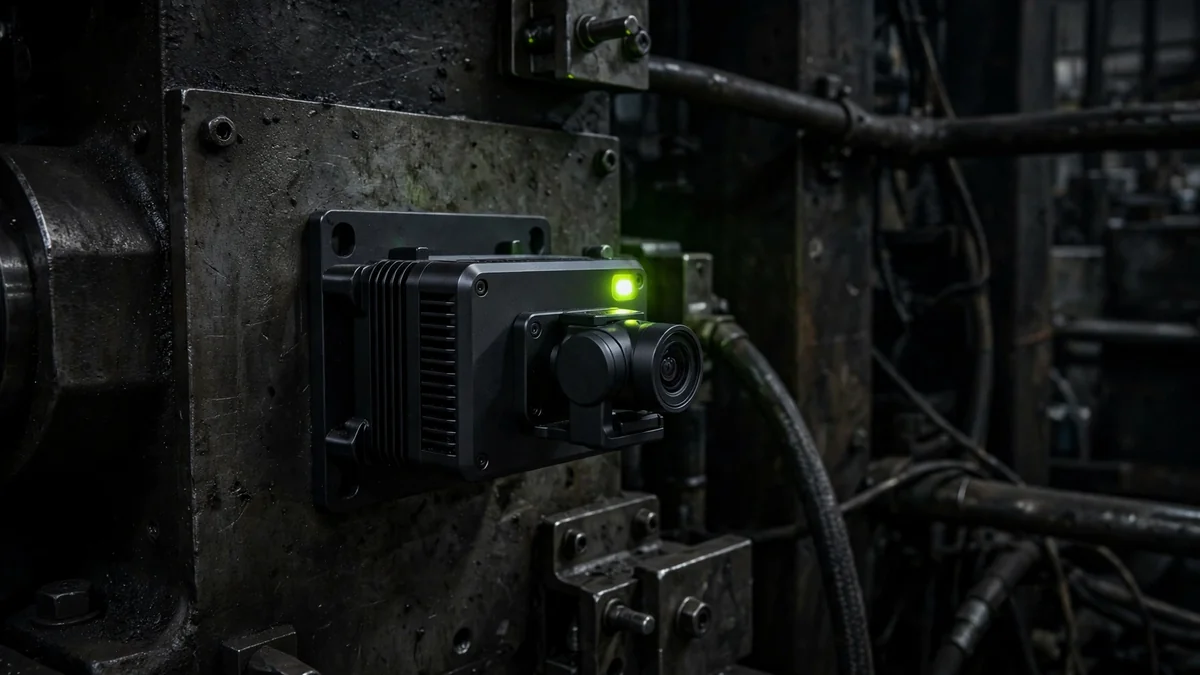
Beyond consumer devices, there are single-board computers and dedicated edge modules built for factories, vehicles and retail. These are designed to run continuously in difficult conditions, with limited power and cooling, and they often include hardware for cameras and other sensors.
The most powerful AI hardware still lives in data centres. A Nvidia Blackwell guide describes the kind of data-centre GPU built for training large models, and the gap between that hardware and a phone chip explains why training stays in the cloud. Understanding CUDA explained also helps, because it is the software platform that lets developers use Nvidia GPUs for AI work, whether in training or in larger edge systems.
Edge AI versus cloud AI
Edge and cloud AI are not rivals; they solve different parts of the same problem. The cloud offers far more compute, memory and storage, and it can run the largest models. The edge offers speed, independence from connectivity, and data that stays local. Most real systems use both, splitting work according to what each side does best.
A common pattern is to train in the cloud, deploy a compressed model to the edge, and send only selected results back. A camera might analyse video locally and send an alert, plus a short clip, only when it detects something worth reporting. That keeps bandwidth low while still letting the cloud store, review and learn from the important events.
Another pattern is to use the edge for immediate decisions and the cloud for deeper analysis. A factory sensor can stop a machine instantly when it detects a fault, while the cloud analyses weeks of sensor data to predict when the next fault is likely. Neither side alone would cover both needs.
| Factor | Edge AI | Cloud AI |
|---|---|---|
| Response time | Very fast, no network round trip | Slower, depends on connection |
| Connectivity | Works offline | Needs a reliable connection |
| Privacy | Data stays on the device | Data leaves the device |
| Compute power | Limited by device hardware | Very large, scalable |
| Best for | Instant, local decisions | Training and heavy analysis |
Where edge AI wins
Edge AI wins wherever a fast local response matters. In vehicles, it powers driver assistance features that cannot wait for a server reply. In factories, it spots defects on a production line in real time and flags them before more faulty items are made. In healthcare, it lets wearable devices monitor vital signs and raise alerts without a constant connection.
It also wins where connectivity is poor or unreliable. Farms, mines, ships and remote industrial sites often have limited bandwidth, and sending every sensor reading to the cloud would be slow and expensive. Processing locally means the system keeps working regardless of the connection.
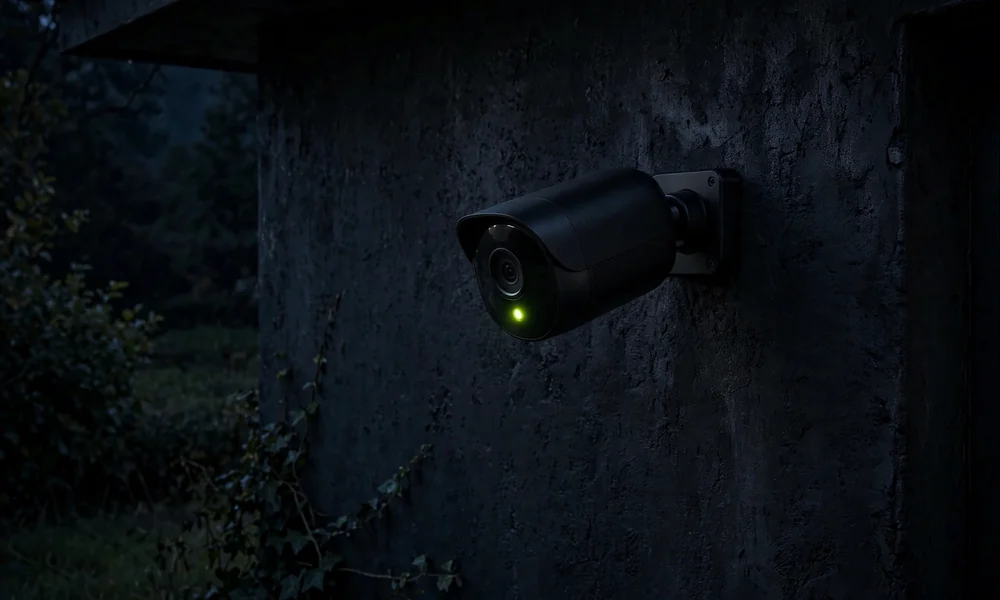
Privacy is a third area where the edge has a clear advantage. A camera that analyses video locally and only reports that a person was detected shares far less personal data than one that streams raw footage to a server. The same logic applies to voice assistants that process wake words on the device, and to health devices that analyse sensitive readings without uploading them.
The limits of edge AI
Edge AI has real limits, and honest planning starts with them. The first is compute: a device has far less processing power, memory and storage than a data centre, so it can only run smaller models. Tasks that need the largest language models, or that involve huge datasets, still belong in the cloud.
The second limit is power and heat. A battery-powered device must balance AI work against battery life, and a device in a sealed enclosure has limited cooling. Models that run continuously must be efficient, or the device will drain its battery or overheat.
The third limit is updating and managing many devices. A cloud model can be updated once, for everyone. An edge fleet may contain thousands of devices in different places, each needing its model updated, tested and monitored. That operational work is often the hardest part of an edge AI project, and it is easy to underestimate.
How models are made ready for the edge
Preparing a model for the edge usually involves three steps. The first is choosing a smaller architecture, designed for limited hardware rather than adapted from a large model as an afterthought. Mobile-focused architectures are built with efficiency in mind from the start.
The second step is compression. Quantisation reduces the precision of the numbers in a model, so it takes less memory and runs faster, with only a small loss of accuracy. Pruning removes connections that contribute little to the result. Both techniques are widely used, and both need testing to confirm the compressed model still performs well enough.
The third step is testing on the actual device. A model that runs well in a simulator may behave differently on real hardware, with different speeds, power use and accuracy. Teams that test early on the target device avoid unpleasant surprises late in a project, when changing the model is expensive.
Checklist: is edge AI right for your project?
- Your application needs a response in milliseconds, not seconds.
- It must keep working when the network is slow or unavailable.
- It handles sensitive data that should stay on the device.
- Sending all raw data to the cloud would use too much bandwidth or cost too much.
- A compressed model can meet your accuracy target on the target hardware.
- You have a plan for updating models across the whole device fleet.
- You have tested the model on the actual device, not just in a simulator.
- You have a fallback for when the edge model is uncertain, such as sending the case to the cloud.
Frequently asked questions
What is edge AI?
Edge AI is artificial intelligence that runs on the device where data is created, such as a phone, camera or sensor, rather than in a cloud data centre. The model is usually trained in the cloud and deployed to the device for inference.
How is edge AI different from cloud AI?
Cloud AI runs on powerful servers in a data centre and can handle the largest models, but it needs a network connection and adds delay. Edge AI runs locally, so it is faster, works offline and keeps data on the device, but it is limited by the device’s hardware.
What devices use edge AI?
Smartphones, security cameras, cars, factory machines, wearables, drones and smart home devices all use edge AI. Any device that needs to make a quick decision from sensor data is a candidate.
Does edge AI work without the internet?
Yes, for inference. Once the model is on the device, it can make predictions with no connection. An internet connection is still usually needed to download the model, send updates, or report selected results to the cloud.
Is edge AI more private than cloud AI?
Usually, yes. Data processed on the device does not need to be sent to a server, which reduces exposure. The device still needs good security, because a stolen or compromised device could expose the data and the model stored on it.
What are the main challenges of edge AI?
The main challenges are limited compute, memory and power on the device, keeping compressed models accurate enough, and managing updates across a large fleet of devices in different locations.
The bottom line
Edge AI is not a replacement for cloud AI. It is a way of putting intelligence where the data is created, so that decisions happen quickly, offline and privately, while the cloud handles training, heavy analysis and long-term learning. The two work best together, with each doing the job it is suited to.
Before building, be honest about the limits: a small device can only run a small model, and managing a fleet of devices is real work. If your use case needs instant responses, offline operation or local privacy, and a compressed model meets your accuracy target on real hardware, edge AI is the right choice.