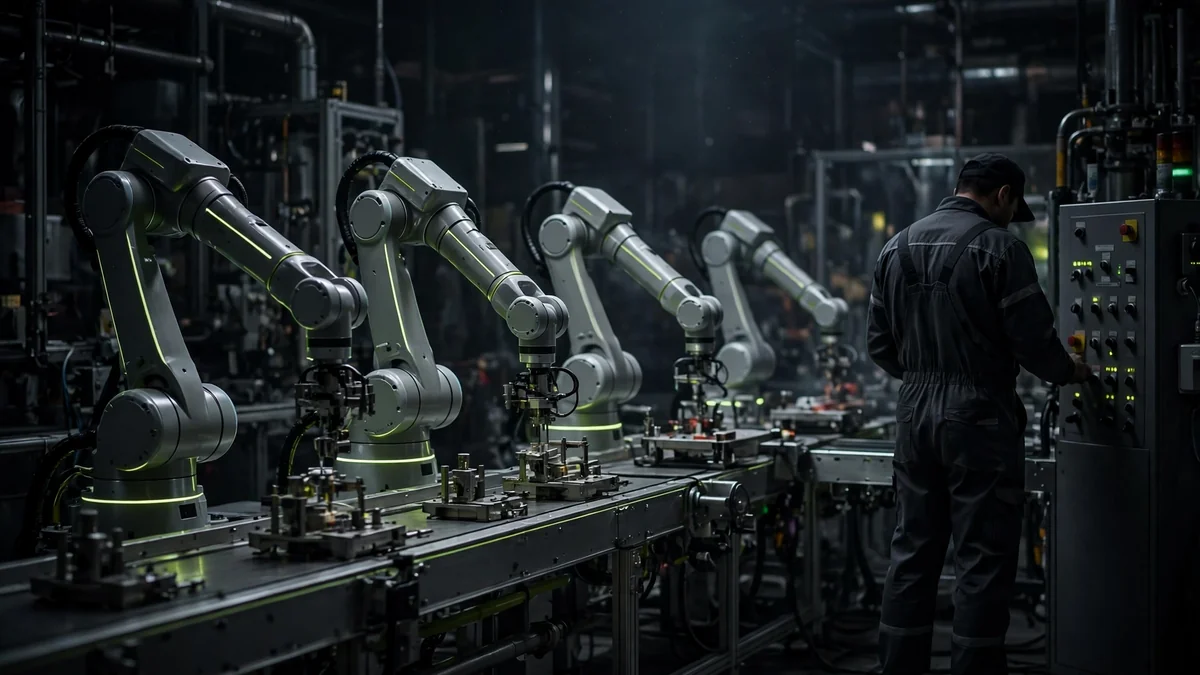
AI in manufacturing explained simply is this: artificial intelligence helps factories predict breakdowns, spot defects, plan production and run robots more flexibly than fixed automation ever could. The central question is whether it genuinely improves output, and the short answer is that it can, when it is built on clean sensor data and clear processes, and when workers stay in charge of the decisions that matter.
Factories have used automation for decades, from conveyor belts to programmable robots that repeat one task thousands of times a day. AI adds judgement to that automation: it learns from vibration, temperature, images and production records, then flags problems a fixed rule would miss. This guide explains what AI does on the factory floor today, where it pays off, and where it does not.
Key takeaways
- Predictive maintenance is the most proven use: AI spots early signs of wear before a machine fails.
- Computer vision inspects products faster and more consistently than the human eye, but it needs good training images.
- AI planning helps factories adapt to changing orders, supply delays and energy prices.
- Bad sensor data, poor integration and unrealistic expectations are the common reasons projects stall.
- Workers remain essential: AI suggests and flags, while people decide, fix and improve the process.
What AI in manufacturing actually means
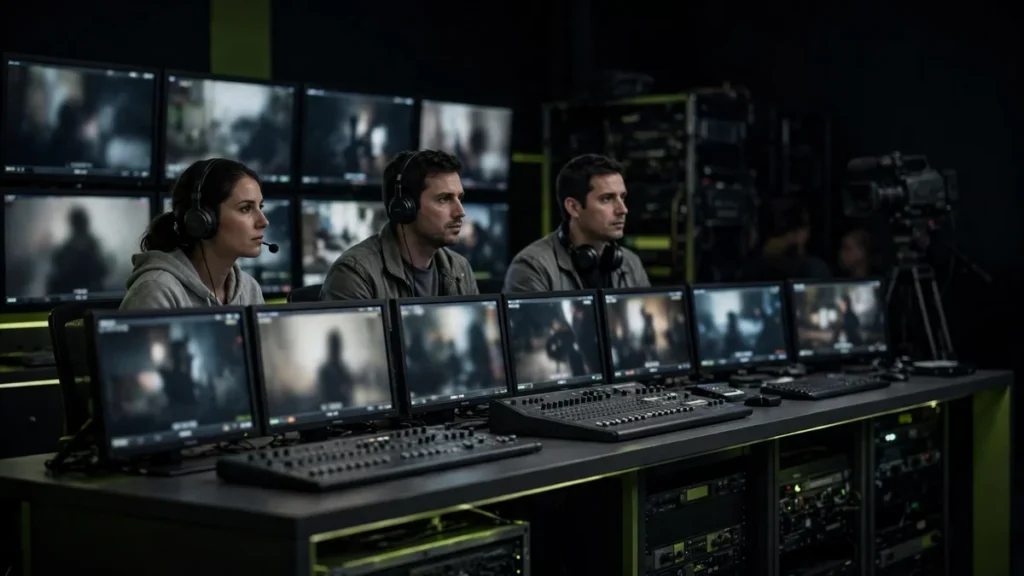
Most factory AI runs on machine learning, trained on data the plant already collects. Sensors measure vibration, heat, pressure and power use; cameras capture images of parts; production systems record orders, batches and downtime. A model learns the patterns of normal operation, then highlights anything unusual.
That is different from traditional automation, which follows a fixed programme or trips when a single value crosses a set limit. AI looks at many signals together, so it can notice a slow drift across several sensors long before a single threshold is crossed.
The technology also includes newer tools. Digital twins are virtual models of a line or a whole plant, updated with live data, that let engineers test changes without stopping production. Collaborative robots, often called cobots, work alongside people rather than behind safety fences, and AI helps them adapt to varied tasks. Our guide to AI agents in production explains how autonomous software fits into this picture.
Predictive maintenance
Predictive maintenance is the use case factories trust most, because the problem is clear and the payoff is easy to see. Unplanned downtime stops a line, wastes material and forces rush repairs, while routine servicing on a fixed schedule replaces parts that may still have months of life left. AI offers a middle path: service a machine when its condition says it needs it.
The system learns what healthy operation looks like for each machine. Vibration sensors on a motor produce a characteristic pattern, and a gradual change can signal bearing wear, imbalance or misalignment. When the model sees a pattern it associates with impending failure, it raises an alert with a suggested time window for inspection.
Getting this right takes more than a model. Sensors must be fitted correctly and kept calibrated, data must be labelled with real maintenance records, and alerts must be specific enough that engineers act on them. A system that cries wolf every week will be ignored, while one that misses a genuine fault will lose trust quickly. The best results come from starting with one critical machine, proving the alerts are accurate, and only then expanding.
Quality control and computer vision
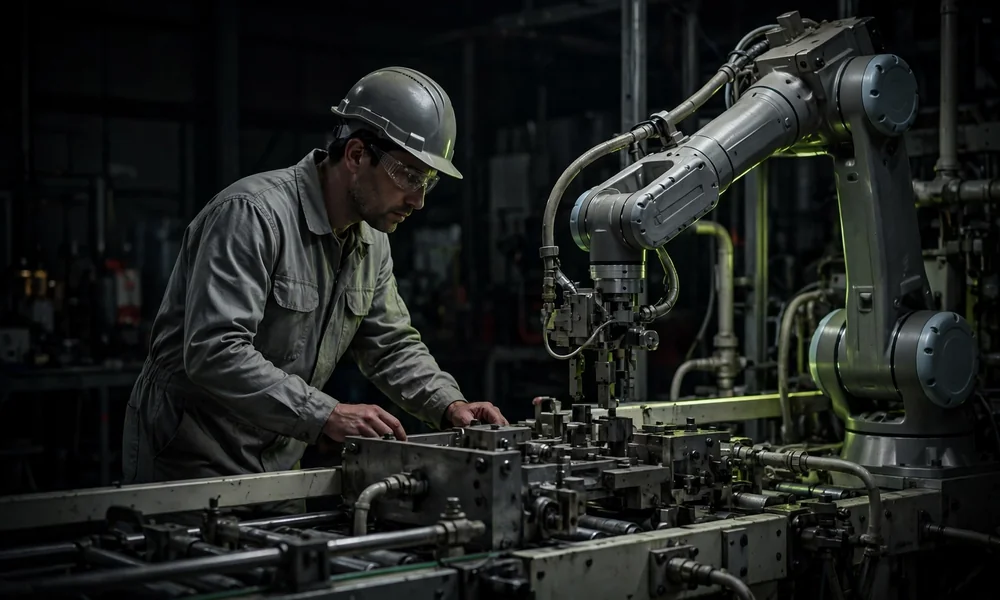
Quality inspection is the second major use. Cameras above a conveyor can photograph every part, and a vision model can check for cracks, scratches, missing components, wrong labels and incorrect assembly. Unlike a human inspector, it does not tire, lose focus or vary from shift to shift, and it can work at line speed.
The result depends entirely on the training data. A model trained only on good parts and one type of defect will miss new faults, and one trained in bright light may fail under different lighting. Factories therefore collect images of real defects, including rare ones, and keep retraining as products change.
Vision systems also need careful handling at the edges. A part that is slightly out of position, dusty or wet can look like a defect to the camera. Good installations combine the camera with clear handling rules, and send borderline cases to a human inspector rather than rejecting them automatically. That keeps false rejects low and protects the relationship with customers who receive the parts.
Production planning and scheduling
Planning is where AI helps factories cope with change. Orders arrive unevenly, suppliers deliver late, machines go down and energy prices move during the day. A fixed weekly plan cannot keep up, so planners spend much of their time firefighting instead of improving the operation.
AI planning tools take in orders, stock levels, machine availability, staffing and delivery dates, then suggest a schedule that balances speed, cost and reliability. When a delay occurs, the system can propose a revised plan in minutes rather than hours, showing the trade-offs of each option. The planner still chooses, but the choice is informed rather than guessed.
Demand forecasting is a related use. By combining past sales, seasonal patterns and promotions, a model can estimate future demand more accurately than a simple average. That reduces both overproduction and stockouts, though forecasts still go wrong, so factories keep safety stock for key products and review the forecast regularly.
Robots, cobots and the smart factory
Robots have been part of manufacturing for decades, but AI makes them more flexible. A traditional robot needs precise programming for one task and one product, so changing the product means reprogramming. An AI-guided robot can use vision to locate parts that are not in exactly the same place each time, and can learn new tasks from demonstration rather than code alone.
Cobots extend this flexibility to smaller operations. They are designed to work safely near people, handling repetitive lifting, sorting and assembly while a worker does the skilled part of the job. In small and medium factories, where volumes are lower and products change often, cobots are often the first step into AI-assisted automation.
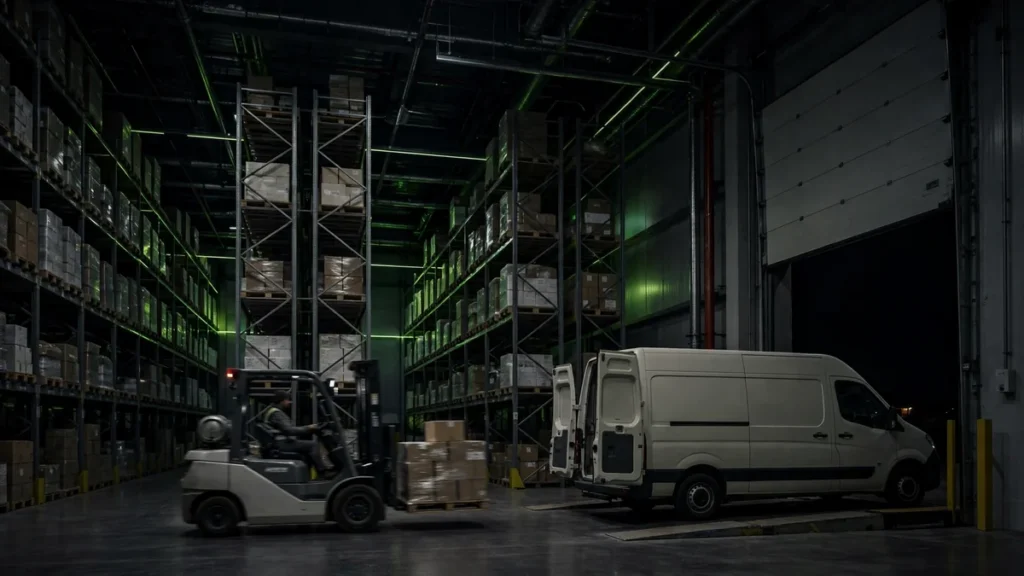
The smart factory brings these pieces together. Machines, sensors, robots and planning systems share data through a connected network, so a change in one place is visible everywhere. Our guide to edge AI explains why much of this processing happens on the factory floor itself, close to the machines, rather than in a distant data centre. Latency, reliability and data privacy all favour local processing for time-critical decisions.
Comparing the main uses of AI in factories
| Use | Main benefit | Main risk | Best for |
|---|---|---|---|
| Predictive maintenance | Fewer unplanned stoppages | False alerts if data is poor | Critical machines with sensor history |
| Vision inspection | Consistent checks at line speed | Misses new or rare defects | High-volume, visually checkable parts |
| Production planning | Faster replanning after delays | Relies on accurate input data | Plants with variable orders |
| Demand forecasting | Less overstock and fewer stockouts | Forecasts still go wrong | Products with clear seasonal patterns |
| Cobots and flexible robots | Handles varied, repetitive tasks | Needs careful safety setup | Small-batch and mixed-product lines |
Data, integration and cost
Data is the foundation, and it is also the most common stumbling block. Many factories hold data in separate systems that do not talk to each other: machines from different makers, old control systems, spreadsheets and paper records. Before AI can help, that data must be collected, cleaned and connected, which is often the largest part of a project.
Integration matters just as much. A new tool that cannot read data from a twenty-year-old machine, or send alerts into the maintenance system engineers already use, will sit unused. Successful projects start by mapping what exists, then choose tools that fit the plant.
Cost is a real consideration. Sensors, cameras, software licences, integration work and training all add up, and the return may take months to appear. Factories that succeed usually start small, measure the result in downtime saved or defects avoided, and use that evidence to justify the next step.
Energy, sustainability and safety
AI can also help factories use less energy and produce less waste. Models can tune heating, cooling and compressed-air systems to actual need rather than running them at full power all day, and can spot processes that waste material. Our guide to sustainable AI covers the wider question of AI’s own energy use, which factories should weigh against the savings it delivers.
Safety improves when AI watches for hazards, but only with clear limits. Vision systems can check protective equipment or warn when someone enters a dangerous zone, and sensors can detect overheating early. These systems must be designed with workers, not imposed on them, and must never replace the basic safety measures a plant must maintain.
Workers themselves are central to every successful project. The factories that gain most involve operators and maintenance staff from the start, train them to understand what the AI does and does not do, and listen when they say an alert is wrong. An operator who has run a machine for ten years often knows its quirks better than any model, and the best systems combine that knowledge with the data.
Factory checklist
- Pick one clear problem first, such as downtime on a critical machine, and measure the baseline.
- Check sensor coverage and data quality before buying any AI software.
- Start with a small pilot on one line, prove the result, then expand.
- Involve operators and maintenance staff in design, testing and training.
- Send borderline inspection cases to a human rather than rejecting them automatically.
- Connect AI alerts into the maintenance system staff already use.
- Keep retraining vision models as products, materials and lighting change.
- Review forecasts and schedules against reality, and keep safety stock for key products.
- Track energy use and waste, and weigh AI’s own power demand against the savings.
Frequently asked questions
What is AI in manufacturing?
It is the use of machine learning and related tools in factories, mainly for predictive maintenance, quality inspection, production planning, demand forecasting and flexible robotics. It learns from sensor, image and production data to spot problems and suggest better decisions.
Will AI replace factory workers?
No, not in the plants where it works well. AI takes over repetitive checking and monitoring, while people handle repairs, judgement calls, improvement work and tasks that vary too much for a machine. Roles change, but skilled workers remain essential.
How much does AI in manufacturing cost?
It varies widely with the size of the plant and the use case, from a single sensor and software pilot to a plant-wide system. Most factories start with a small pilot, measure downtime or defects saved, and expand only when the result justifies the spend.
What data does factory AI need?
It needs reliable sensor readings, images of good and defective parts, maintenance records and production data. Clean, labelled, connected data matters more than the choice of model, and poor data is the most common reason projects fail.
Can small factories use AI?
Yes. Cobots, cloud-based vision tools and off-the-shelf predictive maintenance software have lowered the entry cost. A small factory should still start with one clear problem and a pilot, rather than trying to automate everything at once.
Is AI in manufacturing safe?
It can improve safety by spotting hazards early, but it must be set up carefully, with workers involved and basic safety measures kept in place. AI should support safety procedures, never replace them.
The bottom line
AI in manufacturing explained in one line is this: it turns the data factories already collect into earlier warnings, steadier quality and more flexible planning, but only when the data is sound, the pilot is small and the people on the floor stay in charge. Start with one problem, prove the result, and build from there.