Edge computing explained in one sentence: it moves data processing closer to where the data is created, instead of sending everything to a distant central cloud. The central question is why that move matters. The answer is speed, bandwidth and reliability — processing locally cuts the round trip to a faraway data centre, which matters whenever milliseconds, connectivity or data volume make the central cloud the bottleneck.
That shift is already visible in everyday life. A security camera that recognises a person on the device, a factory sensor that stops a machine before it fails, and a self-driving car that must react in real time all depend on local processing, because waiting for a distant server would be too slow or too fragile. The cloud has not gone away — it still handles training, storage and coordination — but the edge now does the work that cannot wait.
Key takeaways
- Edge computing processes data near its source, cutting latency, saving bandwidth and working through connectivity gaps.
- It complements the cloud rather than replacing it: the edge handles real-time decisions, the cloud handles heavy analysis and long-term storage.
- The main use cases are industrial IoT, autonomous vehicles, retail, healthcare and content delivery.
- Edge brings real challenges — managing many distributed devices, securing them and keeping software consistent across them.
What is edge computing?
Edge computing is a distributed computing model in which processing happens at or near the source of data — on the device itself, on a local gateway, or in a small facility close to the user — rather than in a centralised data centre hundreds or thousands of miles away. The “edge” is simply the boundary between the physical world and the digital one: the factory floor, the shop, the vehicle, the hospital ward.
The model exists because the old assumption — that all data should travel to the cloud — breaks down at scale. A modern factory can generate terabytes of sensor data a day, a fleet of vehicles can generate far more, and sending all of it to a central cloud costs bandwidth, adds delay and creates a single point of failure. Processing locally means only the useful results, alerts and summaries need to travel, which is cheaper, faster and more resilient.
Best for: any workload where the data is created far from the cloud, in large volumes, or under strict time pressure.
How edge computing works
A typical edge system has three layers. At the bottom are the devices themselves — sensors, cameras, machines and vehicles that generate data. In the middle are edge nodes: gateways, local servers or small clusters that filter, analyse and act on that data.
At the top sits the cloud, which receives summaries, retrains machine learning models, stores long-term data and coordinates the whole fleet.
The flow is straightforward. A sensor produces a reading, the edge node decides whether it matters, and only the meaningful result travels onward. A vibration sensor on a production line, for example, might sample thousands of readings a second, but the edge node only sends an alert when the pattern suggests a bearing is failing.
The cloud later uses those alerts to improve the model, and pushes the improved model back down to the edge. This loop — local action, central learning — is the heart of the architecture.
Best for: systems that need immediate local decisions plus central coordination and learning over time.
Edge, cloud and fog: how the terms relate
Three terms are often confused, so it helps to separate them. Cloud computing is centralised: processing happens in large data centres, and users connect over the internet. Edge computing is decentralised: processing happens near the data source.
Fog computing sits between the two, describing a layer of intermediate nodes — such as a gateway or a local network of devices — that extends cloud services toward the edge without being as close as the device itself.
In practice, the boundaries blur, and most real systems combine all three. A content delivery network, for instance, is an early form of edge computing: it caches video and web content on servers close to viewers, so the content loads fast without travelling from a central origin. Modern edge platforms such as Cloudflare Workers, AWS Wavelength and Azure’s edge services extend the same idea to running code, not just serving files.
Our guide to cloud computing explains the centralised model that edge architecture builds on.
Best for: understanding architecture discussions, where the three terms describe positions on a spectrum rather than rival technologies.
Why edge computing matters: the four drivers
Latency is the first driver. Every round trip to a distant data centre adds delay, and for applications such as industrial control, augmented reality or autonomous vehicles, that delay can make the application unusable or unsafe. Processing locally removes most of the round trip, leaving only the short hop to a nearby node.
Bandwidth is the second. Sending every raw video frame or sensor reading to the cloud is expensive and often unnecessary. Filtering at the edge can reduce the data that travels by orders of magnitude, which matters when connectivity is metered, congested or slow.
Reliability is the third: an edge system can keep working when the internet connection drops, which is essential for a factory, a remote site or a vehicle. Privacy is the fourth, since data that never leaves the premises cannot leak in transit, which helps with regulations that restrict where personal data may be processed.
Best for: applications where any one of these four drivers — latency, bandwidth, reliability or privacy — is a hard constraint rather than a nice-to-have.
Where edge computing is used
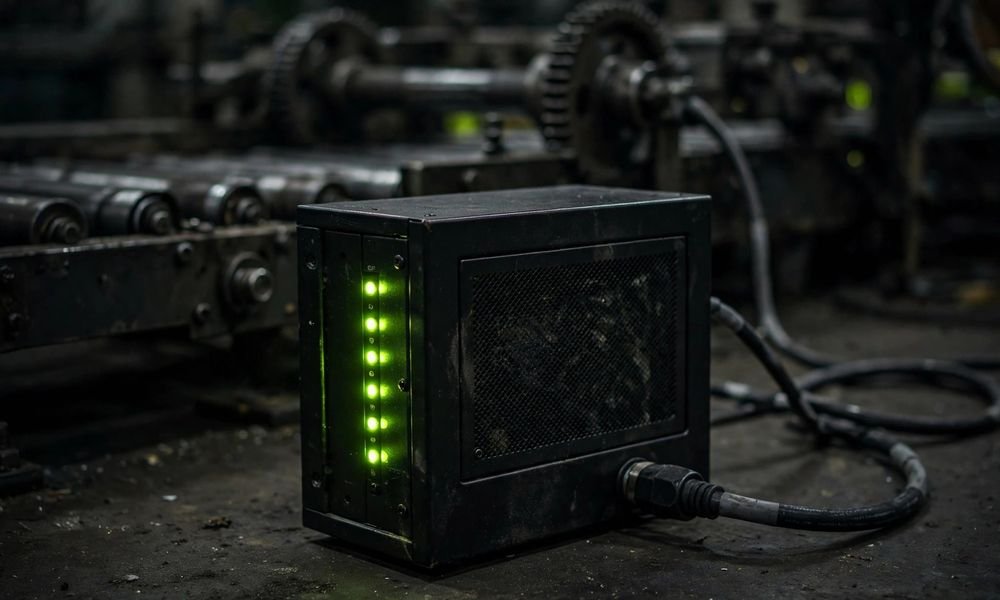
Manufacturing is one of the clearest use cases. Sensors on production lines monitor vibration, temperature and pressure, and edge systems detect anomalies in real time, stopping a machine before a fault becomes a breakdown. This kind of predictive maintenance saves downtime and waste, and it cannot wait for a cloud round trip.
Autonomous vehicles are another. A self-driving car must react to its surroundings in a fraction of a second, so perception and decision-making happen on board, with the cloud used for mapping updates, fleet coordination and model training. Retail uses edge computing for real-time inventory, self-checkout and personalised displays, while healthcare uses it for patient monitoring devices and imaging equipment that must work even when connectivity is poor.
Content delivery and gaming round out the picture. Streaming services cache content at the edge so viewers get fast playback, and cloud gaming providers run game sessions on edge servers close to players to keep input delay low. In each case the pattern is the same: the urgent work happens locally, and the cloud handles what can wait.
Best for: industrial IoT, vehicles, retail, healthcare and media — anywhere the physical world meets the network.
Edge versus cloud: a direct comparison
| Factor | Edge computing | Cloud computing |
|---|---|---|
| Latency | Very low — processing near the source | Higher — round trip to a data centre |
| Bandwidth use | Low — only results travel | High — raw data travels |
| Works offline | Yes, for local decisions | No, needs connectivity |
| Compute power | Limited per node | Virtually unlimited |
| Storage | Small, short-term | Large, long-term |
| Management effort | High — many distributed devices | Lower — centralised |
| Cost pattern | Hardware and maintenance spread out | Pay-as-you-go, centralised |
The table shows why the two are complements, not competitors. Edge wins on latency, bandwidth and offline operation; the cloud wins on raw power, storage and ease of management. Sensible architectures use both, and our guide to edge AI inference architecture shows how machine learning models are split between the two in practice.
The challenges of going to the edge
Edge computing is not free of problems. The first is management: instead of a handful of data centres, you may have hundreds or thousands of devices spread across sites, each needing software updates, monitoring and troubleshooting. Tools for fleet management and remote updates are essential, and they need to work over unreliable connections.
Security is the second challenge. Every edge device is a potential entry point, and many sit in physically accessible locations such as shops and factory floors. Devices need encrypted storage, secure boot, regular patching and a way to be revoked if compromised.
Consistency is the third: keeping software, models and configuration in sync across a distributed fleet is harder than updating a single central system. Finally, there is the question of cost. Edge hardware, installation and maintenance add up, and a project that saves cloud bandwidth but spends more on field service has not saved anything.
Best for: teams that go in with eyes open — edge projects succeed when the operational cost is planned, not discovered.
Deciding whether edge computing fits: a checklist
Work through these questions before committing to an edge architecture. If most answers are yes, the edge is probably the right call.
- Does the application need a response faster than a cloud round trip allows?
- Is the volume of raw data too large or too expensive to send to the cloud?
- Must the system keep working when the internet connection drops?
- Are there privacy or regulatory reasons to keep data on site?
- Can the workload run on limited local hardware, or does it need heavy compute?
- Is there a plan — and a budget — for managing, updating and securing many distributed devices?
- Is the cloud still handling training, long-term storage and coordination, so the edge stays focused?
- Has a pilot on one site proven the benefit before a wider rollout?
What comes next for edge computing
At the same time, the tools are maturing. Managed edge platforms from the major cloud providers reduce the operational burden, and standardised approaches to device management and model deployment make fleets easier to run. The direction is clear: computing will keep spreading outward, and the skill of designing systems that span cloud and edge will only become more valuable.
For the infrastructure side of that design, see our guide to cloud infrastructure best practices.
Frequently asked questions
What is edge computing in simple terms?
Edge computing means processing data close to where it is created — on a device, a local gateway or a nearby server — instead of sending it to a distant central cloud. It exists to cut delay, save bandwidth and keep systems working when connectivity fails.
Is edge computing replacing cloud computing?
No. Edge and cloud are complementary. The edge handles real-time decisions and local processing, while the cloud handles heavy computation, long-term storage, model training and coordination across many sites.
Most modern systems use both.
What is the difference between edge computing and fog computing?
Fog computing is an intermediate layer between the edge and the cloud — gateways and local networks that extend cloud services toward the data source. Edge computing is the processing that happens closest to the source itself, on the device or a nearby node. In practice the terms overlap and most systems use both.
What are examples of edge computing?
Common examples include factory sensors that detect machine faults, self-driving cars that process sensor data on board, security cameras that recognise people locally, content delivery networks that cache video near viewers, and retail systems that run checkout and inventory locally.
What are the disadvantages of edge computing?
The main disadvantages are management complexity, because many distributed devices must be updated and monitored; security exposure, since devices sit in accessible locations; limited local compute and storage; and the cost of hardware, installation and field maintenance.
Do I need 5G for edge computing?
No. Edge computing works over any connection, including wired networks, Wi-Fi and 4G. 5G helps for mobile and vehicle use cases because it lowers latency and raises bandwidth, but most edge deployments today run on ordinary connectivity.