
AI inference explained in plain terms is the work a trained AI model does when it is actually used: taking an input, such as a question or an image, and producing an answer. The central question is why the same model can feel instant in one product and sluggish in another, and the short answer is that inference is a separate engineering problem from training, with its own trade-offs between speed, cost, accuracy and where the model runs.
Training is the expensive, one-off process of teaching a model. Inference is the everyday process of using what was learned, and it happens millions of times: every chatbot reply, every search result, every photo tag is an inference. A model that is brilliant in training is useless if inference is too slow, too costly, or too unreliable to serve real users. Our guide to large language models explains what a trained model contains and how it generates text.
Key takeaways
- AI inference is what a trained model does when it is used: turning an input into an output, one request at a time.
- Training happens once and is very expensive; inference happens millions of times, so its cost and speed decide whether a product works.
- Latency, throughput, cost and accuracy trade against each other, and the right balance depends on the product.
- Inference can run in the cloud, on a device, or at the edge, and the choice shapes speed, privacy and cost.
- Techniques such as batching, caching, quantisation and smaller models make inference faster and cheaper without retraining.
What AI inference means
Inference is the phase of a model’s life that comes after training. During training, the model adjusts its internal parameters by studying vast amounts of data. During inference, those parameters are frozen, and the model applies what it learned to new inputs. A language model receives a prompt and predicts the next word, over and over, until it has produced a reply. An image model receives a picture and returns a label. A recommendation model receives a user’s history and returns suggestions.
The distinction matters because the two phases have different needs. Training needs enormous computing power for weeks or months, and it happens in a data centre. Inference needs to be fast, cheap and reliable, and it happens wherever users are. A team that designs a model only for training accuracy, without thinking about inference, can end up with a model that works in the lab but cannot be served to users at a reasonable cost.
How inference works
When a request arrives, the model loads its parameters into memory, processes the input through its layers, and produces an output. For a language model, the output is produced one token at a time: the model predicts the most likely next token, adds it to the sequence, and predicts the next one, repeating until it reaches a stopping point. Each token requires a full pass through the model, which is why long replies take longer than short ones.
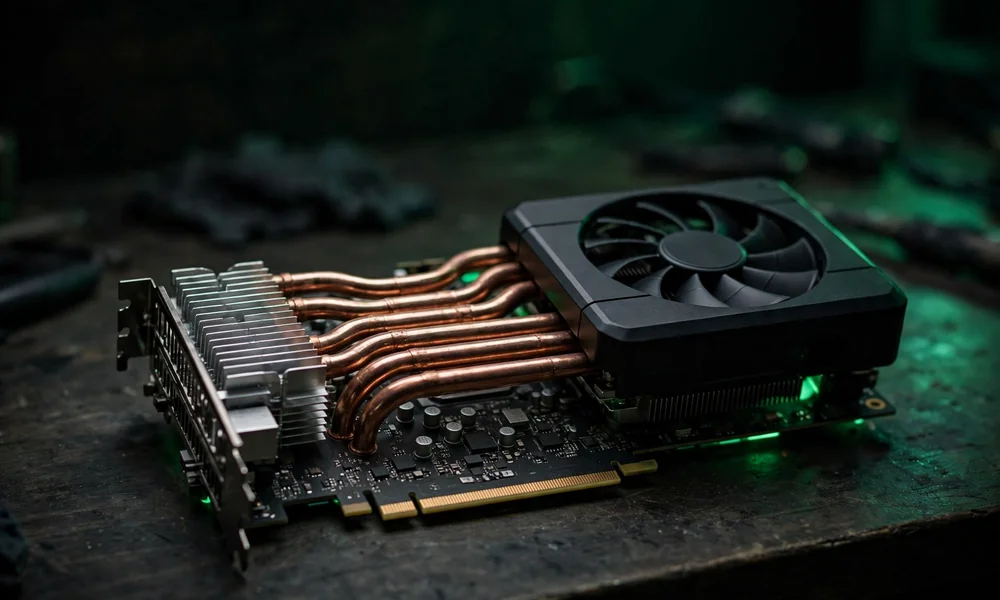
The speed of inference depends on several things. The size of the model matters most: a model with more parameters needs more computation for every token. The hardware matters too: specialised chips designed for inference can run a model far faster than a general-purpose processor. The length of the input matters as well, because the model must process everything it has been given before it can start answering. And the way requests are handled matters: serving many requests together, in a batch, is more efficient than serving them one by one.
Latency, throughput and cost
Three measures define inference performance. Latency is how long one request takes, from the moment it arrives to the moment the answer is complete. For a chatbot, latency decides whether the conversation feels natural; for a fraud check, it decides whether a payment can be approved in time. Throughput is how many requests the system can handle at once. A system with high throughput serves many users cheaply, even if each request takes a little longer.
Cost is what the provider pays for the computing power, and it grows with model size, request volume and latency requirements. The three measures trade against each other. A bigger model may be more accurate, but it is slower and more expensive. Serving requests one at a time gives the lowest latency for a single user, but wastes hardware. Batching requests together improves throughput and cost, but makes each user wait a little longer. There is no single best setting; the right balance depends on what the product needs. Our guide to AI chips explains the hardware that inference runs on.
Comparing where inference runs
| Location | Main benefit | Main risk | Best for |
|---|---|---|---|
| Cloud servers | Handles large models easily | Needs a network connection | Most products |
| On-device | Fast and private | Limited compute available | Phones and wearables |
| Edge servers | Low latency near users | Harder to manage | Factories and vehicles |
| Hybrid split | Balances speed and power | More complex to build | Mixed workloads |
| Serverless inference | No servers to manage | Cold starts add latency | Bursty traffic |
Cloud, device and edge inference
Most inference today runs in the cloud, on servers in a data centre. The cloud can run the largest models, scale up when demand rises, and be updated easily, because the model lives in one place. The cost is latency: every request must travel over the network, and the answer must travel back. For many products that delay is small enough not to matter, and the cloud remains the default choice.
On-device inference runs the model on the user’s own phone, laptop or other device. It is fast, because there is no network round trip, and private, because the input never leaves the device. The limit is compute: a phone cannot run the largest models, so on-device inference uses smaller, specialised models. Edge inference sits between the two, running on servers close to where the data is produced, such as in a factory or a vehicle. It offers low latency without the limits of a single device, but it is harder to manage, because the servers are spread out rather than in one data centre.
Making inference faster and cheaper
Several techniques make inference faster without retraining the model. Batching groups many requests together and processes them in one pass, which uses the hardware far more efficiently. Caching stores the results of repeated requests, so a question asked twice is answered from memory rather than computed again. Quantisation reduces the precision of the model’s numbers, so it uses less memory and runs faster, with only a small loss of accuracy. Distillation trains a smaller model to imitate a larger one, producing a model that is cheaper to run and nearly as capable.
These techniques are often combined, and the choice among them depends on the product. A chatbot that answers the same questions repeatedly benefits most from caching. A service with steady, high-volume traffic benefits most from batching. A product that must run on a phone needs quantisation and distillation. The common thread is that inference is an engineering problem with many levers, and the best teams pull several of them at once. Our guide to GPUs and TPUs explains the chips that make fast inference possible.
What good practice looks like
Good inference practice starts with measuring. A team should know the latency its users will accept, the throughput it needs, and the cost it can afford, before choosing a model or a deployment. Without those numbers, every optimisation is a guess. With them, the team can choose the smallest model that meets the accuracy target, the hardware that fits the budget, and the deployment that matches the latency requirement.
Good practice also means testing inference under realistic load, not just with a single request. A model that answers quickly when one user asks can slow down badly when a thousand ask at once, and the failure often appears at the worst moment, during a traffic spike. Load testing, monitoring of latency and errors in production, and a plan for scaling when demand rises are all part of running inference well. A model that is fast in testing and slow in production has not been tested properly.
AI inference checklist
- Measure the latency, throughput and cost your product actually needs before choosing a model.
- Choose the smallest model that meets the accuracy target, not the largest available.
- Decide where inference runs: cloud, device, edge or a mix, based on latency and privacy needs.
- Use batching for steady high-volume traffic, and caching for repeated requests.
- Consider quantisation and distillation when cost or on-device limits matter.
- Load-test under realistic traffic, not just with single requests.
- Monitor latency, error rates and cost in production, and alert on drift from normal.
- Keep a fallback ready, such as a smaller model, for traffic spikes or outages.
- Review the inference setup regularly, because traffic patterns and model options change.
Frequently asked questions
What is AI inference?
AI inference is what a trained model does when it is used: it takes an input, such as a question or an image, and produces an output. Training teaches the model; inference is the model applying what it learned, one request at a time.
What is the difference between training and inference?
Training adjusts a model’s internal parameters by studying vast amounts of data, and it happens once, at great cost. Inference uses those frozen parameters to answer new inputs, and it happens millions of times. Training needs enormous computing power; inference needs to be fast, cheap and reliable.
Why is inference sometimes slow?
Inference is slow when the model is large, the hardware is weak, the input is long, or many requests arrive at once. Long replies from a language model take longer because each word requires a full pass through the model. Batching, caching and smaller models all help.
What is quantisation?
Quantisation reduces the precision of the numbers inside a model, so it uses less memory and runs faster. It trades a small loss of accuracy for a large gain in speed and cost, and it is one of the main ways models are made to run on phones and other limited devices.
Should inference run in the cloud or on a device?
It depends on the product. The cloud runs the largest models and scales easily, but needs a network connection. On-device inference is fast and private, but limited by the device’s compute power. Many products use a mix of both.
What is inference latency?
Latency is how long one request takes, from arrival to a complete answer. For a chatbot, latency decides whether the conversation feels natural. For a fraud check, it decides whether a payment can be approved in time.
The bottom line
AI inference explained in one line is this: training teaches a model once, at great cost, while inference is the everyday work of using what was learned, and the products that succeed are the ones whose inference is fast enough, cheap enough and reliable enough for real users, because a model nobody can afford to run is a model nobody uses.