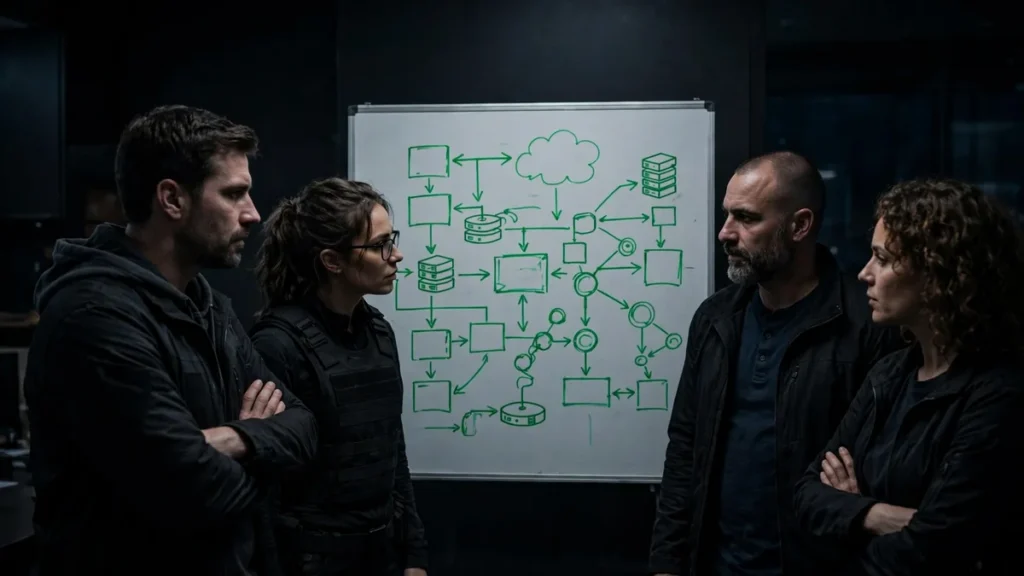
Data lineage explained in plain terms is the record of where data came from, what happened to it along the way, and where it ended up. The central question is why a number in a report should be trusted, and the short answer is that trust comes from being able to trace that number back through every transformation to its original source, and to see every system and person that touched it.
Modern organisations move data through many systems: it is collected in one place, cleaned in another, joined with other data, fed into a model, and finally shown in a report or a dashboard. At each step, the data changes, and each change is a chance for error. Without lineage, a wrong number is a mystery: nobody knows where it came from or which step broke it. With lineage, the same number is a trail that can be followed back to the source. Our guide to data lakes explains where much of this data lives before it is used.
Key takeaways
- Data lineage is the record of where data came from, what happened to it, and where it ended up.
- Lineage makes numbers trustworthy, because any figure can be traced back to its source through every transformation.
- Column-level lineage shows how individual fields flow; table-level lineage shows how whole datasets connect.
- Lineage is essential for compliance, because regulators ask how personal data is used and where it goes.
- Good lineage is captured automatically from pipelines and queries, not written down by hand after the fact.
What data lineage means
Data lineage describes the journey of data through an organisation. It records the source systems where data originates, the pipelines and transformations that change it, and the destinations where it is consumed, such as reports, dashboards and machine learning models. A lineage record answers three questions about any piece of data: where did it come from, what happened to it, and what depends on it.
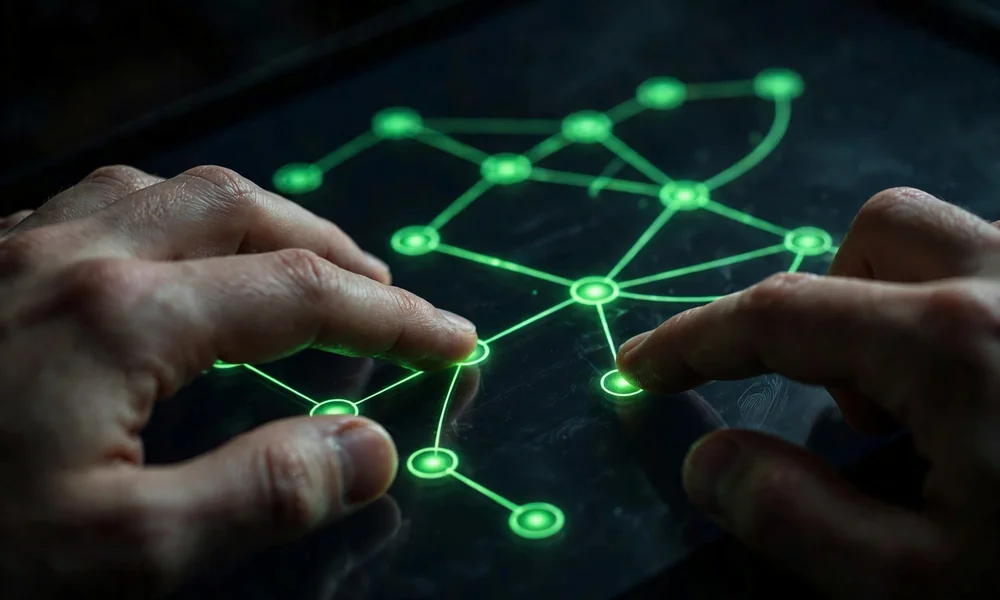
Lineage is usually shown as a graph, with sources on one side, destinations on the other, and transformations in between. A single report may depend on dozens of sources, and a single source may feed hundreds of reports. The graph makes those relationships visible, so that a team can see the full impact of changing a source, or trace a suspicious number back to the step where it went wrong. Without that map, data work is guesswork.
Column-level and table-level lineage
Lineage comes in two levels of detail. Table-level lineage tracks whole datasets: which tables feed into which other tables, and which reports depend on each one. It is enough to answer broad questions, such as which reports would break if a source table changed, or which systems hold a particular kind of data. Table-level lineage is simpler to capture and easier to understand, and it is where most teams start.
Column-level lineage tracks individual fields: how a single column in a report was calculated, which source columns fed into it, and what transformations were applied along the way. It is the level needed to answer precise questions, such as why a revenue figure changed, or whether a personal data field flows into a report it should not reach. Column-level lineage is harder to capture, because it requires understanding the logic inside each transformation, but it is the level that makes lineage genuinely useful for debugging and compliance.
Why lineage matters
Lineage matters first for trust. A report is only useful if the people reading it believe the numbers, and belief comes from being able to check them. When a figure looks wrong, lineage lets a team trace it back and find whether the source was wrong, a transformation was wrong, or the report itself was wrong. Without lineage, the same investigation takes days of asking around, and often ends without an answer.
Lineage matters second for compliance. Regulations such as the GDPR give people rights over their personal data, including the right to know where it is used and to have it deleted. An organisation that cannot say where personal data flows cannot answer those requests, and cannot prove it is handling data lawfully. Lineage provides that answer, by showing every system and report that a piece of personal data reaches. Our guide to data governance explains the policies that lineage supports.
Comparing lineage approaches
| Approach | Main benefit | Main risk | Best for |
|---|---|---|---|
| Automatic capture | Always up to date | Needs tooling in place | Most organisations |
| Manual documentation | No tooling needed | Goes stale quickly | Very small estates |
| Table-level only | Simple and readable | Cannot answer precise questions | Impact analysis |
| Column-level | Answers exact questions | Harder to capture | Debugging and compliance |
| Lineage in the catalogue | Searchable alongside metadata | Depends on catalogue adoption | Data discovery |
How lineage is captured
The best lineage is captured automatically, from the systems that move the data. Data pipelines, query engines and transformation tools can record what they read, what they wrote, and how they changed it, as a by-product of doing their work. That lineage is accurate, because it describes what actually happened, and it stays current, because it is regenerated every time the pipeline runs.
Manual lineage, written down by hand in documents or spreadsheets, is the alternative, and it has a familiar weakness: it goes stale. Pipelines change, new sources appear, and the document is not updated. Within months, the manual record describes a system that no longer exists. Manual documentation is useful as a starting point, or for the few flows that no tool can see, but it cannot be the main source of lineage for a system of any size. Teams that rely on it usually discover the gaps at the worst moment, during an incident or an audit.
Lineage, impact analysis and debugging
Lineage is used in two directions. Tracing backwards, from a report to its sources, is debugging: a wrong number is followed upstream until the step that produced it is found. Tracing forwards, from a source to everything that depends on it, is impact analysis: before a source is changed, the team can see which reports, dashboards and models would be affected, and warn their owners.
Impact analysis changes how changes are made. Without it, a team changes a source and discovers the damage afterwards, when reports break or models behave strangely. With it, the team knows in advance what will break, and can plan the change, notify the owners, and test the affected outputs before the change goes live. That shift, from reacting to damage to preventing it, is one of the main practical benefits of lineage, and it is why data teams value it even when no regulator is asking.
What good practice looks like
Good lineage practice starts with automatic capture, built into the pipelines and tools that move data, so that lineage is a by-product of normal work rather than a separate chore. It covers the most important flows first: the data that feeds regulated reports, the data that trains models, and the data that contains personal information. Coverage can grow from there, but the critical flows should never be undocumented.
Good practice also means making lineage visible. A lineage graph that only a specialist can read is of limited use; the people who need it are analysts, auditors and engineers, and they need to find it quickly, understand it, and trust it. That means keeping lineage in the same place as the rest of the data documentation, keeping it current, and treating a gap in lineage as a defect to be fixed, not as a minor omission.
Data lineage checklist
- Map the most important data flows first: regulated reports, models and personal data.
- Capture lineage automatically from pipelines and queries, not by hand.
- Track lineage at column level for the fields that matter most, such as money and personal data.
- Use lineage to trace wrong numbers backwards to the step that produced them.
- Use lineage for impact analysis before changing any source system.
- Keep lineage in the same place as other data documentation, so people can find it.
- Treat gaps in lineage as defects, and fix them as part of normal work.
- Review lineage coverage regularly, because new sources and pipelines appear constantly.
- Make sure personal data flows are fully mapped, so deletion and access requests can be answered.
Frequently asked questions
What is data lineage?
Data lineage is the record of where data came from, what happened to it along the way, and where it ended up. It answers three questions about any piece of data: where did it come from, what happened to it, and what depends on it.
What is the difference between table-level and column-level lineage?
Table-level lineage tracks whole datasets and which tables feed into which. Column-level lineage tracks individual fields and how each one was calculated. Table-level lineage answers broad questions about impact; column-level lineage answers precise questions about a single figure.
Why does lineage matter for compliance?
Regulations such as the GDPR give people rights over their personal data, including the right to know where it is used and to have it deleted. An organisation that cannot say where personal data flows cannot answer those requests. Lineage shows every system and report that a piece of personal data reaches.
How is lineage captured?
The best lineage is captured automatically, from the pipelines, query engines and transformation tools that move the data, as a by-product of their work. Manual lineage, written down by hand, goes stale quickly and cannot be the main source for a system of any size.
What is impact analysis?
Impact analysis traces lineage forwards, from a source to everything that depends on it, so a team can see what would break before changing a source. It lets teams plan changes, warn owners and test affected outputs, instead of discovering the damage afterwards.
Is lineage only useful for large organisations?
No. Even a small team benefits from knowing where its numbers come from, and small teams are often the ones who suffer most when the only person who understands a data flow leaves. Lineage is a record that survives people leaving.
The bottom line
Data lineage explained in one line is this: a number is only trustworthy if it can be traced back to its source, and lineage is the map that makes that tracing possible, turning data from a mystery into something a team can debug, defend and stand behind.