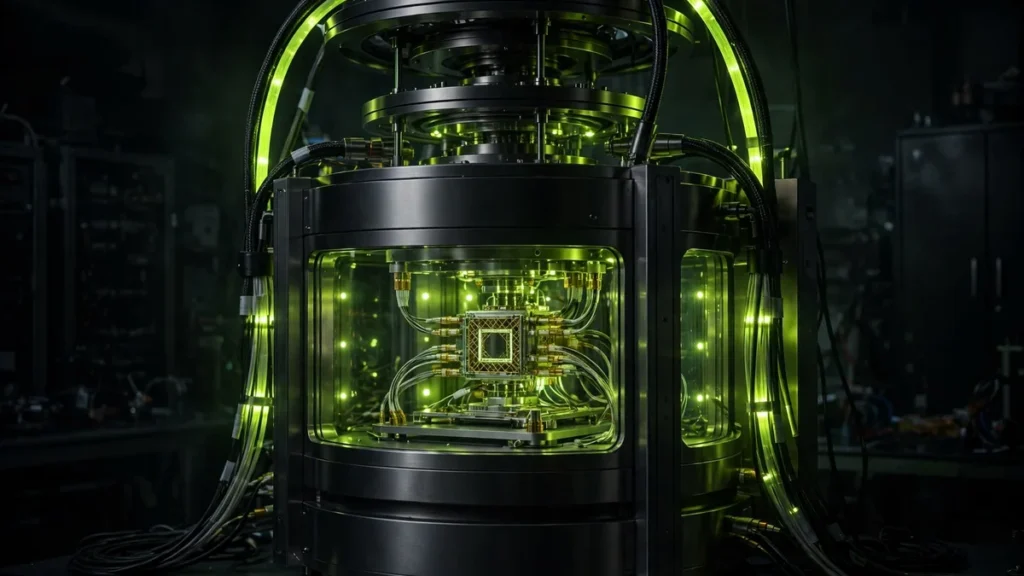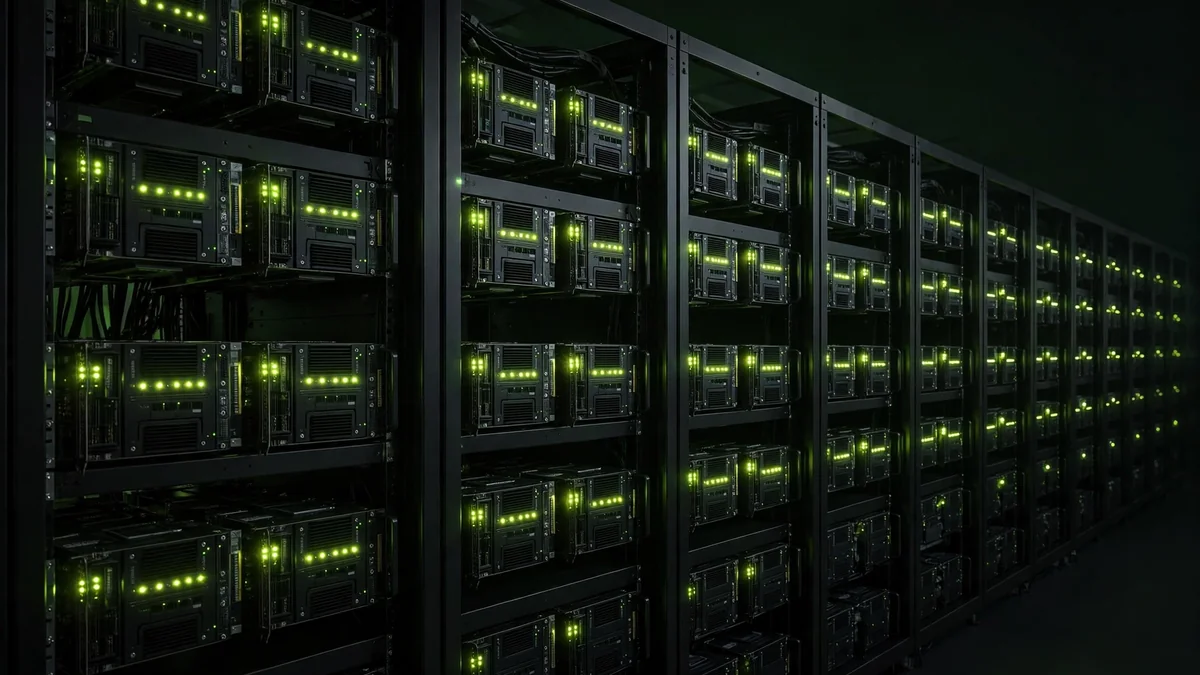
Tensor processing units explained in plain terms means a type of chip designed by Google to speed up machine learning, the calculations that let computers recognise images, understand language, and make predictions from data. The central question is why Google built its own chip when ordinary processors and graphics cards already existed, and the short answer is that machine learning needs vast numbers of simple, repeated calculations, and a chip built only for that work can do them faster and with less energy.
Almost every Google service that uses artificial intelligence depends on this idea in some form. When you search the web, translate a sentence, or ask a voice assistant a question, the answer may be produced by a model running on tensor processing units in a Google data centre, with thousands of chips working on different parts of the same problem.
Understanding tensor processing units matters because they show how specialised hardware shapes what artificial intelligence can do. They explain why training a large model takes so much computing power, why some AI services respond in seconds rather than minutes, and why the largest technology companies now design their own chips instead of buying only general-purpose ones.
Key takeaways
- A tensor processing unit, or TPU, is a chip built by Google to accelerate machine learning calculations.
- TPUs are designed for matrix maths, the large grids of numbers at the heart of neural networks.
- They are used mainly in Google data centres, for both training models and running them for users.
- TPUs work alongside ordinary processors, which handle the general work around each machine learning task.
- Their strength is doing many simple calculations at once, not running the wide range of tasks a normal processor handles.
What tensor processing units are
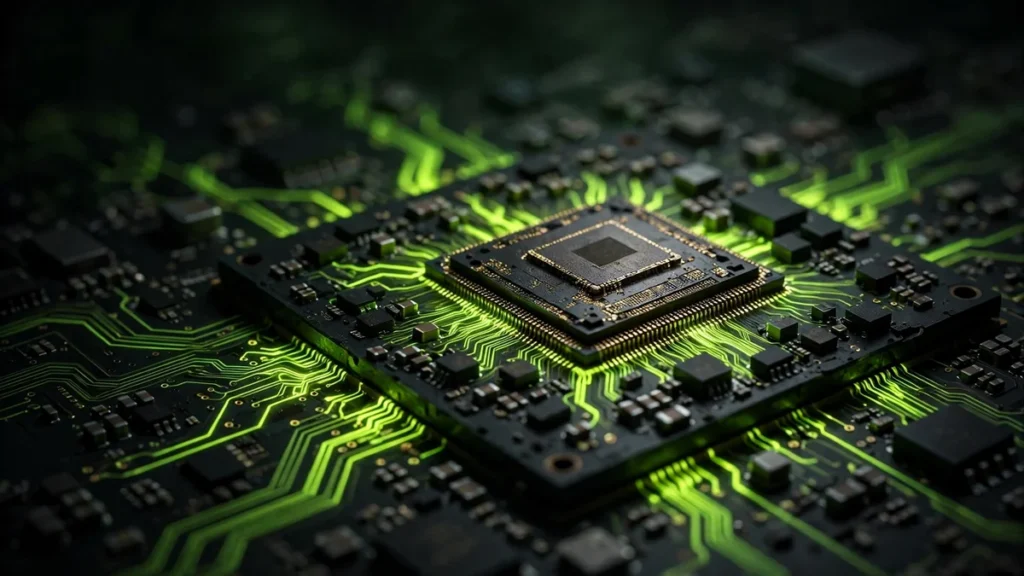
A tensor processing unit is an application-specific chip, which means it was designed for one family of tasks rather than for general computing. The name comes from tensors, the multi-dimensional grids of numbers that machine learning models use to represent data, from the pixels of an image to the words of a sentence. A TPU is built to move and combine those grids as efficiently as possible.
The core of a TPU is a large array of simple arithmetic units that can multiply and add many numbers at the same time. A normal processor has a small number of powerful cores that can do almost any task, while a TPU has far more simple units that can only do the maths a neural network needs. For that narrow job, the simpler design is far faster.
TPUs are not sold as standalone parts for home computers. They run in Google data centres, where they are grouped into racks and linked by fast networks, so thousands of them can work on one large model together. Developers reach them through Google Cloud, where they can rent time on TPUs instead of buying the hardware themselves.
The idea behind them is not new. Engineers have long built specialised chips for a single job, from the chips that decode video to the ones that process radio signals. What changed is the scale of machine learning, which grew so large that a general-purpose chip could no longer keep up, and a dedicated design became worth the cost.
How tensor processing units work
The starting point is the model, a neural network made of layers, where each layer transforms its input numbers into a new set of numbers. Most of that transformation is matrix multiplication, where rows and columns of numbers are combined in a regular pattern. A TPU is organised so that data flows through its arithmetic array in a steady stream, with each unit passing its result to the next, rather than fetching the same numbers from memory again and again.
Memory sits close to the arithmetic units, because moving data is often slower than calculating with it. A TPU holds the model’s weights, the numbers the model learned during training, in fast on-chip memory, and it reuses each piece of data as many times as possible before fetching the next. That reuse is a large part of why the chip is efficient.
Training and inference are the two main jobs. Training means adjusting the model’s weights by showing it many examples and correcting its mistakes, which takes enormous amounts of calculation over days or weeks. Inference means using a trained model to answer a new question, which is smaller work but must happen quickly, often while a user waits for a reply.
TPUs rarely work alone. A normal processor prepares the data, sends it to the TPU, and handles the result, while the TPU does the heavy maths in the middle. Our guide to the GPU explains how graphics cards also handle many calculations at once, and TPUs take that idea further by narrowing the work to machine learning alone.
Cooling and power matter at this scale. A rack of TPUs draws far more power than a single computer, and data centres use careful airflow and liquid cooling to carry the heat away. The chips are also designed to use lower-precision numbers where the model allows it, which cuts both the energy and the time each calculation needs.
Comparing TPUs, GPUs, and CPUs
The difference between these chips is how general they are. A central processor can do almost anything but does relatively little at once, a graphics card does many similar tasks at once, and a tensor processing unit does one family of tasks at once, faster still, but with far less flexibility.
The table below sets out the main contrasts.
| Aspect | CPU | GPU | TPU |
|---|---|---|---|
| Main job | General computing of all kinds | Graphics and parallel computing | Machine learning calculations |
| Flexibility | Very high, runs any program | High, many parallel tasks | Low, built for neural networks |
| Parallel work | A few powerful cores | Thousands of smaller cores | Large arrays of simple units |
| Best use | Everyday computing and control | Graphics, simulation, and AI training | Training and running large AI models |
| Availability | In almost every computer | In computers and data centres | Mainly in Google data centres |
Where tensor processing units are used
Search is one of the earliest and largest uses. When you type a query, a model must understand what you mean, match it against vast numbers of pages, and rank the results, all in a fraction of a second. TPUs run those models at scale, so the search results you see are produced by machine learning as well as by traditional ranking.
Language services are another major use. Translation, voice recognition, and text generation all rely on models that process words as numbers, and TPUs handle the matrix maths behind those models. A spoken question can be turned into text, understood, and answered by a chain of models, each running on specialised hardware.
Image and video work uses TPUs too, from recognising objects in a photo to sorting large collections of images. Our guide to data centres explains the buildings where this hardware lives, and TPUs sit in those halls in large groups, linked so that one model can spread across many chips at once.
Research teams also use TPUs through Google Cloud. Scientists working on weather, protein folding, and other large problems can rent time on the same hardware that powers Google services, rather than building their own data centre. That shared access is one reason specialised chips have spread beyond a single company.
Strengths and limits
The greatest strength of a TPU is throughput, the sheer number of machine learning calculations it can finish in a given time. By arranging its arithmetic units for matrix maths and keeping data close to them, it can train large models faster than a general-purpose chip, and it can answer many user requests at once.
Energy efficiency is the second strength. Because each unit does only simple maths, and because data is reused rather than fetched repeatedly, a TPU can do more useful work per unit of electricity than a chip that must handle every kind of task. At data centre scale, that saving matters a great deal.
The main limit is narrowness. A TPU cannot run an operating system, a web browser, or a game, and it cannot handle a machine learning task that does not fit its pattern of matrix maths. It depends on ordinary processors to prepare data, manage the system, and deal with anything outside its speciality.
There is also a cost of access. TPUs are not sold to the public, and using them means working through Google Cloud, with its own pricing, software, and limits. A team that wants to run a model elsewhere, or on hardware it owns, must use a different chip, even if a TPU would be faster for that model.
Tensor processing units checklist
- Check whether the task is machine learning, since TPUs only help with that family of work.
- Decide if you need training, inference, or both, as each places different demands on the hardware.
- Compare TPUs with GPUs for your model, because some models run better on more flexible hardware.
- Look at the model’s size, since very large models may need many chips working together.
- Consider data preparation, because ordinary processors must still clean and move the data.
- Check cloud pricing and availability, as TPU time is rented rather than bought outright.
- Test with a small version of the model first, before committing to a large training run.
- Watch power and cooling costs, which grow quickly when many chips run at once.
- Remember that a TPU is a tool for one job, not a replacement for a whole computer.
Frequently asked questions
What is a tensor processing unit in simple terms?
A tensor processing unit is a chip built by Google to do the large, repeated calculations behind machine learning, especially the matrix maths used by neural networks, faster and more efficiently than a general-purpose processor.
Are TPUs better than GPUs for AI?
For many large machine learning models, TPUs are faster and more energy efficient, because they are built only for that work. For other models, or for work that needs more flexibility, a GPU may be the better choice.
Can you buy a TPU for a home computer?
No, TPUs are not sold as parts for home computers. They run in Google data centres, and developers use them by renting time through Google Cloud.
What is the difference between training and inference?
Training is teaching a model by showing it many examples and adjusting its weights, which takes a great deal of calculation. Inference is using a trained model to answer a new question, which is smaller work but must happen quickly.
Do TPUs replace ordinary processors?
No, they work alongside them. An ordinary processor prepares data, runs the surrounding software, and handles the result, while the TPU does the heavy machine learning maths in the middle.
What are TPUs used for outside Google?
Outside Google, researchers and companies rent TPU time through Google Cloud for work such as language models, image recognition, and scientific research, including problems in weather and biology.
The bottom line
Tensor processing units explained in one line is this: specialised chips built by Google to run the matrix maths behind machine learning at very large scale, so models can be trained faster and used by millions of people at once.
The trade is clear. You gain remarkable speed and efficiency for neural networks, and you pay for them with narrow flexibility and access only through Google’s data centres, and that balance explains why TPUs power so much of modern artificial intelligence.
This article is general information about how tensor processing units work, not advice about choosing hardware or a cloud service for a particular project.