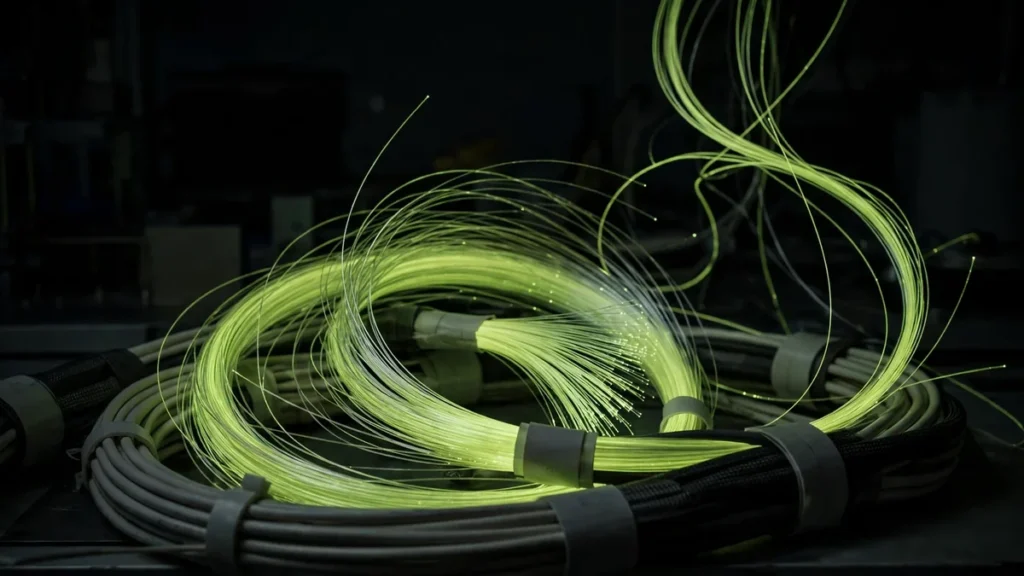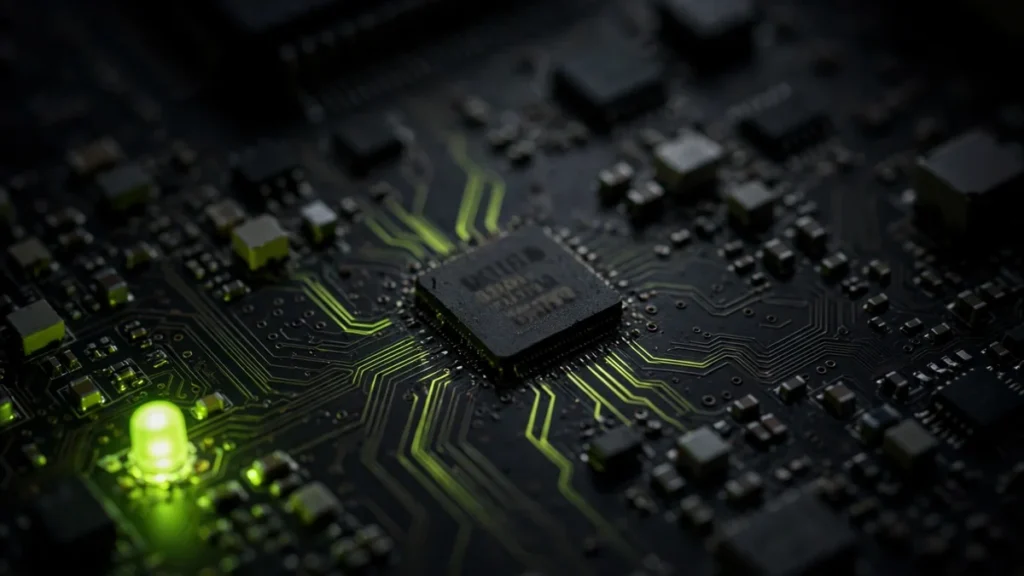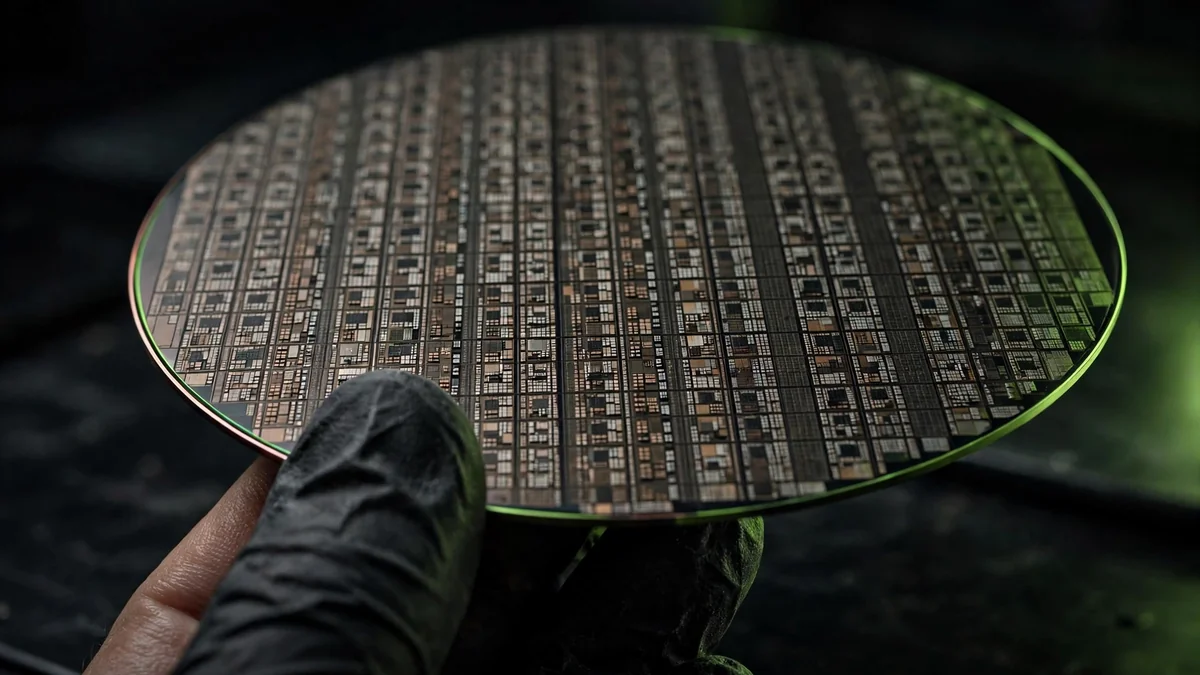
Semiconductors explained simply are materials that sit between conductors and insulators, and that in-between behaviour is what makes modern electronics possible. A semiconductor can carry electricity under some conditions and block it under others, and engineers use that switching ability to build the transistors inside every computer, phone, and television. Without semiconductors, there would be no chips, and without chips, there would be no digital world.
The central question this guide answers is what a semiconductor actually is and how it gives rise to the chips that run our lives. The answer is that a semiconductor, usually silicon, is carefully treated so that tiny regions of it conduct or resist electricity on demand, and billions of those regions are patterned onto a single chip to form circuits. That simple idea, repeated at an enormous scale, is the foundation of all computing.
This guide explains what semiconductors are, how they work, how they are made, and where they are used.
Key takeaways
- A semiconductor is a material whose ability to conduct electricity can be controlled, which makes switching possible.
- Silicon is the most common semiconductor, chosen because it is abundant, stable, and well understood.
- Transistors are tiny switches made from semiconductors, and a single chip can contain billions of them.
- Chips are made in specialised factories by layering, patterning, and etching silicon wafers with great precision.
- Semiconductors are inside almost every electronic device, from phones and cars to medical equipment.
What semiconductors are
A semiconductor is a material that conducts electricity better than an insulator but worse than a metal. Glass and rubber are insulators, keeping electricity from flowing, while copper is a conductor, letting it flow freely. Silicon and germanium fall in between, and that middle ground is useful because their conductivity can be changed. Add a small amount of another element, change the temperature, or apply an electric field, and the material starts or stops conducting.
The most important semiconductor is silicon, the second most common element in the crust of the Earth, found in sand and quartz. Silicon is favoured because it is plentiful, it handles heat reasonably well, and decades of research have made its behaviour thoroughly understood.
The key trick is called doping. Pure silicon is a poor conductor, but adding tiny amounts of other elements changes it. Add an element with extra electrons, and the silicon gains free electrons that can carry current. Add an element with fewer electrons, and the silicon gains gaps, known as holes, that behave like positive charges moving through the material. By placing these two types of treated silicon side by side, engineers can build junctions that control the flow of electricity.
Those junctions are the building blocks of transistors, diodes, and every other component on a chip. A transistor is essentially a switch: a small voltage applied to one part of it decides whether current flows between the other two parts. Arranged in vast numbers and wired together in clever patterns, transistors become logic gates, memory cells, and processors, the circuits that add numbers, store information, and run software.
How semiconductors work
To understand how a semiconductor works, it helps to picture the crystal. In a piece of pure silicon, each atom is bonded to its neighbours, and the electrons are mostly held in place. Very few are free to move, so very little current flows.
A junction forms where one type of doped silicon meets the other. At that boundary, electrons and holes interact in a way that lets current flow easily in one direction but not the other. That one-way behaviour is the basis of a diode, a component that turns alternating current into direct current in power supplies. It is a simple device, but it shows the central principle: by arranging doped regions, you can decide exactly where electricity is allowed to go.
A transistor takes the idea one step further by adding a control terminal. In the common field-effect transistor, a voltage applied to the gate creates an electric field that opens or closes a channel between the other two terminals. With no voltage on the gate, the channel stays closed and no current flows. With a voltage applied, the channel opens and current flows. That is the switch, and it can flip between on and off billions of times a second.
Computers are built from these switches. Two transistors can form a logic gate that answers a simple question, such as whether both of its inputs are on. Combine gates, and you can build circuits that add numbers, compare values, and remember results. A processor is an enormous collection of these circuits, organised so that patterns of electrical signals represent numbers, letters, and instructions. The software you use is, at the lowest level, a sequence of instructions that flips these switches in the right order.
Comparing semiconductor materials
Silicon dominates the industry, but it is not the only semiconductor material, and each alternative has qualities that suit particular jobs. The table below compares the main materials in simple terms.
| Material | Main strength | Typical use |
|---|---|---|
| Silicon | Abundant and well understood | Processors and memory chips |
| Gallium arsenide | Very fast switching | Radio and mobile signals |
| Silicon carbide | Handles heat and high voltage | Electric vehicles and power systems |
| Gallium nitride | Efficient at high frequencies | Fast chargers and radio equipment |
| Germanium | Used in early transistors | Specialist sensors and optics |
Where semiconductors are used
The most visible home for semiconductors is in personal electronics. A smartphone contains dozens of chips: a processor to run applications, memory to hold data, a modem to connect to mobile networks, and smaller chips to manage the screen, the camera, and the battery. A laptop is much the same, with a graphics processor handling images and video alongside the main processor. Without semiconductors, none of these devices could exist in their current form.
Cars have become one of the biggest users of semiconductors. A modern car can contain hundreds of chips, managing the engine, the brakes, the airbags, the entertainment system, and the driver-assistance features that watch the road. Electric cars use still more, including power semiconductors that control the flow of energy between the battery and the motor. When chip supplies run short, car factories feel it quickly, because there is no modern car that can be built without them.
Smaller computers show the same idea at a friendlier scale. A Raspberry Pi is a complete computer built around a single chip, and it is used in schools, workshops, and home projects to teach programming and build gadgets. It is a reminder that the same technology inside a supercomputer also fits on a board the size of a credit card, and that the principles are the same whatever the scale.
Strengths and limits
The great strength of semiconductors is that they make control possible at a tiny scale. A transistor is far smaller than a grain of sand, uses very little power, and can switch billions of times a second. Put billions of them together and you have a machine that can perform calculations, store information, and communicate, all in a package that fits in a pocket. No other technology offers that combination of size, speed, and efficiency.
A second strength is versatility. The same basic material can become a processor, a memory chip, a sensor, or a power controller, depending on how it is doped and patterned. That flexibility is why semiconductors appear in so many different industries, from phones to power stations.
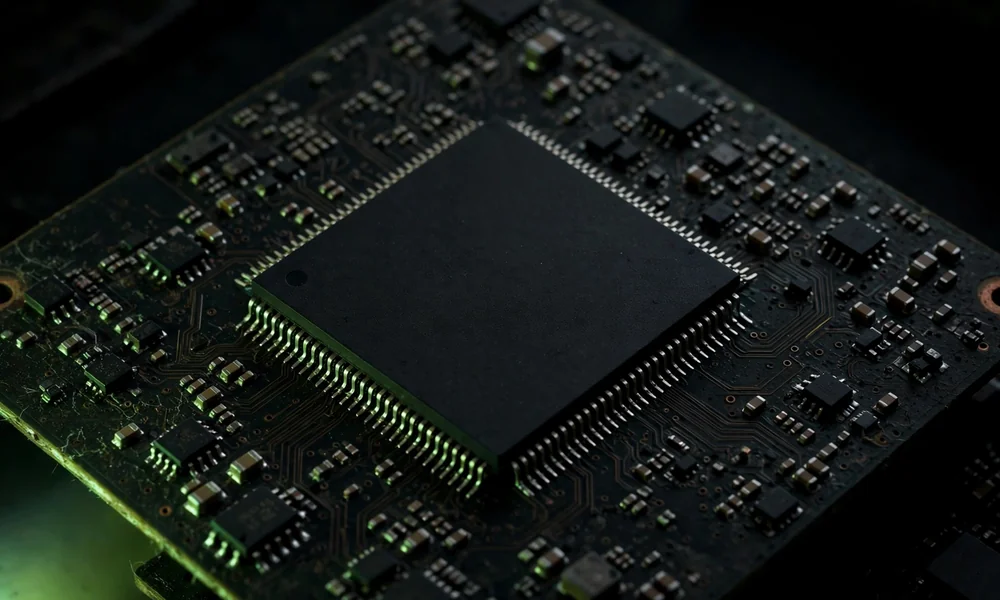
The limits begin with manufacturing. Making a modern chip is one of the most demanding processes in industry, requiring factories that are kept cleaner than an operating theatre and machines that pattern features a few atoms wide. A motherboard full of chips represents an extraordinary chain of precision engineering, and that is why chips are expensive to develop and why only a handful of companies can make the most advanced ones.
The other limit is physical. As transistors have shrunk, they have approached sizes where heat and quantum effects make further shrinking harder. Semiconductors will keep improving, yet the easy gains of the past are behind us, and future progress will depend on clever design as much as on smaller transistors.
Semiconductors checklist
- Remember that a semiconductor is a material, while a chip is a device made from it.
- Learn the difference between a conductor, an insulator, and a semiconductor.
- Know that silicon is the standard material for most chips.
- Understand doping as the process that makes silicon conduct on demand.
- Think of a transistor as a switch that is controlled by a small voltage.
- Notice how many chips are inside one ordinary device, not just the processor.
- Check where your electronics were made when chip supply makes the news.
- Handle circuit boards by their edges to avoid static damage to the chips.
- Recycle old electronics so the materials inside them can be recovered.
Frequently asked questions
What is a semiconductor in simple terms?
A semiconductor is a material that can conduct electricity under some conditions and block it under others. That controllable behaviour lets engineers build switches, and those switches are the transistors inside every chip. Silicon is the most common semiconductor material.
Why is silicon used for semiconductors?
Silicon is abundant, stable, and well understood after decades of research and manufacturing. Its crystal structure is regular, it handles heat reasonably well, and it can be purified and doped with great precision. Those qualities together make it the practical choice for most chips.
What is the difference between a semiconductor and a chip?
A semiconductor is the material, usually silicon, while a chip is the finished device made from that material. A chip contains transistors, wiring, and other structures patterned onto a small piece of semiconductor. One wafer of silicon can be cut into many individual chips.
How are semiconductor chips made?
Chips are made in specialised factories called fabs, where thin silicon wafers are layered, patterned with light, etched, and doped in many repeated steps. Each step adds or shapes part of the circuit.
Are semiconductors only used in computers?
No, they are used in almost every electronic device, including phones, cars, televisions, medical equipment, household appliances, and industrial machinery. Any device that controls electricity, processes signals, or stores information almost certainly contains semiconductors.
Why are semiconductors sometimes in short supply?
Chips are difficult to make, and only a limited number of factories can produce them. When demand rises quickly, for example when car makers and electronics companies order at the same time, factories cannot expand fast enough.
The bottom line
Semiconductors are the quiet foundation of the modern world. A material that can be switched between conducting and insulating sounds unremarkable, but that single property, multiplied by billions of transistors, gives us computers, phones, cars, and the networks that connect them. Understanding semiconductors means understanding why the digital age was possible at all.
The next time you pick up a phone or switch on a car, remember that you are holding the result of careful chemistry, precise engineering, and decades of refinement.
This article is general information about how semiconductors work, not advice about buying electronics or investing in the semiconductor industry. If you need guidance on a specific purchase or decision, speak to a qualified professional.