AI in transport explained simply is this: artificial intelligence now helps decide how traffic flows, where vehicles go, when they need maintenance and, increasingly, how they drive themselves. The central question is whether it makes travel safer and smoother or simply faster and more complicated, and the short answer is that it does both, cutting congestion and delays while raising hard questions about safety, jobs and who is responsible when a machine makes a mistake.
Transport was an early home for AI because it runs on constant streams of data: vehicle positions, road sensors, timetables, weather and passenger demand. AI can read all of that at once and act on it in seconds, in ways no control room of humans could match. This guide explains how AI works across transport, where it genuinely helps, and where the limits still matter.
Key takeaways
- AI now manages traffic lights, predicts congestion and reroutes vehicles in real time.
- Fleets use AI to plan routes, save fuel and predict maintenance before breakdowns happen.
- Driver assistance is widespread, but fully self-driving vehicles remain limited to controlled settings.
- Public transport gains the most from better timetables, demand prediction and disruption handling.
- Safety, accountability and jobs are the questions transport operators must answer openly.
What AI in transport actually means
AI in transport covers several different tools, and they do different jobs. Some predict where congestion will form, some choose the best route for a delivery van, some watch a driver for signs of tiredness, and some steer a vehicle along a motorway. A city might use all of them at once, often without passengers ever noticing.
Most of these tools run on machine learning, trained on large amounts of movement data. A traffic model learns how a junction behaves at rush hour, a routing system learns which streets slow down in rain, and a maintenance system learns the vibration pattern that precedes a brake failure. None of them understands a journey the way a driver does, but all can process far more information far faster than a human team.
Traffic management and smart cities
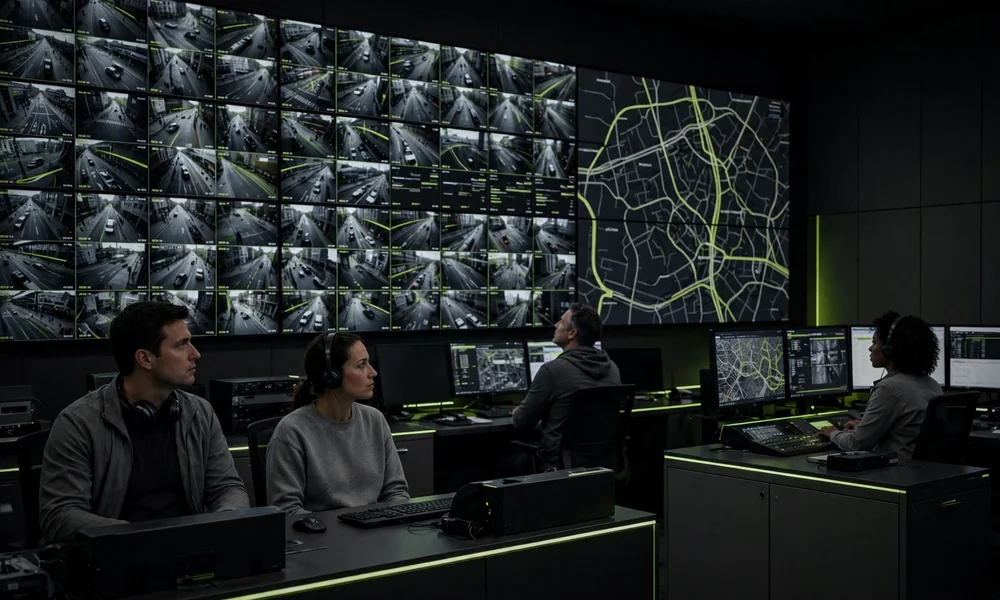
Traffic lights are the oldest AI application in transport, and still one of the most useful. Traditional lights run on fixed timers, which means a green light can sit empty while traffic queues on the cross street. Adaptive signals use cameras and sensors to count real vehicles and adjust their timing second by second, giving green time where the queue actually is.
Cities also use AI to predict congestion before it forms. By combining live sensor data with historical patterns, weather and event schedules, a system can warn that a route will jam in twenty minutes and suggest alternatives to drivers and bus operators. Some cities use this to manage roadworks and major events, steering traffic around closures before the queues build.
The gains are real but limited. Better signals can smooth a junction, but they cannot create road space that does not exist. Cities that pair AI traffic management with better public transport, walking and cycling get far more from it than cities that simply try to move more cars through the same streets.
Fleets, routing and predictive maintenance
For companies that run vehicles, AI is now part of daily operations. Routing systems plan each vehicle’s stops in the best order, taking account of traffic, delivery windows, vehicle size and driver hours. A plan that once took a dispatcher an hour can now be recalculated in seconds when a customer changes an order or a road closes.
Fuel and energy use is the second gain. AI can suggest the most efficient speed and route, coach drivers on smoother driving, and choose which vehicle in a fleet suits each job. For electric fleets, it also manages charging, making sure vehicles are charged when electricity is cheapest and ready when they are needed. Our guide to sustainable AI explains how these efficiency gains fit into the wider picture of energy use.
Driver assistance and self-driving vehicles
Driver assistance is the form of AI most people already use. Lane keeping, adaptive cruise control, automatic emergency braking and blind-spot warnings are all AI systems, reading cameras and radar to help a driver stay safe. They are now standard on many new cars, and they prevent a meaningful share of everyday collisions.
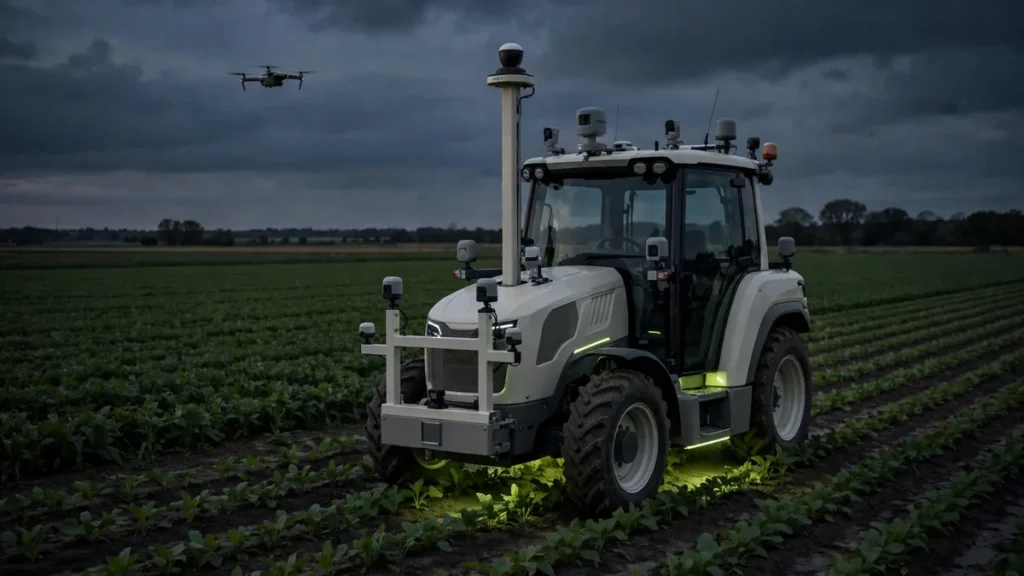
Fully self-driving vehicles are a different matter. Robotaxis operate in some cities, and driverless trucks run on some motorway routes, but only in carefully mapped areas, in good weather, with remote support on standby. The hard cases are the ones humans handle without thinking: a child stepping between parked cars, a hand signal from a road worker, a flooded road at night. Our guide to AI agents in production explains the guardrails that matter when an AI system acts in the real world.
The honest picture is that self-driving is arriving in stages, not all at once. Motorway driving, depot-to-depot freight and fixed shuttle routes are the first places it works reliably. Busy city streets with pedestrians, cyclists and unpredictable behaviour remain the hardest test, and most experts expect a human driver to stay in charge there for years yet.
Public transport and passenger experience
Public transport may gain more from AI than private cars do. Demand prediction lets operators run more buses where passengers actually are, and fewer where they are not. Real-time arrival information, based on live vehicle positions rather than printed timetables, tells passengers when their bus will really arrive, and disruption handling reroutes services around incidents instead of leaving passengers stranded.
Railways use AI to schedule trains, predict delays and plan maintenance. A system that spots a worn track component before it fails can schedule the repair overnight instead of closing a line at rush hour. Airlines use similar tools to plan crews, fuel and turnaround times, and to rebook passengers when a flight is cancelled.
For passengers, the visible change is better information. Apps that combine live positions, walking times and service updates make a journey easier to plan, and that matters most for people who cannot drive. Transport that is predictable and well explained is transport people trust.
Comparing the main uses of AI in transport
| Use | Main benefit | Main risk | Best for |
|---|---|---|---|
| Adaptive traffic signals | Smoother flow at junctions | Cannot create extra road space | Busy urban networks |
| Fleet routing | Faster deliveries, less fuel | Over-optimised routes that fail | Delivery and service fleets |
| Predictive maintenance | Breakdowns prevented early | False alarms that waste time | Trains, buses and trucks |
| Driver assistance | Fewer everyday collisions | Drivers over-trusting the system | Motorway and long-distance driving |
| Self-driving vehicles | Labour and access gains | Unpredictable edge cases | Mapped routes and fixed shuttles |
Safety, accountability and jobs
Safety is the first question, and it is the right one. AI systems fail differently from humans: they can be excellent in routine conditions and suddenly wrong in a situation they have never seen. Testing must cover those rare cases, not just the easy miles, and operators must be able to explain what their system did and why after an incident.
Accountability follows from that. When a self-driving vehicle crashes, the chain of responsibility runs through the operator, the manufacturer and the software provider, and the law is still catching up. Passengers, pedestrians and other road users deserve to know who is responsible before these vehicles share their streets, not after a first serious crash.
Jobs are the third question. Driving is one of the largest occupations in many countries, and automation will change it. The likely pattern is gradual: long-distance freight and depot work first, with drivers moving into supervision, maintenance and customer roles. Transport companies and governments that plan that transition early, with retraining and honest timelines, will handle it far better than those that pretend it is not coming. Our guide to edge AI explains the on-vehicle computing that makes much of this possible.
What good practice looks like
Good practice starts with transparency. Operators should say where AI is used, what it decides, and what its limits are. A passenger in a driverless shuttle should know there is no driver, and a driver using assistance should know exactly what the system can and cannot do.
Testing is the second pillar. AI transport systems should be tested in the conditions they will actually face, including bad weather, roadworks and unusual behaviour, with independent checks rather than the manufacturer’s word alone. After deployment, incidents and near misses should be recorded and learned from, not hidden.
Human oversight is the third pillar. Even the most automated system needs people who can take over, investigate problems and stop a service when something is wrong. A transport network that cannot be stopped safely is not ready to run.
Transport checklist
- Use AI to smooth traffic and improve information, not just to move more cars.
- Plan routes and maintenance with real data, and keep a human able to override the plan.
- Test driver assistance and self-driving systems in bad weather and unusual conditions.
- Tell passengers and drivers clearly where AI is used and what its limits are.
- Keep records of incidents and near misses, and learn from them openly.
- Plan for the jobs that automation changes, with retraining and honest timelines.
- Make sure someone is accountable for every automated decision on the road.
- Protect the location data that transport systems collect, and say how it is used.
- Keep a human in the loop for safety-critical decisions, always.
Frequently asked questions
Are self-driving cars safe?
Driver assistance systems prevent many everyday collisions, and robotaxis in controlled areas have a strong safety record so far. Fully self-driving vehicles still struggle with unpredictable situations, and they are only operating in limited, carefully mapped settings.
How does AI reduce traffic congestion?
By adjusting traffic signals to real demand, predicting where jams will form, and rerouting vehicles before queues build. It smooths flow, but it cannot create road space, so it works best alongside better public transport.
Will AI replace drivers?
Gradually, and unevenly. Long-distance freight and fixed routes are automating first, while city driving with pedestrians and cyclists still needs a human. Many driving jobs will change into supervision and customer roles rather than disappearing overnight.
What is predictive maintenance in transport?
It uses sensor data to spot the early signs of wear or failure, so repairs can be scheduled before a breakdown. It reduces delays and costs, but it depends on good data and careful tuning to avoid false alarms.
How does AI help public transport?
It predicts passenger demand, adjusts timetables, gives real-time arrival information, and reroutes services around disruption. The result is more reliable services and better information for passengers.
Who is responsible when a self-driving vehicle crashes?
The law is still developing, but responsibility generally runs through the operator, the manufacturer and the software provider. Operators should be able to explain what their system did, and passengers deserve to know who is accountable before these vehicles share the road.
The bottom line
AI in transport explained in one line is this: the technology makes journeys smoother, fleets cheaper to run and simple claims of safety easier to prove, but its value depends on honest testing, clear accountability and planning for the people whose jobs it changes. Transport that keeps those standards will move people better; transport that hides behind automation will lose the trust it needs most.