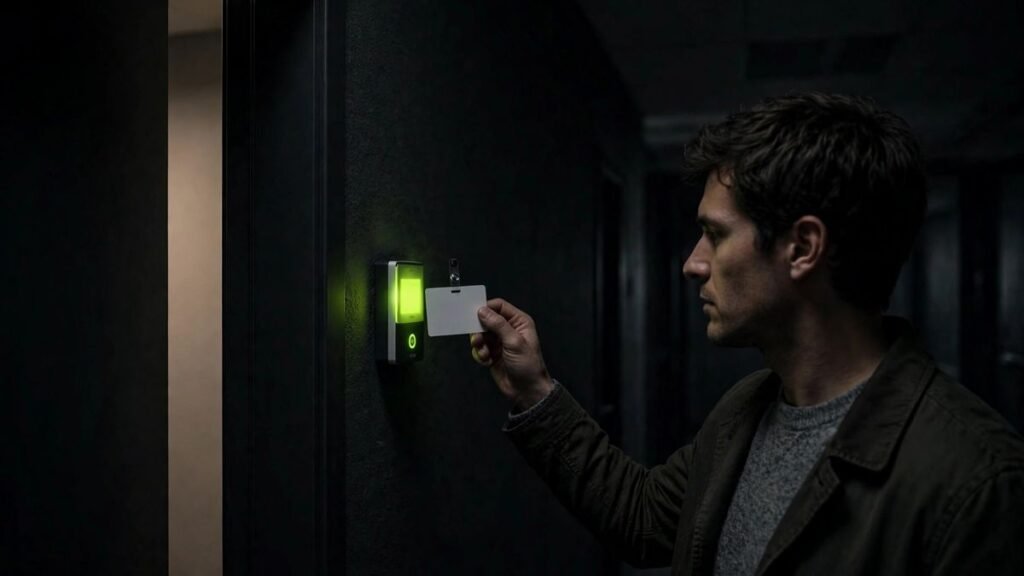
Privileged access management is the practice of controlling, monitoring and auditing the accounts and credentials that hold elevated permissions over systems, data and infrastructure. The central question it answers is straightforward: who holds the keys to your most powerful accounts, and what stops those keys from being stolen or misused? The answer is a combination of vaulting, just-in-time access, session recording and strict oversight.
Privileged accounts are the most attractive target in any organisation. An ordinary user account might open a handful of files, but an administrator account can change configurations, read any data, create new accounts and disable security tools. Attackers know this, which is why they aim for privilege escalation in almost every serious breach: get in as an ordinary user, then climb to an account that can do real damage.
Key takeaways
- Privileged access management protects the accounts that can change systems, read sensitive data and create other accounts.
- Standing privileges are the core problem: permanent admin access is a standing invitation to attackers.
- Just-in-time access replaces permanent privileges with temporary elevation for a specific task.
- Credential vaulting removes shared passwords and rotates credentials automatically.
- Session recording and monitoring turn privileged activity into evidence that can be reviewed and audited.
What privileged access management actually means
Privileged access management, usually shortened to PAM, is the discipline and the tooling that governs accounts with elevated access. It covers who can use those accounts, how they obtain the credentials, what they can do while using them, and what record is left afterwards.
PAM is a subset of identity and access management, but it deals with the accounts where the stakes are highest. Ordinary IAM makes sure the right people can reach the right systems. PAM makes sure that the people who can change those systems, read the most sensitive data and disable the controls are watched closely, and that their powers are temporary rather than permanent.
The scope is wider than human administrators. Service accounts, automation scripts, cloud root accounts, database administrators and emergency break-glass accounts all hold privilege, and all of them belong inside a PAM programme. An unattended service account with broad permissions is often the easiest privileged target an attacker can find.
Best for: any organisation with administrators, cloud accounts or systems that hold sensitive data, which covers almost every organisation beyond the smallest teams.
What counts as a privileged account
The most obvious privileged accounts belong to system administrators, network engineers and database administrators. They can install software, change configurations, manage users and read data across the estate. Their everyday accounts should be separate from their privileged accounts, so that browsing the web or reading email never happens with admin rights.
Cloud accounts add another layer. A cloud root account can do almost anything in the account, including deleting everything, and it should be locked away and used only in genuine emergencies. Cloud roles with broad permissions, such as the ability to create resources and change policies, are privileged too, even when they look like ordinary service accounts.
Then there are the accounts people forget: the default accounts shipped with software, the shared accounts used by a whole team, the emergency break-glass account, and the old admin account of someone who left years ago. Discovery is the first step of any PAM programme, because you cannot protect accounts you do not know exist. Our guide to cloud identity security implementation steps that actually work covers the discovery work that has to come first.
Why standing privileges are the problem
Standing privilege means an account holds elevated permissions all the time, whether they are needed or not. Most administrators historically worked this way: they logged in as an admin in the morning and stayed an admin all day, even while doing ordinary work that needed no special rights.
The risk is obvious once stated. If that account is compromised at any moment, the attacker inherits full privileges immediately.
There is no window to close, no approval to seek, and no extra step to slow them down. Standing privilege also makes misuse harder to spot, because admin activity is constant and blends into the background.
Just-in-time access is the answer. Privileges are granted for a specific task, for a limited time, and then removed automatically.
An administrator who needs to change a firewall rule requests elevation, completes the task, and returns to ordinary access. The window of risk shrinks from always to minutes.
Credential vaulting and rotation
Credential vaulting is the practice of storing privileged passwords and keys in a secure, encrypted store, and never letting people see them directly. When an administrator needs access, the vault supplies the credential, often injecting it into the session, and the administrator never learns the password at all.
Rotation is the companion control. Every time a credential is used, or on a fixed schedule, the vault generates a new one.
That means a stolen password stops working quickly, and a password written down years ago is useless. Shared passwords, the classic PAM failure where a whole team knows the root password, disappear entirely, because nobody needs to know it.
Vaulting also solves the audit problem. The vault records who requested which credential, when, and for what purpose, so there is a complete trail. Without a vault, shared accounts make accountability impossible: if five people know the password, nobody can prove who used it.

Session management and recording
Privileged session management controls how an administrator connects to a system. Instead of connecting directly, the administrator connects through a PAM gateway or jump host, which authenticates them, checks the request against policy, and then opens the session to the target system. The gateway becomes a single control point for all privileged access.
Session recording captures what happens during that session, either as a video-style recording or as a detailed log of commands and actions. The recording serves two purposes: it deters misuse, because the administrator knows the session is watched, and it provides evidence if something goes wrong, whether that is a mistake or a malicious act.
Live monitoring adds a third layer. Unusual commands, such as bulk data exports or attempts to disable security tools, can trigger an alert or terminate the session automatically. For the AI side of the same challenge, where non-human agents hold powerful access, see our guide to AI agent authorisation, and giving bots real power without losing control.
| PAM control | What it does | Risk it removes |
|---|---|---|
| Credential vaulting | Stores privileged passwords encrypted, injects them into sessions | Shared and stolen passwords |
| Just-in-time access | Grants privileges temporarily for a specific task | Standing admin access |
| Session recording | Records privileged sessions for review | Unaccountable admin activity |
| Least-privilege roles | Limits each admin to the systems they manage | One account compromising everything |
| Break-glass procedure | Emergency access with strict logging and review | Being locked out in a crisis |
Least privilege for administrators
Least privilege applies to administrators just as much as to ordinary users. A database administrator does not need access to the network firewalls, and a cloud engineer does not need to read HR data. Splitting admin duties into separate roles limits the damage if any one account is compromised.
PAM in the cloud
Cloud environments change PAM in two ways. First, the number of privileged identities explodes: every workload, container, function and automation has an identity, and many of them hold broad permissions. Managing these machine identities by hand is impossible, so automation and policy-as-code become essential.
Second, the cloud control plane itself is a privileged target. Whoever can change cloud policies can create resources, exfiltrate data and disable logging, often without touching a single server. Protecting the cloud root account, requiring multi-factor authentication on every cloud admin, and monitoring control-plane activity are the highest-priority PAM controls in any cloud estate.
Cloud providers offer their own privileged access tools, and third-party PAM platforms extend them, but the principles are the same as on-premises: vault the credentials, grant access just in time, record the sessions, and review the permissions regularly. For the risk framework that ties this together, see our guide to a practical AI model risk management framework for teams.
Break-glass accounts and emergencies
Every PAM programme needs a break-glass account: an emergency account that can restore access if the normal systems fail, such as an identity provider outage or a locked-out administrator team. The break-glass account is powerful by design, which makes it dangerous, so it needs special handling.
The account should have a long, random password stored in a sealed vault or a physical safe, with access to that vault tightly restricted. It should never be used for routine work, and every use should trigger an immediate alert and a full review afterwards. The password should be rotated after each use.
Test the break-glass procedure before you need it. An emergency account that nobody can find, or whose password was changed and never updated in the vault, is worse than useless in a crisis, because it wastes the time you can least afford to lose.
PAM implementation checklist
- Discover every privileged account, including service, cloud and default accounts.
- Vault all privileged credentials and rotate them automatically.
- Remove shared admin passwords entirely.
- Replace standing privileges with just-in-time elevation.
- Route privileged sessions through a gateway with recording enabled.
- Separate everyday accounts from privileged accounts for every admin.
- Set up break-glass access and test it twice a year.
- Review privileged access quarterly and remove what is no longer needed.
Common mistakes to avoid
The most common mistake is buying a PAM tool and assuming the programme is done. The tool vaults credentials and records sessions, but it cannot decide who should hold privilege, design the roles, or review the access. Those are management decisions, and without them the tool is an expensive safe with the door left open.
Another mistake is exempting senior staff from PAM controls. Executives and senior engineers often hold the broadest access and resist the friction of checkout procedures, but they are also high-value targets. No one should be exempt from the controls that protect the most powerful accounts.
Finally, do not forget the cloud and the machine identities. A PAM programme that covers only human administrators while service accounts run with broad, permanent permissions has protected the front door and left the side entrance open.
Frequently asked questions
What is the difference between PAM and IAM?
IAM is the broad discipline of managing all identities and their access. PAM is the part of IAM that deals specifically with privileged accounts, the ones that can change systems and read sensitive data. PAM is deeper and stricter because the stakes are higher.
What is just-in-time access?
Just-in-time access grants elevated privileges temporarily for a specific task, then removes them automatically. It replaces standing privileges, so an account is only powerful for the minutes it needs to be.
What is a credential vault?
A credential vault is an encrypted store for privileged passwords and keys. It supplies credentials to sessions without revealing them to users, and rotates them automatically so stolen credentials stop working quickly.
Do small businesses need PAM?
Yes, in a simpler form. Even a small team should separate admin accounts from everyday accounts, use a vault for shared credentials, and remove standing privileges. The principles scale down well.
What is a break-glass account?
A break-glass account is an emergency account used only when normal access systems fail. It is kept sealed, heavily monitored, and its use always triggers an alert and a full review.
Should privileged sessions be recorded?
Yes. Recording creates accountability and evidence, and it deters misuse. Staff should be told that privileged sessions are recorded, and the recordings should be stored securely with limited access.