Is the private cloud dying, or is it quietly becoming the backbone of modern enterprise IT? For years, the narrative has swung between “public cloud wins everything” and “repatriation is coming for all of it.” The reality in 2025 looks far more interesting than either headline. Private cloud is not fading. It is changing shape, and the trends driving that shift matter to anyone who signs off on infrastructure budgets.
This article walks through the trends that are genuinely reshaping private cloud, separates durable shifts from vendor hype, and offers practical guidance on what tends to work and what tends to fail.
What “private cloud” actually means now
The term gets stretched constantly, so it helps to anchor it. The most widely cited definition comes from NIST SP 800-145, published in September 2011, which describes cloud computing through five essential characteristics, three service models, and four deployment models, including private cloud. The core idea: cloud-style infrastructure (pooling, self-service, automation, APIs) operated for a single organization, whether on-premises or hosted.
That definition has aged well because it focuses on operating model rather than location. A private cloud is not “a rack in your basement.” It is infrastructure that behaves like a cloud, with self-service provisioning and automation, but serves one tenant. This distinction matters because much of what people call private cloud today is really virtualized infrastructure with a nicer portal bolted on. (NIST SP 800-145: The NIST Definition of Cloud Computing)
Trend 1: Repatriation is real, but selective
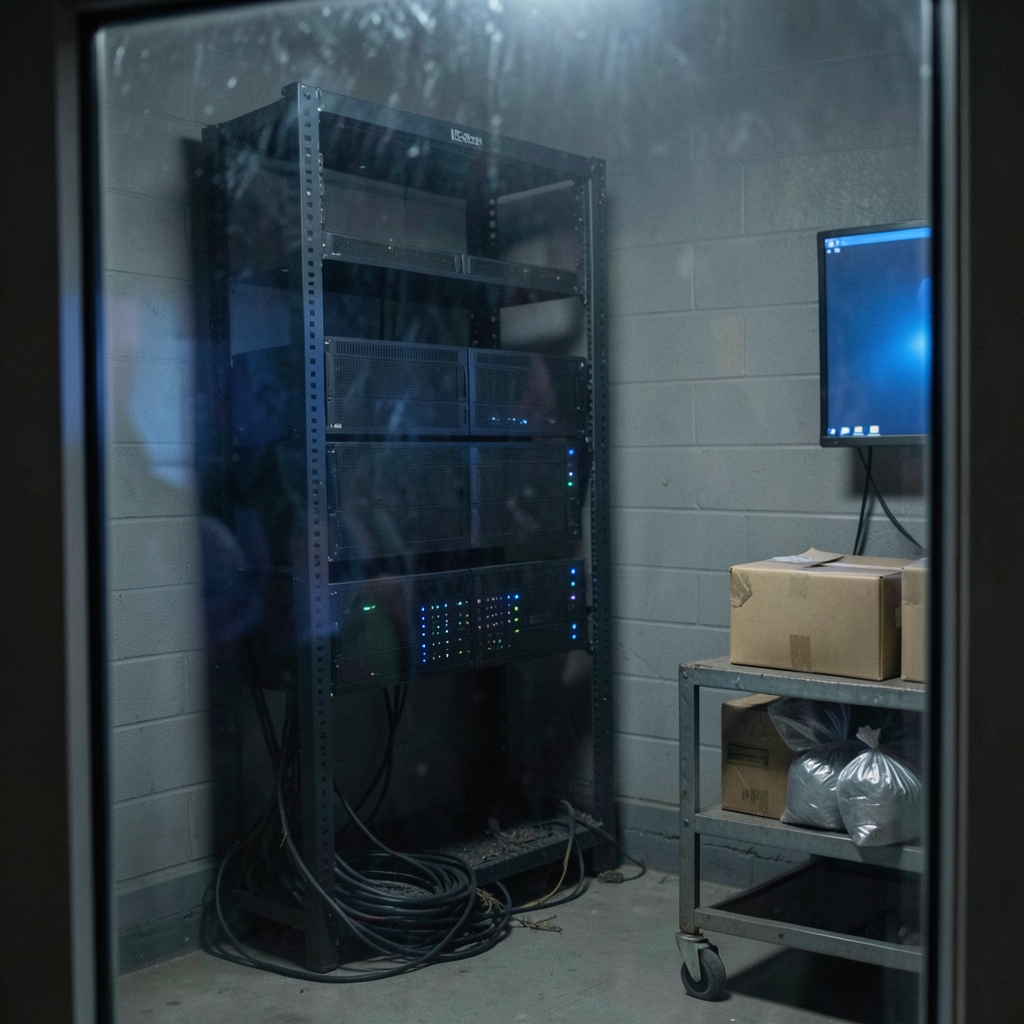
The most talked-about trend is workload repatriation, moving workloads from public cloud back to private infrastructure. The important nuance is that it is selective rather than wholesale.
What tends to drive repatriation decisions:
- Predictable, steady-state workloads where public cloud egress and compute costs compound over years
- Data gravity situations where large datasets are expensive to move and query across boundaries
- Latency-sensitive systems that need to sit close to other infrastructure
- Regulatory or contractual constraints on where data can reside
What tends not to repatriate: bursty workloads, experimental projects, and anything with unpredictable demand. The practical lesson from organizations that have done this is that repatriation succeeds when it is driven by a specific cost or control problem, not by ideology. Teams that move workloads back “because public cloud is expensive” without modeling the full total cost of ownership often trade one bill for another, plus a staffing burden.
Before any move, a disciplined inventory of what you actually run is the unglamorous step that determines whether repatriation pays off. A structured approach to what to inventory before a cloud migration applies in reverse too: dependencies, data volumes, licensing, and integration points all need to be mapped before anything moves.
Trend 2: Hybrid operating models become the default
Few enterprises run purely private or purely public. The dominant pattern is hybrid, with a private cloud core for systems of record and public cloud for elasticity, edge, and SaaS integration. (9481.org)
The operational challenge is not the infrastructure itself but the seams between environments: identity, networking, data transfer, and observability. Data transfer costs in particular are a recurring blind spot. Teams often discover after the fact that cross-environment traffic is a meaningful line item, which is why a clearer way to track cloud data transfer costs is worth building into your FinOps practice early rather than retrofitting later.
A useful habit is to treat every new cloud region or availability zone announcement as a planning input, not just a press release. Learning how to read a cloud region announcement helps you anticipate latency changes, data residency options, and pricing shifts before they affect architecture decisions.
Trend 3: Kubernetes and infrastructure-as-code as the private cloud platform
The platform layer of private cloud has largely standardized. Kubernetes has become the common substrate for containerized workloads, and infrastructure-as-code tools have become the way private clouds are provisioned and governed.
| Layer | Common approach | What it buys you |
|---|---|---|
| Compute | Virtualization plus Kubernetes | Consistent deployment target |
| Provisioning | Infrastructure as code | Repeatable, auditable environments |
| Networking | Software-defined networking | Policy-driven segmentation |
| Storage | Software-defined or hyperconverged | Elastic capacity without silos |
| Identity | Centralized IAM with federation | One policy across environments |
The practical benefit is portability of skills and pipelines. The practical risk is complexity sprawl: too many clusters, too many toolchains, too many bespoke operators. Organizations that do this well tend to standardize aggressively and resist the urge to let every team invent its own platform.
Trend 4: Sovereignty and data residency move from legal to architectural
Data residency and digital sovereignty requirements have moved from legal review into architecture diagrams. Public-sector bodies and regulated industries increasingly need to demonstrate where data is stored, who can access it, and under which jurisdiction.
This does not automatically mean building everything on-premises. Hosted private cloud and sovereign cloud offerings exist precisely to satisfy these constraints without requiring a full data center build. But the trend does push enterprises toward private and hybrid models, and it makes the question “where does this data physically live?” a first-class design concern rather than an afterthought.
The practical mistake here is treating sovereignty as a checkbox. It affects backup locations, support access paths, disaster recovery regions, and even which staff can hold administrative credentials. Getting it wrong is expensive to fix after the fact.
Trend 5: AI workloads pull GPU capacity back on-premises
AI training and inference have created a new reason to own infrastructure. GPU capacity in public clouds is expensive, capacity-constrained, and priced with less predictability than general compute. For organizations with steady inference workloads or sensitive training data, private GPU capacity becomes attractive.
This is one of the clearest examples of a trend that is genuinely new rather than recycled. It also creates new problems: power density, cooling, procurement lead times, and the specialized skills to operate accelerator clusters. Enterprises that succeed here usually start with a narrow, well-defined workload rather than building a general-purpose AI platform on day one.
When GPU capacity is split across teams and accounts, governance gets messy fast. The same reasoning that applies when deciding when to split workloads across cloud accounts applies to accelerator pools: clear ownership boundaries prevent noisy-neighbor problems and budget surprises.
Trend 6: Cost discipline becomes an engineering discipline
FinOps has matured from a finance reporting exercise into an engineering practice. In private cloud, this shows up as chargeback and showback models, capacity planning, and utilization targets.
The most common failure mode is cost reporting that engineers cannot act on. A monthly invoice broken down by department tells a platform team nothing about which workload is wasteful. Making cloud cost reviews useful to engineers requires mapping spend to services, surfacing unit economics, and giving teams the levers to change outcomes. Reviews that end in a spreadsheet nobody reads are worse than no review at all.
Trend 7: Security and confidential computing mature
Private cloud has always had a security story, but the story is getting more specific. Confidential computing, workload identity, and policy-as-code are moving from pilot projects into production patterns.
The practical shift is from perimeter thinking to identity and policy thinking. In a hybrid estate, the network perimeter is not a meaningful boundary. What matters is strong workload identity, least-privilege policy enforced in code, and audit trails that survive an incident review. Enterprise AI and cloud security concerns now sit at the center of this, because AI workloads often touch sensitive data and introduce new access paths.
Trend 8: Automation and self-service, done carefully
Self-service provisioning is one of the defining characteristics of cloud, and private cloud platforms increasingly deliver it. The tension is between speed and control. Give developers a fully open portal and you get sprawl. Give them nothing and they build shadow IT.
What tends to work in practice:
- Start with a small catalog of approved, opinionated service templates.
- Automate guardrails (tagging, network policy, budget alerts) rather than approvals.
- Measure time-to-provision as a platform metric, not just a developer convenience.
- Review the catalog quarterly and retire templates nobody uses.
What tends not to work: lengthy ticket-based approval chains dressed up as governance, and platform teams that build features nobody asked for.
Common mistakes to avoid
A few patterns show up repeatedly in failed private cloud initiatives.
Treating virtualization as cloud. Without self-service and automation, you have a virtual estate, not a private cloud. The operating model is the product.
Underestimating the people cost. Private cloud requires platform engineering, security, networking, and operations skills. Hardware is rarely the bottleneck; staffing is.
Skipping the exit plan. Every private cloud decision should include a view of how workloads could move if requirements change. Lock-in is not only a public cloud problem.
Ignoring energy and facilities. Density is rising, especially with accelerators. Facilities teams need to be in the conversation from the start.
Measuring the wrong things. Uptime alone is not a useful success metric. Provisioning time, utilization, cost per workload, and developer satisfaction tell a more honest story.
How to evaluate the trends for your own organization
Not every trend applies to every enterprise. A reasonable filter:
| Question | Why it matters |
|---|---|
| Which workloads are stable and predictable? | Candidates for private cloud economics |
| Where are regulatory constraints binding? | Drives sovereignty requirements |
| What is the current utilization rate? | Reveals consolidation opportunity |
| Which skills exist in-house today? | Determines realistic scope |
| What is the three-year cost comparison? | Prevents short-term thinking |
The broader discipline of enterprise AI and cloud intelligence is essentially this: matching workload characteristics to the right operating model, then measuring whether the match holds over time.
Conclusion
Private cloud trends in 2025 are less about a dramatic reversal and more about maturing judgment. Repatriation is real but selective. Hybrid is the default operating model. Kubernetes and infrastructure-as-code have become the platform standard. Sovereignty, AI capacity, and cost discipline are reshaping the economics. None of these trends reward ideology; they reward organizations that model costs honestly, inventory what they run, and invest in the platform engineering skills that make private cloud behave like a cloud rather than a data center with a new name.
The organizations getting this right tend to share one habit: they treat private cloud as an operating model decision that gets revisited, not a one-time build. That framing is what separates infrastructure that keeps pace with the business from infrastructure that becomes a monument.
FAQ
What is the difference between private cloud and on-premises infrastructure?
Private cloud uses cloud characteristics such as self-service, pooling, and automation for a single organization. On-premises infrastructure may or may not meet those criteria. The distinction is the operating model, not the physical location, which is why a hosted private cloud can still count as private cloud.
Is private cloud more expensive than public cloud?
It depends entirely on the workload. For steady, predictable workloads running at high utilization, private cloud can be cheaper over a multi-year horizon. For bursty or experimental workloads, public cloud usually wins on cost because you avoid idle capacity. Modeling total cost of ownership, including staffing and facilities, is essential before drawing conclusions.
Why are companies moving workloads back from public cloud?
Common drivers include predictable workloads with high egress costs, data gravity, latency requirements, and regulatory constraints. Repatriation tends to succeed when it targets specific problems rather than being applied as a blanket strategy.
Does private cloud still make sense with Kubernetes?
Yes, and Kubernetes has arguably made private cloud more practical by standardizing the deployment target. It gives teams a consistent platform across environments, though it also introduces complexity that needs deliberate governance to avoid cluster sprawl.
What skills does a private cloud team need?
Platform engineering, infrastructure as code, networking, identity and security, and cost management are the core areas. Facilities and capacity planning skills matter more than they do in public cloud, especially as accelerator workloads raise power density.
How should an organization start with private cloud?
Start with an inventory of workloads and their characteristics, then model costs against both private and public options. Pick a narrow first use case with clear success metrics, build the automation and guardrails around it, and expand only after the operating model is proven.