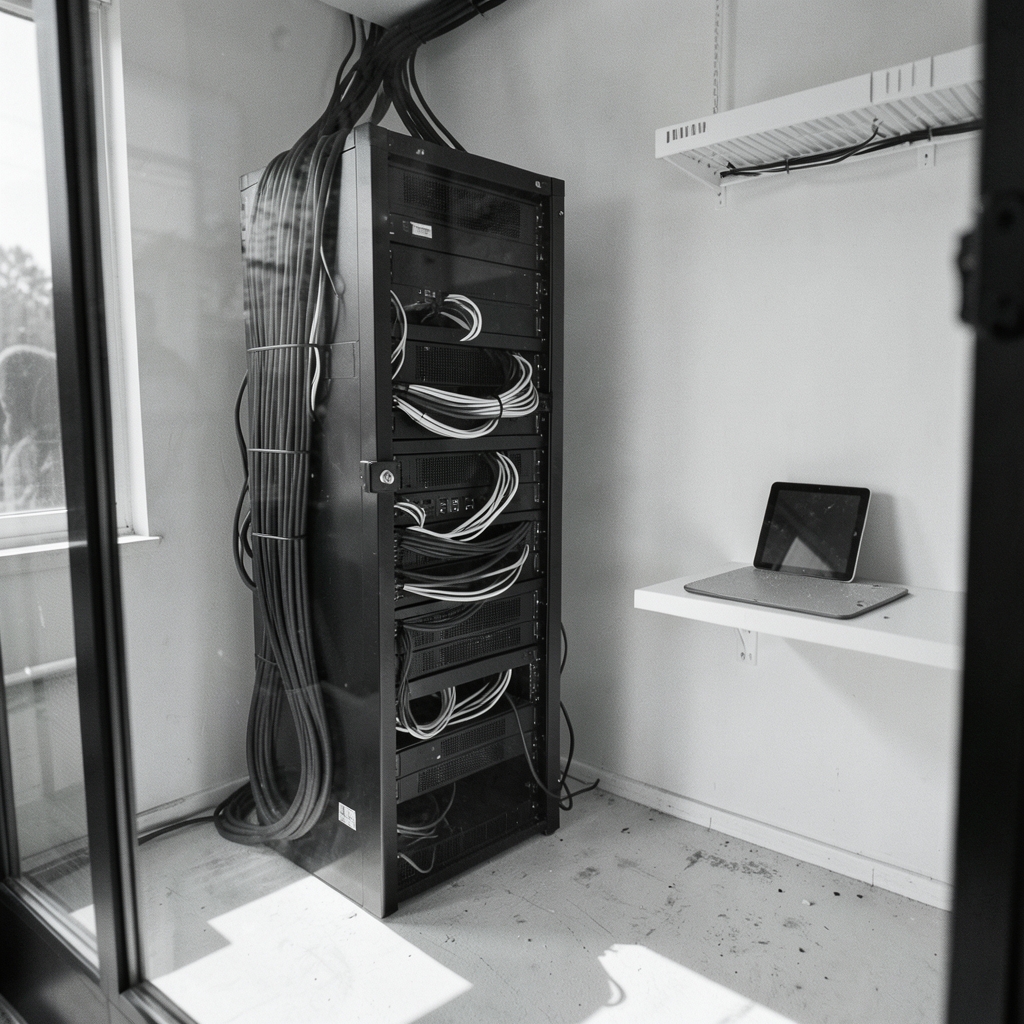
What do a national tax authority, a hospital network, and a mid-sized bank have in common? They all run workloads that never touch a public cloud, and they all describe those environments as a private cloud. That word gets used loosely. Vendors stretch it to cover anything with a hypervisor. Engineers roll their eyes at it. Yet the underlying pattern is real and worth understanding, especially if you are weighing where your own workloads should live.
This article walks through concrete categories of private cloud deployments, the platforms that power them, and the mistakes that turn a promising build into an expensive rack of underused servers. The examples are drawn from patterns that recur across industries rather than from any single company’s press release, because the recurring patterns are what actually teach you something.
What counts as a private cloud, exactly?
Before listing examples, it helps to pin down the term. The most widely cited reference is the NIST definition of cloud computing, which sets out five required characteristics, three service models, and four deployment models. A private cloud, in that framework, is infrastructure provisioned for exclusive use by a single organization comprising multiple consumers. That last clause matters. Exclusive use by one organization is the easy part; supporting multiple internal consumers with self-service is where many builds fall short.
The five required characteristics are the useful test. On-demand self-service, broad network access, resource pooling, rapid elasticity, and measured service. Strip out self-service and elasticity, and what you have is virtualization in a data center. That is a perfectly good thing to have, but calling it a cloud confuses budgeting, staffing, and expectations.
A quick comparison makes the distinction concrete:
| Trait | True private cloud | Traditional on-premises virtualization |
|---|---|---|
| Provisioning | Self-service portal or API, minutes | Ticket to the infrastructure team, days |
| Capacity | Pooled, elastic within the estate | Fixed per cluster, overprovisioned |
| Billing | Measured, chargeback to teams | Annual budget line, opaque |
| Automation | Infrastructure as code by default | Manual runbooks, some scripting |
| Ownership | One organization, often multiple tenants | One organization, one tenant |
If your environment sits in the right-hand column, that position is common. Most organizations that say “private cloud” mean the right-hand column. Knowing which one you actually operate is the first step toward a plan that survives contact with a budget review.
Example 1: Government agencies running citizen services

Public-sector bodies are the most frequently cited private cloud adopters, and for understandable reasons. Citizen records, tax data, and benefits systems carry legal constraints on where data sits and who can access it. Agencies often build internal platforms that offer self-service to dozens of departmental teams while keeping everything inside a controlled boundary.
The pattern usually looks like this: a central IT group operates the platform, sets guardrails, and publishes a catalog of approved service templates. Departments request environments through a portal. The platform team handles patching, identity, and network segmentation. Auditors get logs without asking anyone for a favor.
The practical lesson from these programs is that governance is the product. Agencies that succeed spend as much effort on the service catalog and the approval workflow as on the hardware. Agencies that struggle build a beautiful cluster and then discover nobody can get a virtual machine without a three-week review.
Example 2: Regulated financial institutions
Banks and insurers run private clouds for a mix of regulatory pressure and latency reasons. Core transaction systems, risk models, and customer data often stay in environments the institution controls, while customer-facing apps and analytics may sit elsewhere. The result is usually a hybrid estate, with the private side handling the workloads that cannot move.
What tends to work in practice is treating the private cloud as one region among several. Teams that build a consistent deployment pipeline, with the same container images and configuration tooling across environments, move work between private and public without drama. Teams that build bespoke tooling for the private side create a permanent tax on every future migration. If you are planning this kind of split, a guide on when to split workloads across cloud accounts covers the boundary decisions that cause the most friction. (NIST SP 800-145: The NIST Definition of Cloud Computing)
A common mistake: sizing the private estate for peak load on every application. That produces a data center full of idle capacity. Mature shops size for a baseline and burst outward, or they accept queueing during rare peaks rather than paying for hardware that runs at fifteen percent utilization.
Example 3: Healthcare and research institutions
Hospitals and research universities run private clouds for patient data, imaging archives, and research datasets with consent restrictions attached. Imaging in particular generates enormous volumes, and moving them across a network link for every analysis is slow and costly. Keeping compute near the data is often the deciding factor.
These environments frequently lean on open-source infrastructure projects. OpenStack is the long-standing example, a collection of projects for building public and private clouds, with components for compute, storage, networking, and identity. It is not a small undertaking. The institutions that run it well treat it as a product with a dedicated team, not a side project for whoever has spare time.
Research institutions also tend to have strong internal platform engineering groups, which helps. When a university’s central IT can offer a self-service environment with GPU capacity, researchers stop buying their own servers and stuffing them under desks. That consolidation is one of the clearest financial wins a private cloud can deliver.
Example 4: Container platforms on owned hardware
A growing share of private cloud examples are not virtual-machine clouds at all. They are Kubernetes clusters running on hardware the organization owns, wrapped in a developer portal. The platform provides namespaces instead of virtual machines, and the self-service experience is a git commit rather than a ticket.
This model suits organizations with a strong DevOps culture. The platform team publishes golden paths, teams deploy through pipelines, and the cluster scheduler handles placement. Elasticity comes from adding nodes, which is slower than a public cloud API call but often fast enough for steady-state workloads.
The trap here is underestimating the operational load. Kubernetes is not a set-and-forget product. Upgrades, certificate rotation, networking plugins, and storage integration all need owners. Organizations that succeed budget for a platform team of real size, usually several engineers, before the first cluster goes live. Those that do not end up with a fragile cluster that everyone is afraid to touch.
Example 5: Edge and factory-floor deployments
Manufacturing plants and retail chains increasingly run small private clouds at the edge. A factory floor may host a handful of servers running container workloads that process sensor data locally, because a round trip to a distant region adds latency and creates a dependency on a network link that can fail.
These deployments are small but numerous. The design challenge is managing hundreds of sites without sending an engineer to each one. The answer is usually a central control plane with automated rollout, plus a strict rule that edge nodes must keep running when disconnected. That offline-first requirement shapes everything from the database choice to the update mechanism.
Edge private clouds are also where cost surprises hide. Hardware at a hundred sites, each with its own support contract and spare parts, adds up in ways a single data center does not. A clear view of transfer and connectivity costs helps; this explanation of how to track cloud data transfer costs applies just as well to links between edge sites and a central region.
What separates private clouds that work from those that don’t?
After enough of these deployments, patterns emerge. The successful ones share a handful of habits, and the struggling ones share a handful of mistakes.
Successful habits:
- Treat the platform as a product with a named owner, a roadmap, and users who give feedback.
- Publish a small service catalog with sensible defaults rather than offering infinite configuration.
- Automate provisioning end to end, so a new environment takes minutes and no human approval for standard cases.
- Measure consumption and show teams what they use, even if no money changes hands.
- Plan capacity from real usage data, not from each team’s stated worst case.
Common mistakes:
- Building the cluster before defining who can use it and how they request access.
- Skipping chargeback, then discovering nobody has an incentive to delete anything.
- Letting the platform team become a ticket queue instead of an engineering group.
- Assuming a private cloud removes the need for cost discipline because the hardware is already paid for.
- Forgetting that hardware refresh cycles arrive whether or not the budget was planned.
That fourth mistake deserves emphasis. A private cloud does not make costs disappear; it moves them into capital expenditure and depreciation, where they become harder to see per workload. Teams that run useful cost reviews make the numbers visible to the people who can act on them, a discipline covered in this piece on making cloud cost reviews useful to engineers. The same thinking applies whether the bill comes from a provider or from a depreciation schedule.
How do you decide whether a private cloud example applies to you?
The honest answer is that most organizations end up hybrid, and that is fine. The question is which workloads genuinely need exclusive infrastructure. Work that involves legally restricted data, tight latency requirements, very large datasets that are expensive to move, or long-running steady-state compute is a reasonable candidate. Work that spikes unpredictably, serves a global audience, or benefits from a stream of new managed services usually is not.
A useful exercise is to inventory before you build. List the workloads, their data classifications, their usage patterns, and their dependencies. This checklist for what to inventory before a cloud migration works in reverse too: run it against your current estate to see what a private platform would actually need to support. The output usually shrinks the scope considerably.
It also helps to read vendor and regulator announcements with a skeptical eye. A new region launch or a sovereignty program sounds transformative until you check which services are actually available there and when. This guide to how to read a cloud region announcement is a good calibration tool for that habit.
Conclusion
Private cloud examples span a wider range than the marketing suggests. A tax agency’s self-service portal, a bank’s transaction platform, a hospital’s imaging archive, a Kubernetes cluster behind a developer portal, and a factory-floor node are all recognizably the same pattern: pooled infrastructure, exclusive to one organization, delivered with automation and measured consumption.
The differences that matter are not in the hardware. They are in ownership, governance, and the willingness to treat the platform as a product. Get those right and a private cloud can be a genuine competitive asset. Get them wrong and you have built an expensive, static data center with a fashionable name. The examples above are worth studying not because they are exotic, but because the organizations behind them made deliberate choices about what to keep close and what to let go. That judgment, more than any platform choice, is what determines the outcome.
Start with the smallest viable private cloud: one workload, one team, and a six-month review point. If the platform cannot demonstrate measurable value by then, the scope was wrong, not the idea.
Document the exit plan. Hardware refreshes, staff turnover, and budget cycles all test a private cloud. Teams that write down how workloads would move back out, and keep that path tested, negotiate from strength rather than dependency.
The pattern across every example is consistent: deliberate scope, visible ownership, and honest measurement. Private clouds earn their place when they solve a specific problem better than the alternatives, and lose it when they become an end in themselves.