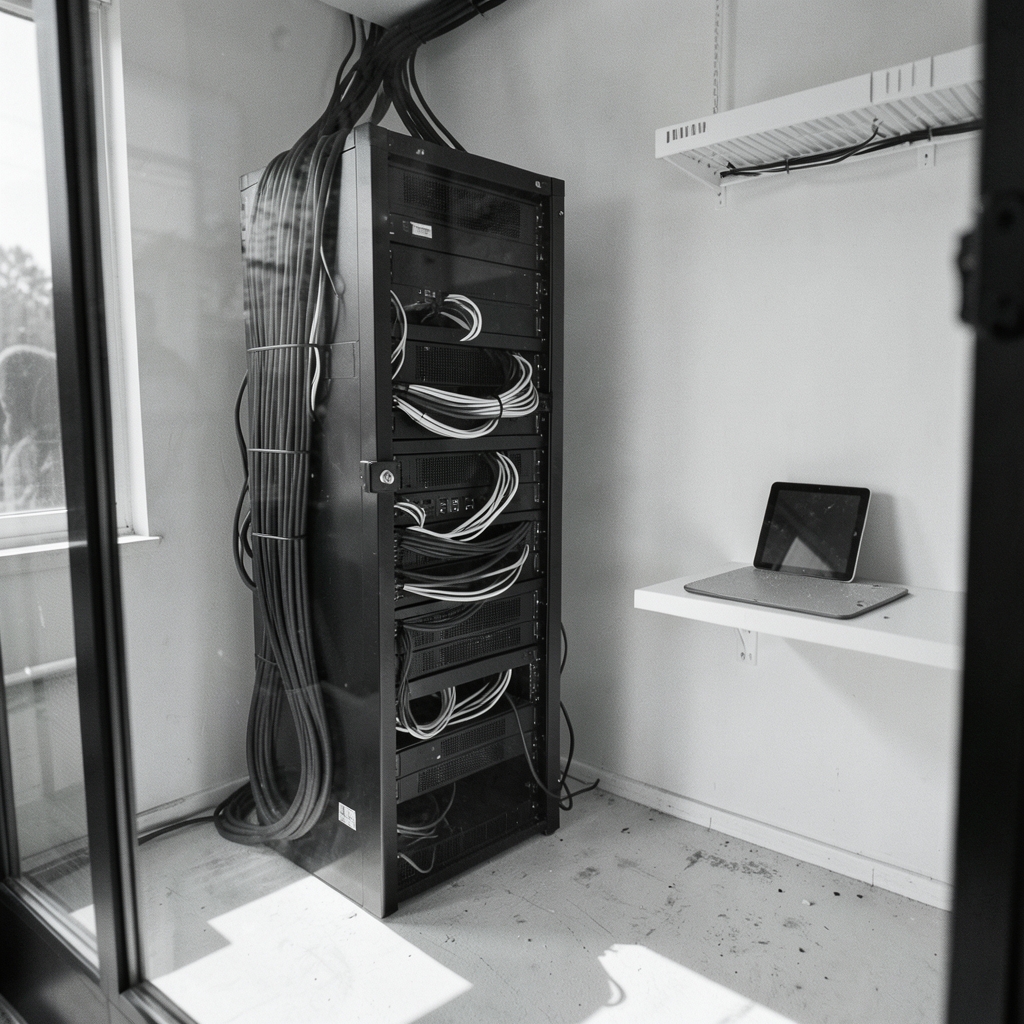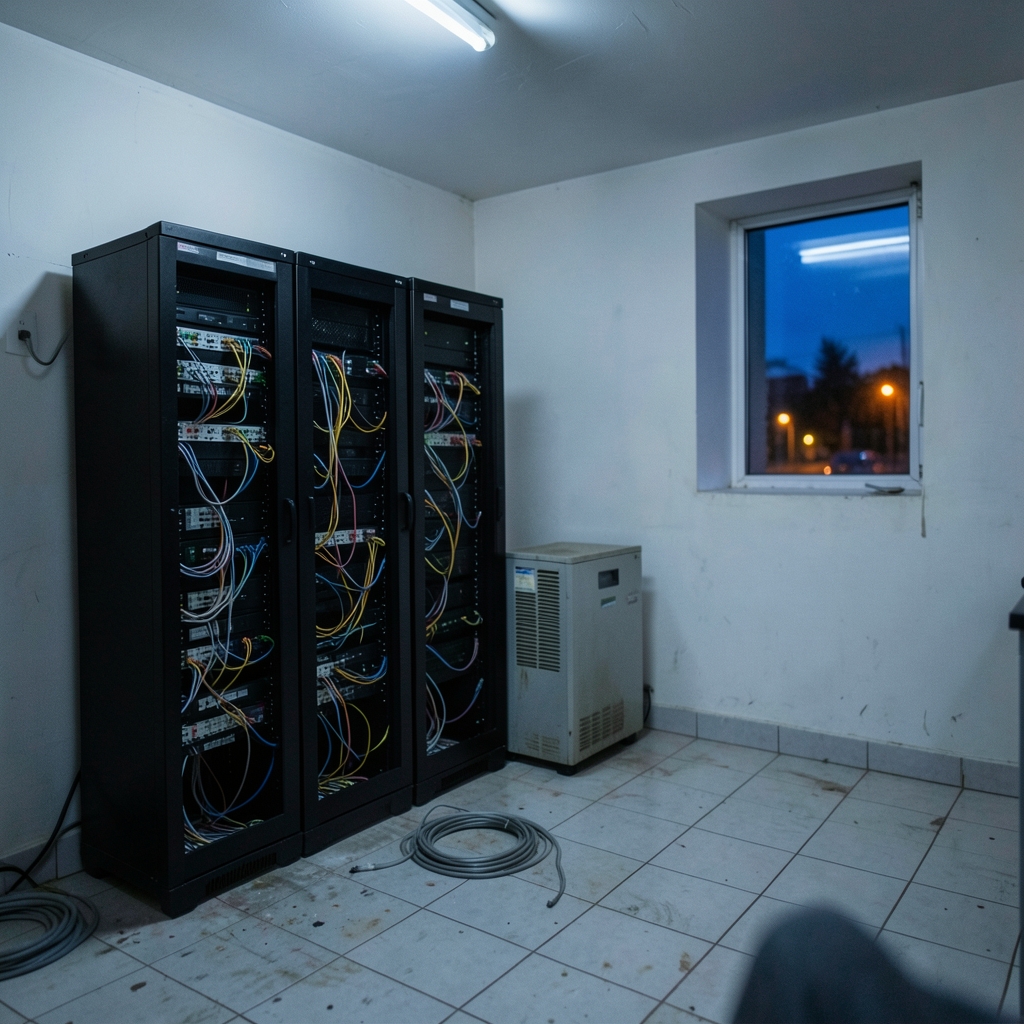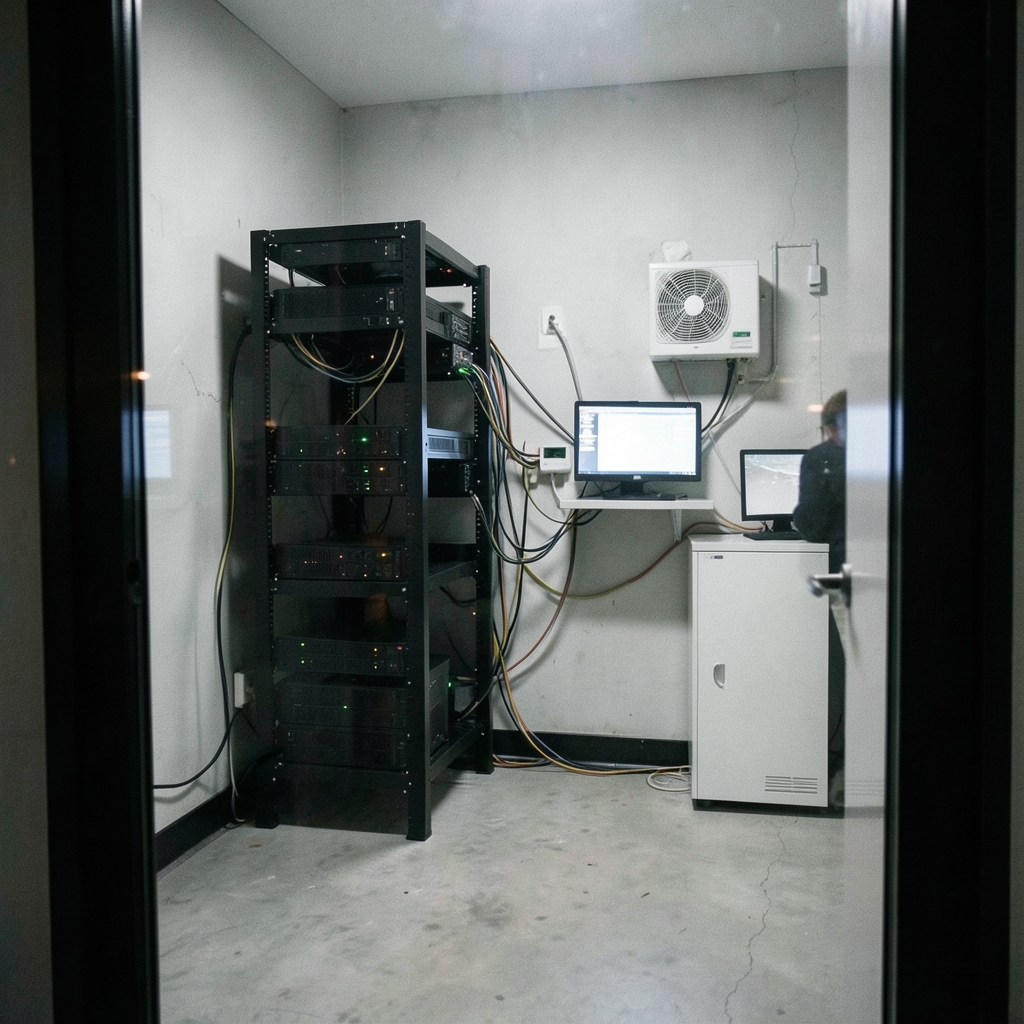
What makes a cloud “private” — the fact that nobody else uses it, or the fact that it sits in your own building?
Most people assume the second. They picture a locked server room down the hall. But the official definition says something different, and that gap causes a lot of expensive confusion. Teams buy hardware expecting a private cloud and end up with a private data center. Others rent dedicated space from a provider and wonder whether it counts.
This guide untangles the definition, walks through the real architecture choices, covers the cost and staffing traps, and explains when a private cloud beats the public alternative — and when it quietly becomes the most expensive way to run a workload.
What Counts as a Private Cloud, Officially
The most widely used definition comes from the U.S. National Institute of Standards and Technology. Its cloud computing definition in NIST SP 800-145 describes cloud computing through five core characteristics, three service models, and four deployment models. Private cloud is one of those deployment models: infrastructure provisioned for exclusive use by a single organization made up of multiple consumers.
Two details in that sentence matter more than they look.
First, “exclusive use by a single organization” is about tenancy, not geography. The same document notes that the infrastructure can be owned, managed, and operated by the organization itself, by a third party, or by some mix of the two, and it can sit on or off the organization’s premises. A private cloud can live in a colocation cage or in a vendor’s dedicated hardware.
Second, the five core characteristics still apply. On-demand self-service, broad network access, resource pooling, rapid elasticity, and measured service are not optional extras. Remove them and you have virtualization, not cloud.
That is the single most common mistake in practice. A company buys a hypervisor cluster, gives each team a folder of virtual machines, and calls it a private cloud. There is no self-service portal, no metering, no elasticity. It is a virtualized data center with a cloud label. The label matters because it sets expectations — and because finance teams start asking why the “cloud” costs so much while delivering so little flexibility.
Private, Public, Hybrid, and Community: Where the Lines Fall

NIST’s framework also defines community cloud — infrastructure shared by a specific group of organizations with common concerns, such as a sector or regulatory regime. That category is worth knowing because many “private” clouds in regulated industries are really community clouds with strict membership rules.
| Model | Who uses it | Typical location | Control level |
|---|---|---|---|
| Private cloud | One organization, multiple internal consumers | On-premises, colocation, or dedicated hosted | Highest |
| Community cloud | A defined group of organizations | Shared among members | High, shared governance |
| Public cloud | Many unrelated organizations | Provider data centers | Lower, provider-managed |
| Hybrid cloud | A mix of the above, connected | Multiple | Varies by workload |
For terminology that holds up across borders, the ISO/IEC 17788 cloud computing vocabulary standard sets out the deployment and service categories in more detail. It is useful when a vendor’s marketing language starts drifting from the standard.
The Architecture Choices That Shape Everything
A private cloud is not one product. It is a stack of decisions, and getting the order wrong is how projects stall.
Start with the service model
Most private clouds are built as infrastructure as a service, where the platform team provides compute, storage, and network while application teams manage their own operating systems and middleware. Some organizations add a platform layer so developers get managed runtimes and databases. A few go further and offer software as a service internally. Each layer up means more work for the platform team and less for everyone else.
Pick your platform deliberately
Open-source stacks such as OpenStack, the open-source cloud platform project, are a common foundation for private infrastructure as a service. Commercial hyperconverged and virtualization suites are the other main path. Kubernetes-based internal platforms are increasingly the third route, especially for container-first shops.
The choice usually comes down to skills rather than features. A platform nobody on staff can debug at 2 a.m. is a liability, no matter how good its benchmark scores look.
Decide who does what
The ISO/IEC 17789 cloud reference architecture lays out the roles involved — cloud provider, cloud consumer, cloud auditor, cloud broker, cloud carrier — and that role map is genuinely useful for private cloud. When the provider and the consumer are both inside the same company, responsibilities blur. Writing them down prevents the classic standoff where the platform team says the application team misconfigured something and the application team says the platform was never documented. (Cloud computing)
Plan the network and identity layers first
Identity, network segmentation, and IP address management are the three things that are painful to retrofit. Teams that start with compute because it is fun end up rebuilding the network a year later. If you are early in planning, a checklist of what to inventory before a cloud migration is a better starting point than a hardware quote.
The Costs Nobody Budgets For
Private cloud shifts spending from a variable bill to a capital commitment. That trade has real advantages — predictable costs, no egress surprises, full control — but the total cost of ownership is routinely underestimated.
Here is where budgets usually break:
- Hardware refresh cycles. Servers have a useful life of roughly three to five years. The refresh is not optional, and it arrives whether or not the business has a good year.
- Staffing. A private cloud needs platform engineers, network specialists, and security people. In many markets, the salary load for a small platform team exceeds the public cloud bill it replaces.
- Software licensing. Virtualization, backup, monitoring, and management tooling all carry license costs that scale with core count.
- Facilities. Power, cooling, space, and physical security are easy to forget when the servers live in a colocation contract rather than a basement.
- The invisible work. Patching, capacity planning, incident response, and documentation consume senior engineering time that never appears on a purchase order.
A useful discipline is to treat the private cloud as a product with its own unit economics. If application teams could see a per-workload cost, they would make better sizing decisions. That is the thinking behind making cloud cost reviews useful to engineers rather than treating cost as a finance-only conversation.
Security and Compliance: The Real Reason People Choose Private
Ask why an organization picked private cloud and the answer is usually data control, regulatory obligation, or latency. Security rarely tops the list on its own — it is the compliance requirement behind it that forces the decision.
The regulatory angle is concrete. In the European Union, the General Data Protection Regulation (Regulation (EU) 2016/679) sets obligations around where personal data goes and who is responsible for it, which pushes some organizations toward infrastructure they control directly. In the United States, public-sector buyers often work within the FedRAMP program for cloud security assessment and authorization, which shapes how cloud services get approved regardless of deployment model.
For structuring the controls themselves, two references come up repeatedly. The NIST Cybersecurity Framework organizes security outcomes into recognizable functions, and its 2.0 revision added a stronger governance focus. Beneath that, the NIST SP 800-53 security and privacy control catalog provides the detailed control baselines many private cloud programs adopt wholesale.
One caution from experience: a private cloud does not automatically make you more secure. It makes you responsible. Public providers employ thousands of security engineers and see threat traffic at a scale no single company can match. Going private means inheriting every patching cadence, every hardening baseline, and every audit yourself. Organizations that move for compliance reasons without adding security capacity often end up with a less defensible posture than they started with.
Operating a Private Cloud Without Burning Out the Team
The failure mode is predictable. A private cloud launches with fanfare, adoption grows, and eighteen months later the platform team is a ticket queue. Self-service quietly reverts to email requests because the portal was never finished.
What actually works, in practice:
- Ship the self-service portal before the hardware. If provisioning still requires a human, you have not built a cloud.
- Set quotas from day one. Unlimited access to a private cloud is how you run out of capacity in a quarter.
- Publish a service catalog with real prices. Teams respond to visible costs far better than to memos about efficiency.
- Automate the boring parts first. Image builds, patching, and access requests deliver more relief than a fancy dashboard.
- Decide early how workloads split across accounts or projects. Isolation boundaries are much easier to design upfront than to retrofit, and when to split workloads across cloud accounts covers the trade-offs well.
It also helps to treat the platform as a product with real users. The cloud infrastructure and architecture resources at 9481.org are a reasonable reference point for how platform teams structure that work, and the broader enterprise AI and cloud intelligence material covers how private infrastructure fits into a wider estate that almost always includes public services too.
When Private Cloud Is the Right Call
Private cloud wins in a narrower set of cases than most vendors suggest. It tends to make sense when:
- Regulation or contract requires direct control over data location and access.
- Workloads are steady, predictable, and large enough to justify dedicated hardware.
- Latency to on-premises systems or equipment is a hard constraint.
- Existing data center capacity and skills are already paid for.
- The organization genuinely wants to run infrastructure as a core competency.
It tends to lose when demand is spiky, when the platform team is one person, when the workload is a standard web application, or when the real motivation is discomfort with a cloud bill rather than a technical requirement. Hybrid arrangements often resolve the tension: keep sensitive or latency-bound systems private, run elastic and experimental work in public cloud, and connect them with a deliberate network design.
Reading provider announcements critically also helps, since region launches and capacity changes affect where private and hybrid footprints can sensibly connect. A guide to how to read a cloud region announcement is worth keeping handy for that.
Conclusion
Private cloud is a tenancy model, not a building. It means infrastructure reserved for one organization, delivered with self-service, elasticity, and metering. Get those characteristics right and you gain control, predictability, and a strong compliance story. Skip them and you have bought servers with a better name.
The organizations that succeed treat the private cloud as a product: they fund the platform team properly, publish real costs, automate the routine work, and resist the urge to build one just because a competitor did. The ones that struggle usually made a hardware decision when they needed an operating model decision. Start with the workload, the regulation, and the skills on hand — then decide whether the cloud you need is private, public, or a careful mix of both.
Frequently Asked Questions
Is a private cloud always on-premises?
No. The defining feature is exclusive use by one organization, not physical location. A private cloud can run in your own data center, in a colocation facility, or on dedicated hardware managed by a third party. What matters is that no other organization shares the underlying infrastructure and that the five core cloud characteristics are present.
What is the difference between private cloud and virtualization?
Virtualization lets you run multiple virtual machines on one physical server. A private cloud adds self-service provisioning, rapid elasticity, resource pooling, and measured service on top. Without those, you have a virtualized environment — useful, but not a cloud, and it will not deliver the agility people expect from the label.
How much does a private cloud cost to run?
There is no single figure, but the total cost of ownership typically includes hardware refreshed every three to five years, software licensing, facilities or colocation fees, network equipment, and the salaries of the platform team. For smaller organizations, staffing alone often exceeds the equivalent public cloud spend, which is why many choose hybrid arrangements instead.
Is private cloud more secure than public cloud?
Not automatically. Private cloud gives you more control over configuration, access, and data location, which helps with compliance. But it also transfers full responsibility for patching, hardening, monitoring, and incident response to your team. Public providers bring security scale that few individual organizations can match, so the answer depends on your team’s capability as much as on the architecture.
Can a private cloud connect to public cloud services?
Yes, and most organizations do exactly that. A hybrid setup connects private infrastructure to public services through dedicated network links or encrypted tunnels. This lets sensitive or latency-bound workloads stay private while elastic or experimental work runs in public cloud, with identity and networking designed to span both sides.
What skills does a private cloud team need?
At minimum: virtualization or container platform engineering, networking and segmentation, identity management, storage, automation and infrastructure as code, and security operations. A small team can cover this with a managed platform and heavy automation, but going private with no platform engineering capacity is the most reliable way to end up with an expensive, fragile environment.