
AI in 2027 is the question every team is asking as the technology moves from novelty to infrastructure, and the short answer is that 2027 will be the year AI stops being a tool you open and becomes a colleague you direct. Agents will handle multi-step work, reasoning models will check their own answers, and AI will appear in devices, vehicles and workplaces that never called themselves computers.
The change will feel gradual day by day and dramatic year on year. This guide sets out what to expect from AI in 2027, what is genuinely new, and what is simply last year’s promise arriving late.
The honest way to read predictions about AI is to separate the direction from the date. The direction is clear: models keep getting more capable, cheaper to run and easier to use, while the software around them, agents, tools and integrations, matures fast.
The date is where predictions fail, because regulation, energy supply and business caution all slow things down. Expect 2027 to reward teams that prepare for steady change rather than a single breakthrough.
Each section below explains what is changing, who it affects, and what a sensible team should do about it.
Key takeaways
- AI in 2027 will be defined by agents that carry out multi-step tasks, not by chatbots that answer single questions.
- Reasoning models that check their own work will become the default for complex tasks.
- Multimodal AI, handling text, images, audio and video together, will become ordinary.
- Smaller, cheaper models will bring AI onto devices and into everyday products.
- The winners in 2027 will be teams that prepare workflows and governance now, not teams that wait for the next model.
Agents move from demos to daily work
The biggest shift to expect from AI in 2027 is the move from chat to action. Early AI assistants answered questions; agentic systems take a goal, plan the steps, use software tools, and report back.
Booking travel, reconciling invoices, triaging support tickets and preparing first drafts are the kinds of multi-step jobs agents are already learning to do. In 2027, more of them will work reliably enough for real use.
Reliability is the open question. An agent that succeeds nine times in ten is a fine demo and a poor employee, because the tenth failure can be expensive.
Expect 2027 to be the year of guardrails: approval steps for costly actions, audit trails for everything an agent does, and human review where the stakes are high. The teams that get value from agents will be the ones that design these controls first and add autonomy second.
Best for: teams with repetitive, multi-step digital work, such as support, finance operations and research, where an agent can be supervised and its output checked.
Reasoning models become the default
Reasoning models, which spend extra time working through a problem before answering, have moved from a research curiosity to the standard for hard tasks. They break a problem into steps, test their own intermediate answers, and often catch mistakes that a fast, single-pass model would miss.
For coding, mathematics, planning and analysis, the difference is large. In 2027, expect reasoning to be switched on by default for complex work and switched off only where speed matters more than accuracy.
The trade-off is cost and time. A reasoning model can use many times more computing power on one question than a standard model, which makes it slower and more expensive per answer.
That means teams will need to choose deliberately: quick answers for simple questions, deep reasoning for decisions that matter. Routing the right question to the right model will become a core skill, and our guide to LLM model routing systems that pick the right model per request explains how that choice works in practice.
Reasoning also changes how people check AI output. A model that shows its working lets a person follow the steps and spot where it went wrong, which makes review faster and more reliable. Expect products in 2027 to expose more of this working, not less, because transparent reasoning is easier to trust.
Best for: complex analysis, coding, planning and any task where a wrong answer costs more than a slow one.
Multimodal AI becomes ordinary
AI in 2027 will be multimodal by default, meaning the same model handles text, images, audio and video together. A user will be able to show a model a photograph, ask a spoken question about it, and receive an answer that refers to what is in the picture. The novelty will fade fast, and the interesting question will be what people do with the capability once it is simply there.
The most useful applications will be unglamorous. Inspecting a damaged roof from a photograph, reading a handwritten form, transcribing a meeting and summarising the decisions, or checking a product photo against a specification are all tasks that mix media and judgement. These are the jobs where multimodal AI earns its keep, because they are expensive to do by hand and easy to describe.
Multimodal systems also raise new risks. A model that can generate realistic video and audio makes convincing fakes cheap, and 2027 will see more rules about labelling synthetic media.
The EU AI Act already requires transparency for AI-generated content, and similar expectations are spreading. Teams that publish AI-generated media should plan to label it clearly.
Best for: field work, inspections, customer support and content teams that already work with images, audio and video every day.
Smaller models and on-device AI
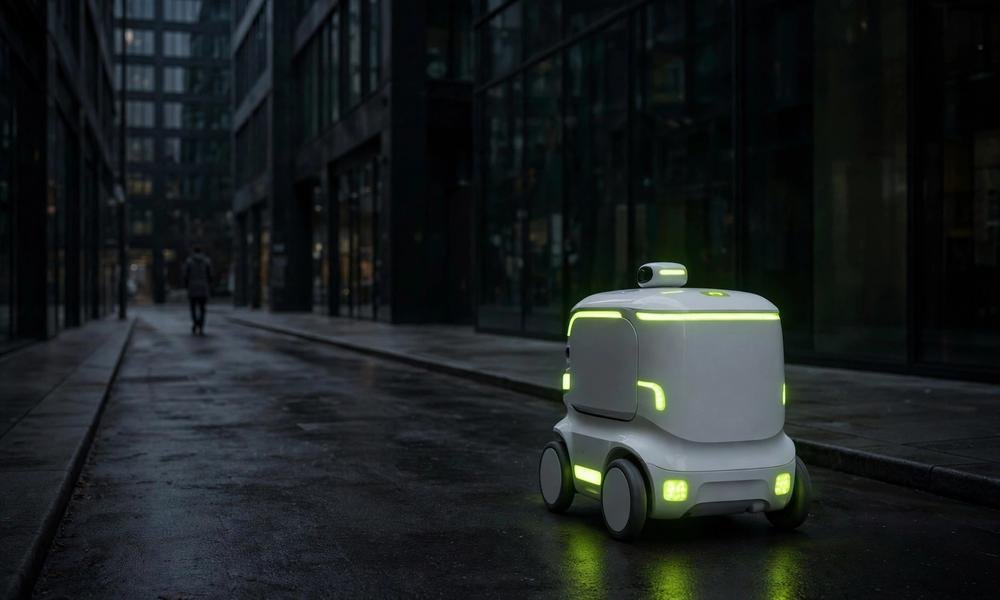
Not every AI advance in 2027 will be about bigger models. Smaller models, trained to do one thing well, are becoming capable enough for many everyday tasks, and they run on phones, laptops and other devices without sending data to a server. That matters for privacy, for speed, and for places where the internet connection is unreliable.
On-device AI changes the privacy conversation. When a model runs locally, sensitive text never leaves the device, which suits health, legal and personal data.
It also removes the per-request cost of a cloud API, so features that were too expensive to offer to every user become affordable. Expect 2027 to bring more AI features built into operating systems and apps, running quietly in the background.
Best for: privacy-sensitive work, offline use, and high-volume routine tasks where cloud costs add up.
AI at work: jobs, skills and the human edge
The honest expectation for AI in 2027 is that it will change jobs more than it removes them. Routine writing, summarising, searching and drafting will be largely automated, while the work that remains will be the judgement around them: deciding what to ask, checking the answer, and taking responsibility for the result. Roles will be redesigned around that split, and the people who thrive will be those who learn to direct AI well.
New skills will matter more than new tools. Writing a precise brief for an agent, checking a model’s reasoning, and knowing when to trust an answer and when to verify it are skills that no model can supply. Employers will start to test for them, and training budgets will shift from teaching people to do routine tasks to teaching them to supervise machines that do.
There will also be a counterweight. As AI-generated text floods every channel, human judgement, taste and trust will become more valuable, not less.
A report signed by a person who checked it, a recommendation from someone with real experience, and a decision explained in plain language will stand out precisely because they are scarce. Our guide to AI transformation and turning pilots into enterprise value looks at how organisations are reorganising work around these changes.
Best for: managers and professionals who want to stay ahead by learning to supervise AI rather than compete with it on speed.
Costs, energy and infrastructure
AI in 2027 will also be a story about cost and energy. Running frontier models needs enormous computing power, and the data centres that provide it use large amounts of electricity and water. That has made energy supply a real constraint on AI growth, and 2027 will see more debate about where data centres are built and what they cost the places around them.
For buyers, the good news is that the cost of a unit of AI capability keeps falling. The same task that needed a flagship model two years ago can often be done by a cheaper model today, and competition between providers keeps prices under pressure.
The bad news is that usage grows faster than prices fall, so bills still rise. Expect 2027 to be the year finance teams start treating AI spend like cloud spend: budgeted, monitored and optimised.
Best for: finance and operations teams that need to control AI spending before it becomes the next surprise line in the budget.
What changes in 2027 at a glance
| Area | Where it stands now | What to expect in 2027 |
|---|---|---|
| Agents | Impressive demos, patchy reliability | Supervised agents doing real multi-step work |
| Reasoning | An option for hard tasks | Default for complex work, off for quick answers |
| Multimodal AI | Available in flagship models | Ordinary in everyday apps and devices |
| Small models | Useful for narrow tasks | Running on devices for routine work |
| Work | AI assists with drafting and search | Roles redesigned around supervising AI |
| Cost and energy | Capability getting cheaper, bills rising | AI spend managed like cloud spend |
The table shows a pattern: nothing in 2027 is a sudden invention. Every shift is already visible, and 2027 is the year these shifts become normal. That is useful news, because it means preparation can start now, with the tools and models that already exist.
Preparing for AI in 2027: a practical checklist
- Pick two or three repetitive workflows and test an agent on them with human approval steps built in.
- Set a routing rule: reasoning models for decisions that matter, fast models for simple questions.
- List every place your team uses AI-generated media and make sure it is labelled clearly.
- Move routine, privacy-sensitive work to small on-device models where that fits.
- Train staff to brief agents precisely and to check model reasoning before acting on it.
- Track AI spending monthly, with a budget and an owner, the way you track cloud spending.
- Review your governance and documentation now, before new rules and customer questions arrive.
Frequently asked questions
Will AI in 2027 replace most office jobs?
No. AI in 2027 will automate many routine tasks, such as drafting, summarising and searching, but it will not remove the judgement, responsibility and relationships that office work depends on. Roles will change, with more time spent directing and checking AI, and less spent on routine production.
What is the biggest AI trend for 2027?
Agentic AI is the biggest trend. Agents that plan multi-step work, use tools and report back are moving from demos into real use, and they will change how teams organise support, finance and research work.
Will AI get cheaper in 2027?
The cost of a unit of AI capability is falling as models get more efficient and providers compete. However, most organisations will spend more in total, because they will use AI far more. The skill to develop is managing spend, not expecting the bill to shrink.
Should small businesses worry about AI in 2027?
Small businesses have the most to gain, because AI gives a small team the output of a much larger one. The risk is not the technology but inaction: competitors that adopt AI for drafting, support and research will move faster. Start with one workflow and learn from it.
What should I learn to stay useful as AI improves?
Learn to brief AI systems precisely, to check their reasoning, and to take responsibility for results. Subject knowledge, judgement and communication will matter more as routine production is automated, and those are the skills worth investing in.