5G explained in plain terms means the fifth generation of mobile networks, the system that carries calls, messages, and data to phones and other devices without wires. The central question is what makes it different from the 4G network it replaces, and the short answer is that it is faster, it responds more quickly, and it can handle far more connected devices at once.
Think of a road. 4G is a good motorway that carries traffic well. 5G is a wider motorway with more lanes, smarter junctions, and separate lanes reserved for ambulances, so that urgent traffic never waits behind ordinary traffic. The road itself is similar, but the way it is managed makes a large difference to what can travel on it.
5G has been rolling out for several years, and it now covers most cities and many towns. Yet the change it brings is easy to miss, because for ordinary browsing it often feels like a modest improvement. Its real impact lies elsewhere: in factories, hospitals, and the growing crowd of connected devices that need a network built for them.
Key takeaways
- 5G is the fifth generation of mobile networks, succeeding 4G.
- It offers higher speeds, lower delay, and capacity for many more devices.
- It uses new radio frequencies and smarter network design to achieve this.
- Its biggest impact is on industry, connected devices, and remote control.
- For ordinary phone browsing, the difference from 4G is often modest.
What 5G is
5G is a set of standards for mobile communication, agreed internationally, that defines how phones, masts, and the core network talk to each other. Like earlier generations, it is a complete system, not a single technology: new radio techniques, new frequencies, and a redesigned core network that is far more flexible than the one behind 4G.
The generations before it each brought a step change. The first carried voice, the second added text, the third brought mobile internet, and the fourth made video streaming and apps practical. 5G was designed with a wider brief: not just faster phones, but a network for machines, sensors, vehicles, and industry, all at once.
That breadth is reflected in how it is built. A 5G network can be split into virtual slices, each tuned for a different job: one slice for ordinary phones, another for factory robots that need instant responses, another for thousands of sensors that send tiny amounts of data. One physical network behaves like several specialised ones.
How 5G works
At the radio level, 5G uses a wider range of frequencies than 4G. Lower frequencies travel far and pass through walls, much like 4G, while higher frequencies carry much more data but over short distances and with poor penetration. Networks combine them, using each where it suits, so that a phone gets the best available connection wherever it is.
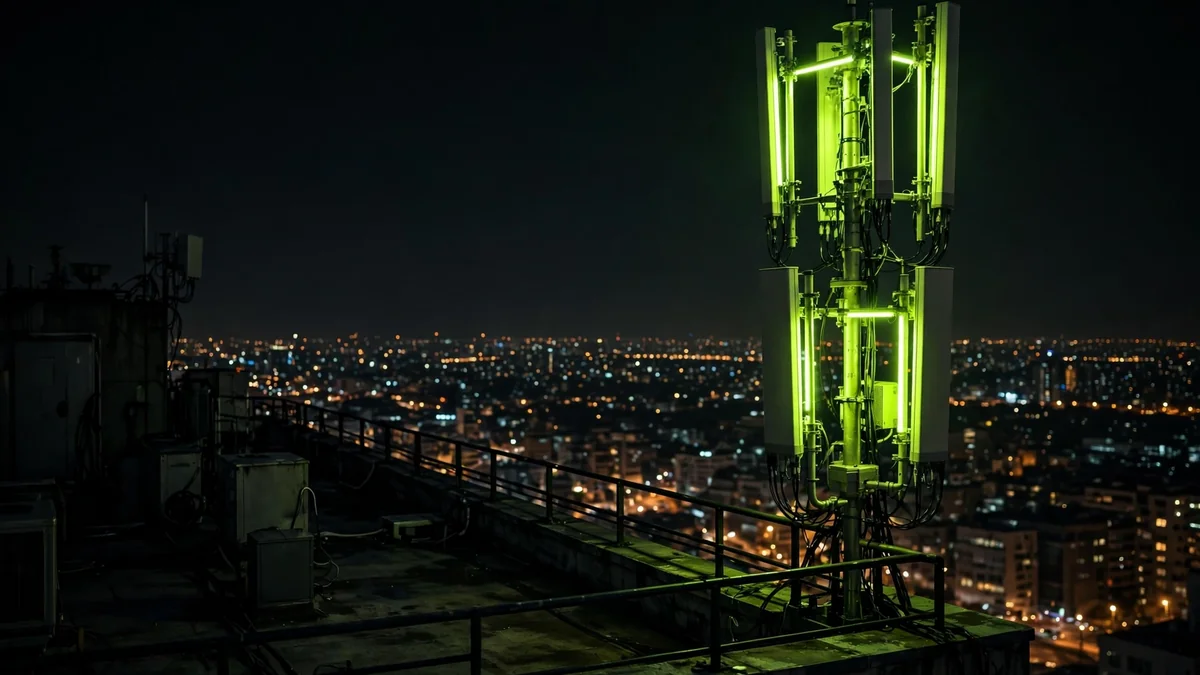
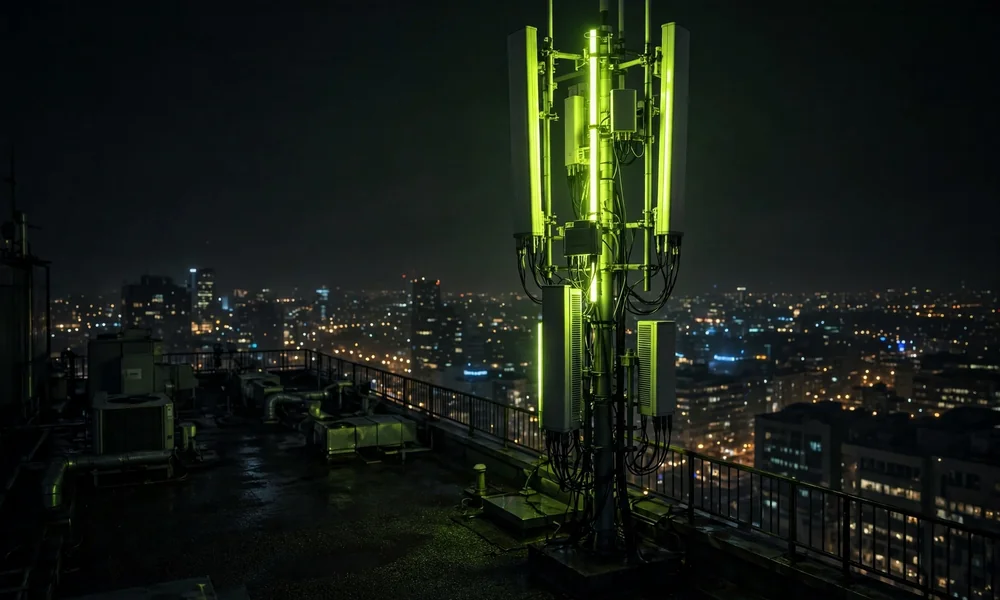
The higher frequencies need more masts, placed closer together, because their signals do not travel far. That is why 5G rollouts involve many small cells on lamp posts and buildings, alongside the tall masts that carry the lower frequencies. The network becomes denser, with more points of connection.
5G masts also use beamforming, which focuses the radio signal towards the device using it, rather than broadcasting in all directions. That focus improves both speed and efficiency, and it is one reason a crowded stadium can now keep thousands of phones connected at once. Our guide to edge computing explains a related idea: moving processing closer to where data is produced, which 5G networks make far more practical.
Behind the masts sits a redesigned core network, built from software rather than specialised hardware. That software core is what makes network slicing possible, and it lets operators change how the network behaves quickly, without replacing equipment.
Another difference is how 5G handles many devices at once. Older networks slow down sharply when thousands of devices share one mast, because each one needs signalling and attention. 5G was designed for that crowd from the start, with signalling that scales and with support for devices that wake, send a tiny message, and sleep again. That design is what lets a city full of sensors share the same network as its people’s phones.
Comparing 5G with 4G
| Aspect | 4G | 5G |
|---|---|---|
| Main design goal | Fast mobile internet for people | Fast internet plus machines and industry |
| Speed | Good enough for video and apps | Higher, especially on high frequencies |
| Delay | Noticeable in real-time uses | Much lower, near-instant responses |
| Devices per area | Thousands | Far more, including sensors |
| Network design | One network for all traffic | Slices tuned for different jobs |
Where 5G is used
Phones are the obvious use, and the one most people notice first. Downloads are faster, video starts sooner, and crowded places stay connected. For many people, though, the difference from a good 4G connection is small, because browsing and streaming were already well served.
Industry is where 5G changes more. Factories use it to connect robots and sensors without cables, so production lines can be rearranged quickly. Ports and mines use it to control vehicles remotely, keeping people away from dangerous places. Our guide to content delivery networks explains how the content those devices consume reaches them quickly in the first place.
Connected devices are the third use. Smart meters, traffic sensors, agricultural monitors, and wearable health devices all need to send small amounts of data from many places at once. 5G was designed to serve that crowd, which earlier networks handled poorly.
Strengths and limits
The greatest strength of 5G is its flexibility. One network can serve phones, factories, and sensors, each with different needs, by slicing itself into virtual networks tuned for each job. That adaptability is something no earlier generation offered, and it is the reason industry is interested.
Low delay is the other strength. For remote control, whether of a vehicle, a robot, or a medical device, the time between an action and its effect matters, and 5G reduces it to the point where remote operation feels immediate. That opens uses that were simply not possible on 4G.
But 5G has real limits. The fastest frequencies travel only short distances and struggle with walls, so indoor coverage and rural coverage depend on the slower frequencies. Building the dense network of small cells takes time and money, and coverage remains patchy in many places.
It also demands new devices. An older phone cannot use 5G, and the benefits arrive only as people replace their handsets and as networks are built out. The technology is impressive, but its value depends on where you are and what you do.
5G checklist
- Check 5G coverage where you live and work before choosing a 5G phone or plan.
- Remember that indoor coverage may rely on lower, slower frequencies.
- Do not expect every task to feel faster; browsing was already quick on 4G.
- Ask what the network offers for your specific use, not just headline speeds.
- Keep your phone’s software updated for the latest network features.
- Consider battery use: early 5G phones can drain faster in weak coverage.
- For business uses, ask about network slicing and service guarantees.
- Plan for 4G fallback, since 5G coverage is still uneven in many areas.
- Ignore health claims about 5G that have no basis in evidence.
Frequently asked questions
What is 5G?
5G is the fifth generation of mobile networks. It is a set of standards for wireless communication that offers higher speeds, lower delay, and capacity for far more connected devices than 4G.
Is 5G much faster than 4G?
It can be, especially on the higher frequencies in good coverage, but the difference for everyday browsing is often modest. Its biggest gains are in delay and in handling many devices at once, rather than in raw speed alone.
Do I need a new phone for 5G?
Yes. A phone needs a 5G radio to use the network, and older phones cannot be upgraded to it. Most new phones now include 5G as standard.
What is network slicing?
Network slicing divides one physical 5G network into virtual networks, each tuned for a different job. A slice for factory robots can guarantee instant responses, while a slice for phones prioritises downloads, all on the same infrastructure.
Is 5G safe?
5G uses radio waves within limits set by international safety guidelines, like earlier mobile networks. Health authorities have found no evidence of harm from exposures within those limits.
Why is 5G coverage still patchy?
The fastest 5G frequencies travel only short distances, so they need many small masts placed close together. Building that dense network takes time and investment, and rural areas are covered later than cities.
The bottom line
5G explained in one line is this: a more flexible mobile network that is faster, responds sooner, and serves far more devices at once.
For phones, it is a useful step forward. For industry and connected devices, it is something more: a network designed for machines as well as people. Its value depends on coverage, on the device in your hand, and on the job you need it to do.