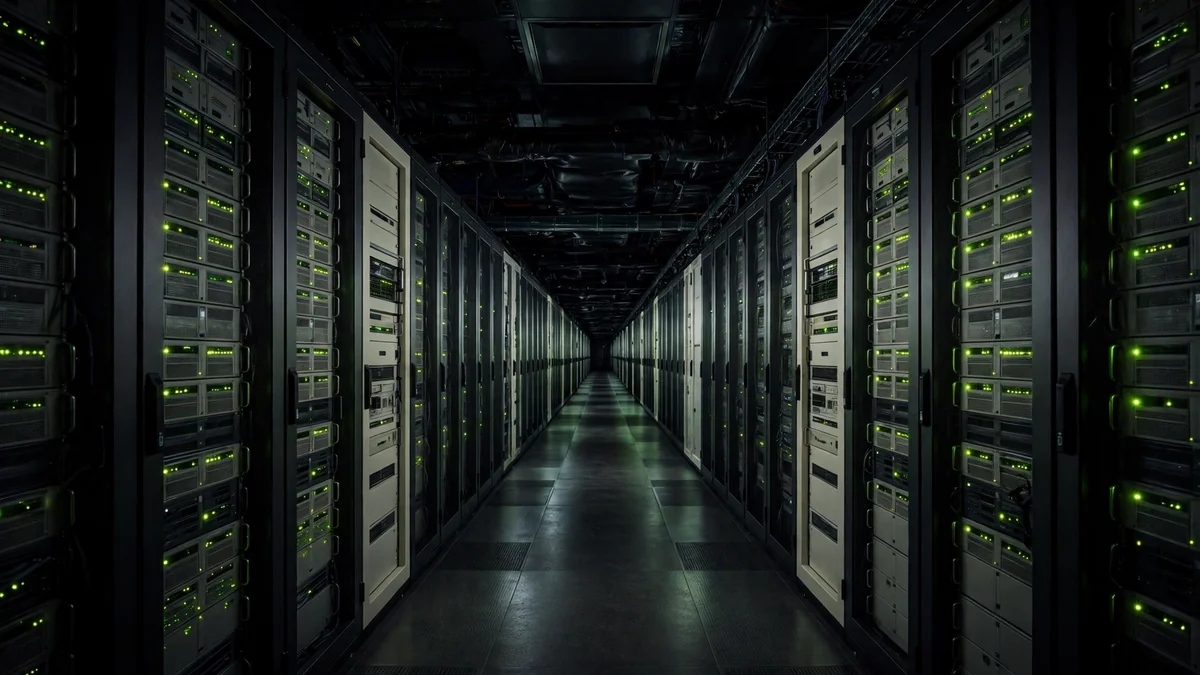
Distributed training explained in plain terms is the technique of splitting the work of training a machine learning model across many processors or machines, so that a job too large for one computer can be finished in reasonable time. The central question is why training needs so much computing power in the first place, and the short answer is that modern models learn from enormous amounts of data, adjusting billions of numbers over many passes, and a single machine would take months or years to do that work.
Distributed training is what makes large AI models possible. The models behind chatbots, image generators, and translation systems are trained on clusters of thousands of specialised chips working together. Without distributed training, those models could not be built at all.
Understanding how the work is divided, and what can go wrong when it is, is essential to understanding modern AI.
Key takeaways
- Distributed training splits model training across many processors or machines so large models can be trained in reasonable time.
- Data parallelism gives each worker the same model and different data, then combines the results.
- Model parallelism splits the model itself across workers when it is too large for one device.
- Communication between workers is often the bottleneck, so fast networking matters as much as fast chips.
- Synchronisation, fault tolerance, and handling slow workers are the main practical challenges.
What distributed training is
Training a machine learning model means adjusting its internal numbers, called parameters, so that its predictions match the training data. This is done in small steps: the model makes predictions on a batch of data, measures how wrong they were, and adjusts its parameters to do better next time. For a large model and a large dataset, this takes an enormous number of steps, each involving heavy calculation.
Distributed training spreads those steps across many workers, each a processor or a machine in a cluster. The workers cooperate, each doing part of the work and sharing results, so the training finishes far faster than it would on one machine. The simplest way to think of it is as a team: one person writing a long document takes a long time, but a team working on different chapters in parallel, and merging their work regularly, finishes much sooner.
Data parallelism
Data parallelism is the most common approach. Every worker holds a complete copy of the model, and each worker processes a different batch of data. After each step, the workers share what they learned, combining their parameter updates so that all copies of the model stay in step.
The standard way to combine updates is called all-reduce, a communication pattern in which every worker contributes its update and receives the combined result.
Data parallelism works well when the model fits on a single device, which is true for many models. Its main cost is communication: the workers must exchange updates after every step, and for large models those updates are large. If the network between workers is slow, they spend more time waiting for each other than calculating.
This is why training clusters invest heavily in fast interconnects between machines, and why the connections between chips matter as much as the chips themselves. Our guide to AI hardware explains the chips that do the calculating, and our guide comparing GPUs and TPUs covers the two main kinds of accelerator used for training.
Model and pipeline parallelism
Some models are too large to fit on a single device, even with its memory. Model parallelism solves this by splitting the model itself across workers: each worker holds a different part of the model, and data flows from one part to the next. A layer of the model might live on one chip, the next layer on another, and so on.
This lets models be trained that no single device could hold, but it creates a new problem: workers spend time waiting for the previous worker’s output, leaving expensive hardware idle.
Pipeline parallelism addresses the waiting by splitting the data into smaller pieces, called micro-batches, and feeding them through the model in a pipeline, so that each worker starts on the next piece as soon as it finishes the last. In practice, large training jobs combine all three approaches: data parallelism across groups of machines, model parallelism within a group, and pipelining to keep everything busy. Getting the combination right is a significant engineering task, and it is one of the reasons training large models is as much a systems problem as a machine learning problem.
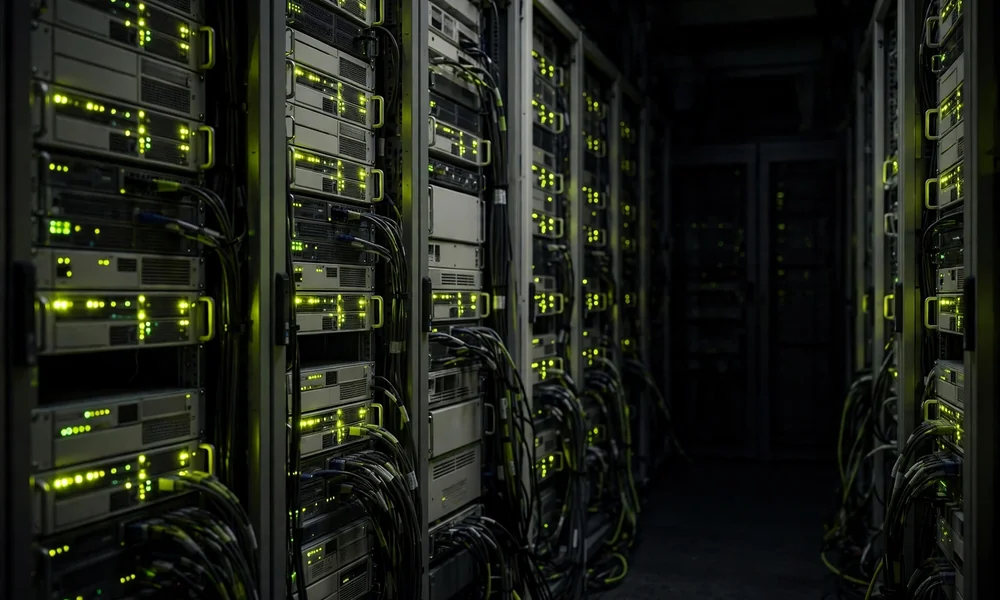
Comparing distributed training strategies
| Strategy | How it works | Main benefit | Main drawback |
|---|---|---|---|
| Data parallelism | Same model, different data per worker | Simple, scales well | Model must fit on one device |
| Model parallelism | Model split across workers | Trains models too large for one device | Workers wait on each other |
| Pipeline parallelism | Micro-batches flow through split model | Reduces idle time | Complex to schedule well |
| Synchronous training | All workers update together | Stable, predictable results | Slowest worker holds everyone back |
| Asynchronous training | Workers update when ready | No waiting on slow workers | Updates can be stale and unstable |
Synchronisation and slow workers
In synchronous training, all workers complete a step, combine their updates, and then move on together. This is stable and predictable, and it is the most common choice for large training runs. Its weakness is the straggler problem: if one worker is slow, because of a failing component or a competing job, every other worker waits for it.
In a cluster of thousands of machines, there is almost always a slow one.
Asynchronous training lets workers update the model whenever they finish a step, without waiting for the others. This removes the waiting, but it introduces a different problem: a worker may update the model using an old copy of it, so its update is based on stale information. This can make training unstable, and it is harder to reproduce.
Most large training jobs use synchronous training and manage the straggler problem by monitoring worker health and replacing slow or failing machines quickly.
Fault tolerance and practical challenges
A training run on thousands of machines lasts days or weeks, and in that time, hardware will fail. A good distributed training setup expects this. It saves checkpoints, snapshots of the model’s state, at regular intervals, so that a failure means losing only the work since the last checkpoint rather than starting over.
It also monitors worker health and replaces failed machines automatically where possible.
Other practical challenges include keeping the data flowing fast enough to feed all the workers, since a cluster that can calculate faster than data can be loaded will sit idle, and managing the sheer cost of the compute involved. These are systems problems as much as machine learning problems, and they are why large training runs need teams who understand both. Our Kubernetes guide explains the orchestration used to manage large clusters, and our guide to AI model deployment covers what happens once training is finished and the model is put to work.
Distributed training checklist
- Start with data parallelism when the model fits on one device, since it is the simplest approach.
- Use model and pipeline parallelism only when the model is too large for a single device.
- Invest in fast networking between workers, since communication is often the real bottleneck.
- Use synchronous training for stability, and monitor for slow workers that hold the run back.
- Save checkpoints regularly, so a hardware failure costs hours of work rather than the whole run.
- Monitor worker health and replace failing machines quickly.
- Make sure data loading keeps up with the workers, or the cluster will sit idle waiting for data.
- Test the training setup at small scale before committing to a large, expensive run.
- Record the exact configuration used, so a run can be reproduced or debugged later.
Frequently asked questions
What is distributed training?
Distributed training is the technique of splitting the work of training a machine learning model across many processors or machines, so that a job too large for one computer can be finished in reasonable time. Workers cooperate, each doing part of the work and sharing results.
What is data parallelism?
Data parallelism is the approach where every worker holds a complete copy of the model and processes a different batch of data. After each step, the workers combine their updates so all copies of the model stay in step. It is the most common approach, and it works when the model fits on a single device.
What is model parallelism?
Model parallelism splits the model itself across workers, with each worker holding a different part of it, so that models too large for one device can be trained. Data flows from one part to the next. It is more complex than data parallelism and can leave workers waiting on each other.
Why is communication a bottleneck in distributed training?
Because workers must share their updates after every step, and for large models those updates are large. If the network between workers is slow, they spend more time exchanging data than calculating. Fast interconnects between machines matter as much as fast chips.
What is a straggler in distributed training?
A straggler is a worker that is slower than the others, because of a failing component or a competing job. In synchronous training, every worker waits for the slowest one, so a single straggler can slow the whole run. Monitoring worker health and replacing slow machines is the usual remedy.
Why are checkpoints important in distributed training?
Because a training run on thousands of machines lasts days or weeks, and hardware will fail in that time. A checkpoint is a snapshot of the model’s state, saved at regular intervals, so a failure means losing only the work since the last checkpoint rather than starting over.
The bottom line
Distributed training explained in one line is this: by splitting training across many machines, it makes large models possible, and its success depends as much on fast networking, careful synchronisation, and planning for failure as on the machine learning itself.