
What if the biggest thing holding your business back isn’t a lack of new ideas, but the aging software quietly running your payroll, your inventory, or your customer records? That’s the situation many organizations face. Their core systems still work, but they’re slow to change, expensive to maintain, and hard to connect to anything modern. Application modernization tools exist to solve exactly this problem, and they’ve become one of the most crowded corners of enterprise software. The trick is knowing which tools do real work and which ones just look good in a sales demo. (Software modernization (Wikipedia))
What Application Modernization Really Means
Modernization is not the same as rewriting everything from scratch. It’s the process of updating a legacy application’s platform, architecture, or features so it can run in a cloud environment, scale on demand, and integrate with modern services. A common framework for deciding how to approach this is the set of migration strategies often called the 6 R’s: rehost, replatform, refactor, repurchase, retain, and retire. (What is application modernization? (IBM explainer))
The distinction matters because each path needs different tools. Rehosting, sometimes called lift-and-shift, needs migration and infrastructure tooling. Refactoring toward cloud-native design needs container platforms, CI/CD pipelines, and observability. Retiring an app needs data extraction and archival tools. Buying the wrong category of tool for your chosen path is one of the most common and expensive mistakes teams make.
The Core Categories of Modernization Tooling
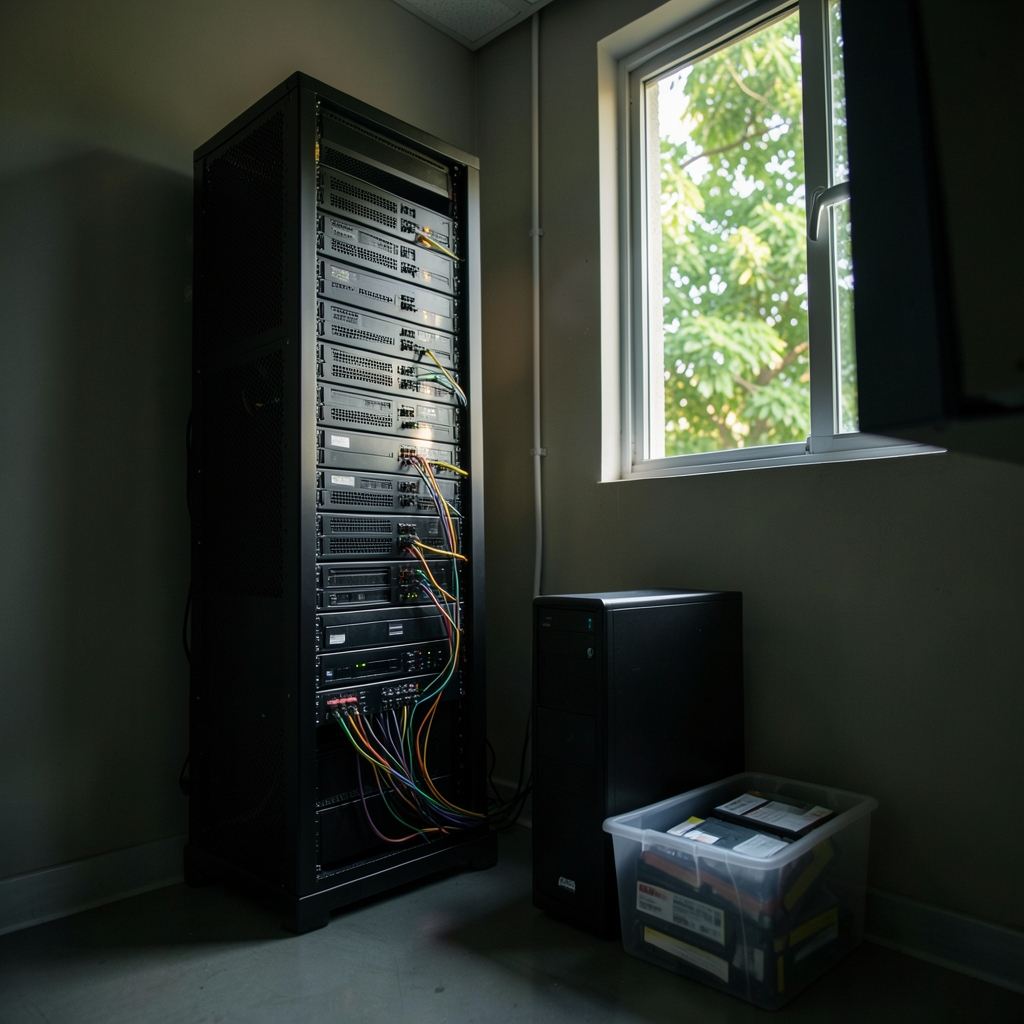
It helps to think of modernization tools in layers, because most real projects use several at once. Here’s how the major categories break down.
| Category | What It Does | Typical Examples |
|---|---|---|
| Container orchestration | Runs and scales applications in containers | Kubernetes, managed container services |
| CI/CD and DevOps | Automates build, test, and deployment | Jenkins, GitLab CI, GitHub Actions |
| Observability | Tracks traces, metrics, and logs across services | OpenTelemetry-based platforms |
| Migration and assessment | Scans legacy code and plans the move | Code analysis and discovery tools |
| API enablement | Exposes legacy logic as modern interfaces | API gateways, service mesh |
| AI-assisted conversion | Suggests or generates code translations | Vendor code-conversion assistants |
Each layer solves a different problem, and skipping a layer usually comes back to bite you. Teams that jump straight to containers without observability, for example, often find themselves unable to diagnose failures in production.
Container Orchestration as the Modernization Backbone
For most organizations, Kubernetes is the default target for containerized workloads. It is the de facto standard for orchestrating containers, and its official documentation on core concepts is a good starting point for understanding how it schedules and manages workloads. Kubernetes 1.0 arrived in July 2015, and it has since become a central part of cloud-native infrastructure.
That said, Kubernetes is not a modernization tool by itself. It’s a platform. The tools that make it usable in a legacy context are the managed services, the deployment pipelines, and the monitoring stacks built around it. Treating Kubernetes as the goal rather than the destination is a classic misstep.
CI/CD Pipelines and the DORA Metrics
Automation is where modernization turns into measurable improvement. Continuous integration and continuous delivery pipelines let teams ship small changes frequently instead of large, risky releases once a quarter.
The research behind this is well established. The book Accelerate and the annual DORA research reports link CI/CD and DevOps practices to delivery performance, measured through four key metrics: lead time for changes, deployment frequency, change failure rate, and time to restore service. These four numbers are a practical scoreboard for any modernization effort. If lead time isn’t dropping after a year of tooling investment, something in the process, not the tool, is broken.
Observability and OpenTelemetry
Once an application is split into services, you can no longer debug it by reading a single log file. OpenTelemetry has become the vendor-neutral standard for instrumenting applications to produce traces, metrics, and logs. It reached general availability for tracing on May 26, 2021, when version 1.0.0 shipped, merging the earlier OpenTracing and OpenCensus projects.
Practically, this means you can instrument your code once and send the data to whichever backend you choose. That flexibility matters during modernization, because it lets teams change observability vendors without rewriting instrumentation. For readers who want the technical detail, the official explanation of what OpenTelemetry is covers the data model and SDKs in depth.
Migration, Assessment, and Code Analysis Tools
Before you move anything, you need to know what you have. Assessment tools scan legacy codebases to find dependencies, dead code, undocumented interfaces, and hidden integrations. This discovery phase is unglamorous and often skipped, yet it’s where many projects fail.
A useful practice here is to inventory every application, score it by business criticality and technical debt, and only then choose a migration path. Teams that skip this step frequently discover a critical integration three weeks into a migration, forcing an emergency rollback.
The Strangler Fig Pattern: The Technique Behind the Tools
Tools are only as good as the strategy guiding them. The Strangler Fig pattern, popularized by Martin Fowler in a 2014 article, describes replacing a legacy system incrementally by routing specific functions to new services while the old system keeps running. Over time, the new system “strangles” the old one until it can be switched off.
This approach is the reason API gateways and service meshes matter so much. They let you route traffic gradually, test in production with real users, and roll back instantly if something breaks. A big-bang rewrite, by contrast, concentrates all the risk into one launch day.
For a deeper look at how these patterns play out in real deployments, the cloud section of 9481.org covers infrastructure and platform topics that pair well with this kind of incremental strategy.
Cloud-Native Design Principles
Refactoring toward cloud-native architecture usually means following the Twelve-Factor App methodology, published by Adam Wiggins around 2011. Its twelve principles cover things like storing configuration in the environment, treating logs as event streams, and designing for disposability. These rules sound simple, but they force teams to confront assumptions baked into legacy code, such as storing state on local disks or hardcoding connection strings.
The methodology is freely available and widely used as a checklist during refactoring. It’s not a tool, but it shapes which tools you need, because a twelve-factor app expects externalized configuration, stateless processes, and automated deployments. (Blog)
AI-Assisted Modernization: Promise and Hype
Since around 2023, major cloud vendors have marketed AI tools that analyze legacy code and suggest or generate conversions, such as translating COBOL into Java. The pitch is compelling: decades of mainframe logic modernized in months instead of years.
Here’s the balanced view. These tools can genuinely accelerate the tedious parts of code translation, especially for well-structured, well-documented code. But the claims are largely vendor-sourced, and independent validation is still thin. Anyone evaluating AI modernization tools should insist on a proof of concept against their own codebase, with human review of every generated module. Treat marketing benchmarks as a starting point, not evidence.
Mainframe and Legacy Platform Realities
IBM Z mainframes still run production workloads at many large enterprises, and full rewrites are rarely realistic. In practice, modernization of these systems often means API enablement, emulation, or rehosting rather than replacement. The goal becomes exposing mainframe logic as services that modern applications can call, rather than ripping out the mainframe entirely.
This is where the assessment phase pays off again. Knowing which transactions are actually used, and how often, prevents teams from porting thousands of lines of code that nobody has touched in a decade.
Public-Sector and Standards Guidance
Organizations in regulated industries often need a defensible framework before they can justify a modernization budget. The official definition of cloud computing from NIST, published as SP 800-145 in September 2011, provides neutral language for describing cloud service and deployment models. It’s dry reading, but it’s useful when procurement or compliance teams ask exactly what “moving to the cloud” means. (Cloud)
Government cloud adoption playbooks serve a similar purpose, offering structured decision frameworks for migration. They are not tools in the software sense, but they are often the document that secures funding.
How to Choose Tools Without Regret
The market is crowded, and every vendor claims to be essential. A few practical guidelines cut through the noise.
- Start with the migration path, not the tool. Decide whether you’re rehosting, replatforming, or refactoring before you shortlist anything.
- Run a proof of concept on real code. Vendor demos use clean sample applications. Your codebase is not clean.
- Check for open standards. Tools built on open standards like OpenTelemetry and Kubernetes reduce lock-in and survive vendor changes.
- Measure before and after. Capture DORA metrics and infrastructure costs at the start so you can prove the investment worked.
- Plan for the people. Training and process change usually matter more than the software license.
A common mistake is buying an enterprise platform suite because it covers every category, then discovering that only two modules get used. Smaller, focused tools that integrate well often deliver more value than a monolithic suite.
Common Pitfalls That Sink Modernization Projects
Even well-funded efforts stumble. The recurring failure modes are worth naming.
- Skipping discovery. Teams migrate applications without knowing their dependencies, then hit integration walls.
- Big-bang cutovers. Replacing everything at once concentrates risk and removes the option to roll back.
- Ignoring observability. Without tracing, debugging distributed systems becomes guesswork.
- Chasing tool counts. Buying more tools doesn’t fix unclear ownership or missing skills.
- No success metrics. Without baseline numbers, nobody can tell whether the project worked.
Each of these is preventable with a bit of discipline up front. The pattern across all of them is the same: strategy first, tools second.
Where to Follow Cloud-Native Tooling Changes
The cloud-native tool set changes monthly. The CNCF’s tool catalog, first published in 2016 and continuously updated, lists hundreds of tools across categories like container runtimes, orchestration, service mesh, CI/CD, and observability. It is a useful map, though the exact tool count shifts constantly, so it is best used for orientation rather than as a definitive list.
For ongoing coverage of platform shifts and industry news, the news section at 9481.org tracks developments that affect modernization planning. Teams that keep an eye on these changes tend to make better long-term platform bets. (News)
Conclusion
Application modernization tools are powerful, but they’re multipliers, not magic. The organizations that succeed start with a clear migration strategy, measure their baseline, choose open standards where possible, and adopt incremental patterns like the strangler fig instead of betting everything on one big rewrite. AI-assisted conversion may eventually change the math on legacy code, but for now it deserves cautious, evidence-based evaluation. Pick the path first, then the tools, and the results will follow.
Frequently Asked Questions
What are application modernization tools?
They are software products and platforms that help organizations update legacy applications to run on modern infrastructure. The category includes container orchestration platforms, CI/CD pipelines, observability systems, code assessment tools, API gateways, and AI-assisted code conversion assistants. Most real projects combine several of these rather than relying on one.
Is application modernization the same as cloud migration?
No. Cloud migration is one possible outcome, but modernization also covers refactoring architecture, replacing features, and retiring systems. A team can modernize an application without moving it to the cloud, and a team can move to the cloud without modernizing anything, which is what happens in a simple lift-and-shift.
What is the strangler fig pattern?
It’s an incremental modernization technique where new services gradually take over functions from a legacy system while the old system keeps running. Traffic is routed piece by piece until the legacy application can be shut down. It reduces risk compared with a full rewrite because each step can be tested and rolled back.
How do you measure whether modernization is working?
The most common approach uses four delivery metrics: lead time for changes, deployment frequency, change failure rate, and time to restore service. Capture these before the project starts, then track them over time. Cost per transaction and infrastructure spend are useful secondary measures.
Are AI tools reliable for converting legacy code?
They can speed up routine translation work, but claims about large-scale conversions are mostly vendor-sourced and lack independent validation. The practical approach is a proof of concept on your own codebase with mandatory human review of every generated module. Treat AI output as a draft, not a finished product.
Which tools should a small team start with?
Start with a CI/CD pipeline and basic observability before anything else. Those two investments deliver measurable improvements quickly and make every later step easier. Container orchestration can follow once deployment automation is solid, and assessment tools should come before any migration begins.








