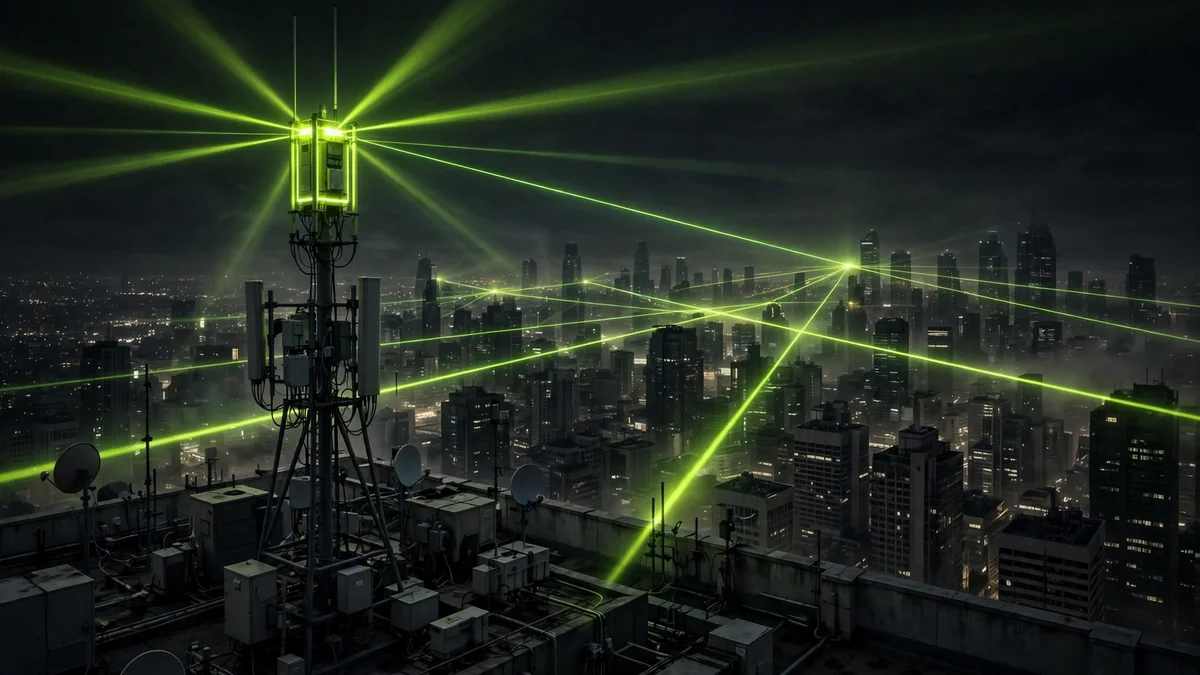
6G explained in plain terms means the next generation of mobile networks, still being designed today, that aims to be far faster than 5G and to sense the world around it, not just carry data through it. The central question is why we need another generation when 5G is barely built, and the short answer is that research takes a decade, and the uses being imagined now will need networks that do not yet exist.
Think of each generation as a new road system. 3G was a country lane, 4G a motorway, 5G a motorway with smart junctions. 6G is the plan for a road that also watches the traffic, the weather, and the road surface itself, and tells every vehicle what it sees. The road becomes a sensor, not just a route.
6G has no final standard yet. Research began in earnest around 2019, the first standards work is under way, and commercial networks are expected around 2030. Everything in this article describes what researchers and standards bodies are aiming for, not a finished technology.
Key takeaways
- 6G is the next mobile generation, expected commercially around 2030.
- It aims for speeds far beyond 5G, with latency near one millisecond.
- It will use terahertz radio frequencies, which are fast but short-range.
- Networks may sense their surroundings, mapping objects and movement.
- AI is expected to manage the network itself, in real time.
What 6G is
6G is the sixth generation of mobile network technology, the successor to 5G, currently being defined by researchers and by standards bodies such as the 3GPP, which writes the specifications every mobile generation follows. Like each generation before it, it will bring a new radio standard, new frequencies, and new capabilities, and like each before it, it will take roughly ten years from first research to first phones.
The headline goal is speed. Researchers talk of peak rates around one terabit per second, roughly a hundred times the peak of 5G, and of latency, the delay before data starts moving, falling to around a millisecond or less. Those numbers are targets, not promises, and real-world speeds will be far lower, just as they are for every generation.
The more interesting goal is sensing. 6G radios are expected to use their signals to detect the world around them, measuring reflections to map rooms, track movement, and spot objects, almost like radar. A network that can sense could help a car see around a corner, let a factory track every tool, or allow a gesture to control a device without touching it.
Artificial intelligence is the third pillar. Where 5G uses AI in places, 6G is expected to be AI-native, with machine learning managing the network itself: predicting congestion, steering signals, saving power, and fixing faults before users notice. The network becomes a system that tunes itself, continuously. Our guide to 5G explains the current generation 6G builds on, and which of its promises, such as ultra-low latency, are still being delivered.
How 6G is expected to work
It begins with spectrum, the radio frequencies the network is allowed to use. 6G is expected to open the terahertz band, frequencies above 100 GHz, where enormous slices of spectrum sit unused. Those frequencies can carry huge amounts of data, but they travel only short distances and are blocked by walls, rain, and even the human body, so the network will need many more small cells, closer together, than 5G does.
To make those fragile signals work, researchers are developing smarter antennas. Massive MIMO, arrays of dozens or hundreds of antenna elements, can steer a narrow beam of radio directly at a device and follow it as it moves, instead of broadcasting in all directions. Reflective surfaces, panels that bounce signals around obstacles, may fill in the gaps where a direct path does not exist.
Sensing works by listening to echoes. A 6G base station sends a signal and measures what bounces back, much like radar, building a picture of the objects and movement nearby. That picture can be shared with applications, so a network could warn a car about a pedestrian it cannot see, or help a robot navigate a warehouse it has never visited.
The network itself is expected to be split between the edge and the cloud in new ways. Processing will happen close to the user, on small servers at the base station, for anything needing instant response, while heavier work goes to the cloud. That split is already happening with 5G, and 6G is expected to make it the default, with AI deciding where each task should run. Our guide to the Internet of Things explains the world of connected devices that 6G is partly being built for, where billions of sensors will need a network that can serve them all at once.

Comparing mobile generations
| Aspect | 4G | 5G | 6G (expected) |
|---|---|---|---|
| Peak speed | About 1 Gbps | About 10 Gbps | About 1 Tbps |
| Latency | About 50 ms | About 10 ms, aiming for 1 ms | Under 1 ms |
| Key frequencies | Below 2.6 GHz | Below 6 GHz, plus mmWave | Terahertz, above 100 GHz |
| Defining idea | Mobile internet | Low latency, many devices | Sensing and AI-native networks |
Where 6G may be used
Immersive media is the showcase use. Holographic calls, where a life-size image of a person appears in a room, and fully immersive virtual reality, need enormous data rates and near-zero delay, far beyond what 5G can deliver reliably. Researchers present these as the experiences that will justify 6G, though whether people want them remains an open question.
Autonomous systems are a more practical case. Fleets of self-driving vehicles, delivery drones, and factory robots need to share what they sense, instantly, and a network that can itself sense the environment adds a layer of awareness no single vehicle can provide. The network becomes part of the vehicle’s senses.
Digital twins, live virtual copies of real things, are another. A factory, a city, or a power grid mirrored in software, updated in real time from sensors, lets operators test changes before making them. That needs a network that can carry sensor data from everywhere, with almost no delay, which is what 6G is designed to do.
Remote presence may be the most human use. A surgeon operating through a robot, a technician repairing a machine from another continent, or a teacher appearing as a hologram in a classroom all need a connection that feels immediate, not merely fast. The difference between ten milliseconds and one is the difference between usable and unusable for work like that.
Strengths and limits
The greatest strength of 6G, if it arrives as promised, is that it closes the gap between the physical and the digital. A network that senses, reacts in a millisecond, and manages itself could support uses that today’s networks can only approximate, and it would do so for billions of devices at once.
It would also push connectivity into places it has not reached. Non-terrestrial networks, satellites working with ground stations as one system, are part of the 6G vision, which could bring coverage to oceans, deserts, and remote regions that terrestrial networks will never reach economically.
Its limits are formidable. Terahertz signals barely travel, so the network will need vastly more infrastructure, at great cost, and the power demands of that infrastructure are a serious concern. The business case is also unclear: 5G’s promised revenues have been slow to arrive, and operators are cautious about funding another generation on promises alone.
There is also the risk of overpromising. Every generation has been sold on uses that arrived late or not at all, and 6G’s showcase uses, holograms and digital twins, may prove to be niche. The technology may succeed while the vision behind it disappoints, which is a familiar story in mobile history.
6G checklist
- Treat 6G as research until standards are final, not as a buying decision.
- Watch the 3GPP timetable: standards first, networks after, phones last.
- Do not buy a phone for 6G; none exists yet, and none will for years.
- Expect 5G to keep improving while 6G is built; it is not standing still.
- Follow the spectrum decisions: terahertz rules will shape what is possible.
- Ask what problem a use case solves, not how impressive the demo looks.
- Remember coverage comes last: cities first, everywhere else much later.
- Plan for energy: denser networks need more power, and that cost is real.
- Keep security in mind: a sensing network raises new privacy questions.
Frequently asked questions
What is 6G?
6G is the next generation of mobile networks, currently being researched and standardised. It aims for far higher speeds than 5G, latency under a millisecond, and new abilities such as sensing the environment and AI-managed networks.
When will 6G arrive?
Commercial networks are expected around 2030, following the usual ten-year cycle. Standards work is under way now, and the first phones are not expected until the end of the decade at the earliest.
How fast will 6G be?
Researchers target peak speeds around one terabit per second, roughly a hundred times 5G’s peak. Real-world speeds will be far lower, as they always are, and the more important gains may be latency and capacity rather than raw speed.
What is terahertz radio?
Terahertz radio uses frequencies above 100 GHz, where huge slices of unused spectrum exist. It can carry enormous amounts of data, but the signals travel only short distances and are easily blocked, so 6G will need many small cells.
Will 6G replace 5G?
Eventually, in the same way 5G replaced 4G: gradually, over many years, with both running side by side. 5G will keep improving and will remain the main network for most of the 2020s.
What can 6G do that 5G cannot?
Its headline new ability is sensing: using radio signals to map and track the physical world. Combined with much lower latency and AI-managed networks, it aims to support uses such as holographic calls, autonomous fleets, and live digital twins.
The bottom line
6G explained in one line is this: the next mobile generation, still on the drawing board, aiming to be a hundred times faster than 5G and to sense the world it connects.
It will not arrive until around 2030, and its promises should be read as research goals, not guarantees. The honest view is that 5G still has years of work ahead, and 6G’s job is to be ready when the uses it imagines finally need it.
This article is general information about 6G research, not advice about which mobile technology or device suits a particular need.