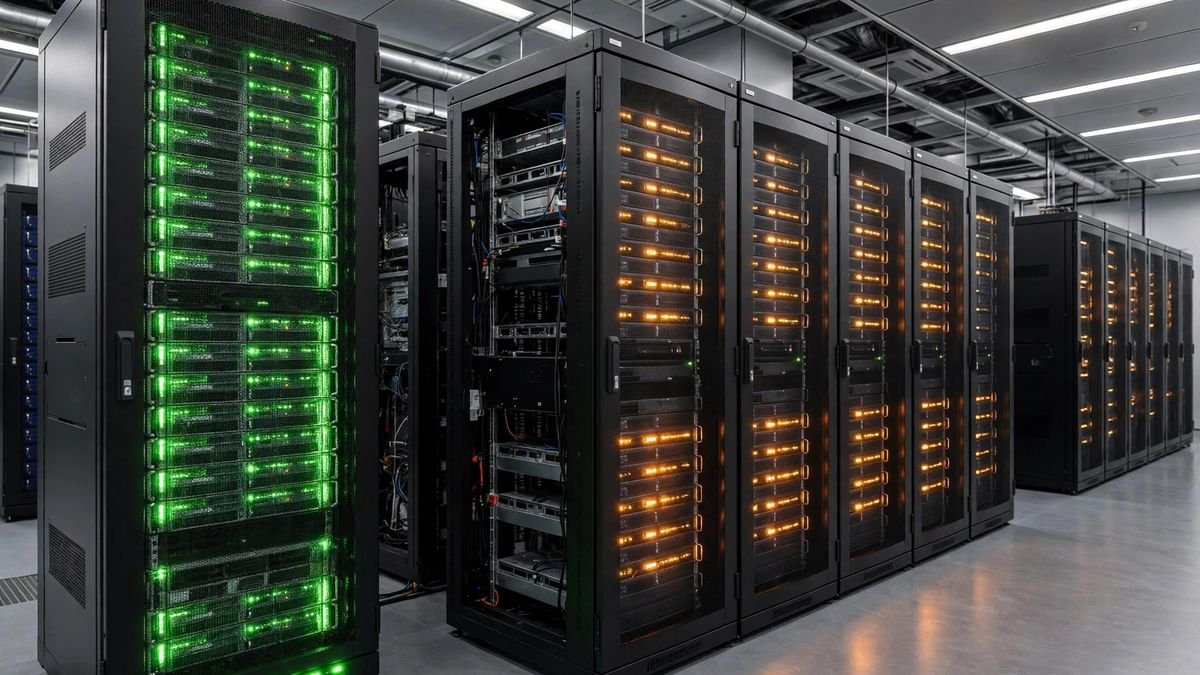
Model warm-up strategies for inference are the techniques that prepare a model server before real traffic arrives, so the first request is fast instead of painfully slow. What is a cold start, and why do model warm-up strategies for inference matter? A cold start is the delay when a model loads from disk into GPU memory, compiles its kernels and processes its first request — a wait that can stretch from seconds to minutes, and that users experience as a broken service.
Warm-up is the difference between a model that answers in half a second and one that answers in forty. It matters most for services that scale to zero, deploy frequently, or run on serverless infrastructure, where cold starts happen often. This guide explains the main strategies, how they combine, and how to choose between them.
Key takeaways
- Cold starts come from three stages: loading weights into GPU memory, compiling kernels, and the first token generation.
- Keeping a warm replica always ready is the simplest and most reliable fix, but it costs money while idle.
- Preloading weights and pre-compiling kernels at container start removes most of the delay before traffic arrives.
- Synthetic warm-up requests prime caches and trigger just-in-time compilation so the first real request is fast.
- Measure cold-start time separately from steady-state latency, and test it after every deployment.
What is a model cold start?
A cold start is everything that must happen before a model can answer its first request. It begins when a new instance is created: the container starts, the serving engine loads, and the model weights are read from disk into GPU memory. A 70B model in FP16 holds about 140 GB of weights, and even from fast local storage that transfer takes time. From object storage over a network, it can take minutes.
After loading, the engine compiles or loads the kernels it needs for the model and the hardware. Frameworks such as TensorRT-LLM build optimised engines for a specific model and GPU, which can take several minutes on first build, though the result can be cached and reused. Other engines compile kernels just in time on first use, which spreads the cost across the first few requests.
The final stage is the first generation itself. The first request builds the KV cache for its prompt, triggers any lazy initialisation in the framework, and warms the CUDA memory allocator. Each of these is small on its own, but together they make the first request far slower than the tenth.
Why cold starts hurt more than they look
A cold start that happens once a day is a minor annoyance. A cold start that happens on every deployment, every scale-out event and every traffic spike is a reliability problem. Autoscaling systems create new instances precisely when traffic rises, which is exactly when users are least forgiving of delay. If each new replica needs two minutes before it can serve, the autoscaler is always behind the demand curve.
Serverless inference makes the problem sharper. When a service scales to zero to save cost, every request after an idle period is a cold start. For a chat product, that means the first user of the morning waits while the model loads, and may leave before it answers.
Keep a warm replica ready
The simplest warm-up strategy is to never let the model go cold: keep at least one replica running at all times. This is the approach behind most production deployments, and it works because there is no cold start at all for the steady-state replica. Traffic that arrives finds a warm model waiting, and new replicas are added ahead of demand rather than in response to it.
The cost is idle GPU time. A warm 70B model holds one or more expensive GPUs at all times, even at 3 a.m. when nobody is asking questions. For many teams that cost is acceptable, because the alternative — losing users to slow first responses — is worse. For teams with strongly diurnal traffic, a schedule that scales down at night and up before the morning peak can cut the idle cost without exposing users to cold starts.
Predictive scaling improves on simple minimum-replica rules. If traffic reliably peaks at 9 a.m., start the extra replicas at 8:45 rather than waiting for the load to rise. LLM inference autoscaling metrics such as queue depth and pending requests are better triggers than CPU use, because they show demand before latency degrades.
Preload weights and pre-compile kernels
When a new replica does start, the goal is to make its start-up as short as possible. The biggest win is usually weight loading. Store model weights on fast local disk or on a local cache rather than fetching them from object storage on every start. Some teams bake weights into the container image itself, which makes start-up fast but images very large; others use a shared local cache on the node, so the first replica pays the download cost and later ones do not.
Kernel compilation is the second win. Engines that build optimised kernels should do so at image build time, not at container start, and the compiled artefacts should be cached alongside the weights. TensorRT-LLM engines, for example, can be built once and reused across restarts on the same hardware. If your engine compiles just in time, run a warm-up request that exercises the code paths you need, so compilation happens before real traffic arrives.
Container start-up itself is worth attention. A slim image with only the dependencies the engine needs starts faster than a general-purpose image, and a health check that waits for the model to be loaded — not just for the process to be alive — prevents the load balancer from sending traffic to a replica that is still warming up.

Synthetic warm-up requests
A synthetic warm-up request is a fake request sent to a new replica before it joins the load balancer. It forces the engine through the full generation path: prompt processing, KV cache allocation, token generation and response formatting. By the time the replica starts serving real users, every lazy initialisation has already happened.
The warm-up request should resemble real traffic. Use a prompt of typical length, with a typical output length, and if your service supports tool calls or structured output, include one of those too. A one-token warm-up request will not prime the paths that a real request uses, and a warm-up that is far longer than real prompts wastes start-up time.
Warm-up requests are also the right place to verify correctness. If a replica loads the wrong weights, a broken configuration or a corrupted cache, a synthetic request that checks the response will catch it before users do. Inference failover design works best when unhealthy replicas are detected during warm-up rather than after they start failing real requests.
Warm-up strategies compared
The table below compares the main strategies on cost, complexity and how much cold-start delay each removes. Most production systems combine at least two of them.
| Strategy | What it does | Cold start removed | Cost | Complexity |
|---|---|---|---|---|
| Warm replica always on | Keeps one model loaded | All of it | Idle GPU time | Low |
| Predictive scaling | Starts replicas before peaks | Most of it | Some idle time | Medium |
| Weight preloading | Caches weights locally | Load time | Disk space | Low |
| Kernel pre-compilation | Builds kernels at image time | Compile time | Build time | Medium |
| Synthetic warm-up requests | Primes the full path | First-request delay | Seconds per start | Low |
| Scale to zero with snapshots | Restores saved GPU state | Most of it | Snapshot storage | High |
Best for: most teams should combine a minimum warm replica, local weight caching and synthetic warm-up requests; the combination covers every stage of the cold start at modest cost.
Scaling to zero without the pain
Some workloads genuinely need scale-to-zero, such as internal tools used a few times a day or bursty batch jobs. The aim then is to make the cold start as short as possible rather than to eliminate it. Fast weight loading from local cache, pre-compiled kernels and a synthetic warm-up request can bring a 7B model from cold to serving in well under a minute, which is acceptable for many internal uses.
Snapshot-based restore is a newer option. Some platforms can snapshot a warm GPU state and restore it on demand, skipping the weight load and compilation stages. It is promising, but it is also the most complex option, and restore time needs measuring on your own stack before relying on it.
Another practical option is a small model as a fallback. When the main model is cold, a small model that loads in seconds can answer immediately, or at least acknowledge the request while the large model warms up. This works well for chat interfaces where a quick acknowledgement is better than silence, though it must be clear to the user which model is answering. GPU cluster autoscaling often pairs a fast-starting small replica with slower large ones for exactly this reason.
Warm-up checklist
Use this checklist when setting up warm-up for an inference service.
- Measure cold-start time from instance creation to first successful response, and track it separately.
- Keep at least one warm replica at all times for user-facing services.
- Cache model weights on fast local storage so new replicas do not download them over the network.
- Pre-compile kernels at image build time and cache the compiled artefacts.
- Send a realistic synthetic warm-up request before a replica joins the load balancer.
- Use a readiness check that confirms the model is loaded, not just that the process is alive.
- Scale replicas ahead of predictable peaks instead of waiting for load to rise.
- Re-test cold starts after every deployment, engine upgrade or model change.
Frequently asked questions
What is model warm-up for inference?
Model warm-up is preparing a model server before real traffic arrives, by loading weights, compiling kernels and running a test request. It exists to remove the cold-start delay that makes the first request to a new replica much slower than later ones.
How long does a model cold start take?
It depends on the model size and the infrastructure. A small model from local cache can be ready in seconds; a 70B model loading 140 GB of weights from object storage, with kernel compilation, can take several minutes. Measure it on your own stack rather than assuming a number.
What causes cold starts in LLM inference?
Three stages: loading model weights from disk into GPU memory, compiling or loading optimised kernels, and the first generation, which builds the KV cache and triggers lazy initialisation. Each stage can be shortened, but only a warm replica removes all three.
Does keeping a warm replica cost much?
It costs the GPU time of one replica, even when idle. For a large model that can be significant, but it is usually cheaper than the users lost to slow first responses. Scheduled scaling can reduce the idle cost for services with predictable traffic patterns.
What is a synthetic warm-up request?
It is a fake request sent to a new replica before it starts serving real users. It forces the engine through the full generation path, so lazy initialisation and just-in-time compilation happen before traffic arrives. It should resemble a typical real request in length and shape.
Can I scale an LLM service to zero?
Yes, but every request after an idle period will pay a cold start. For internal tools and bursty batch work that is often acceptable, especially with fast weight loading and pre-compiled kernels. For user-facing chat, a minimum warm replica is usually the better trade-off.