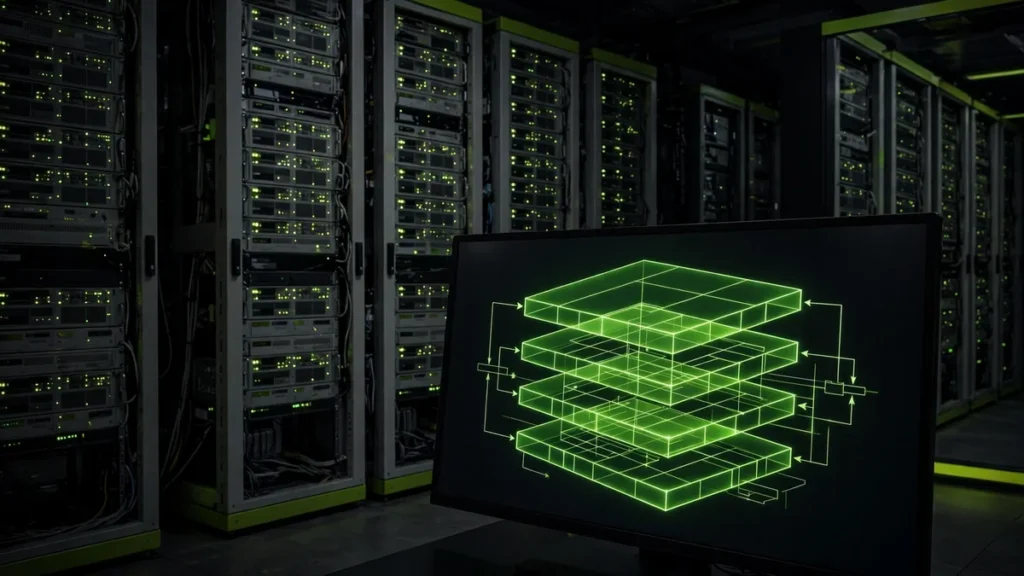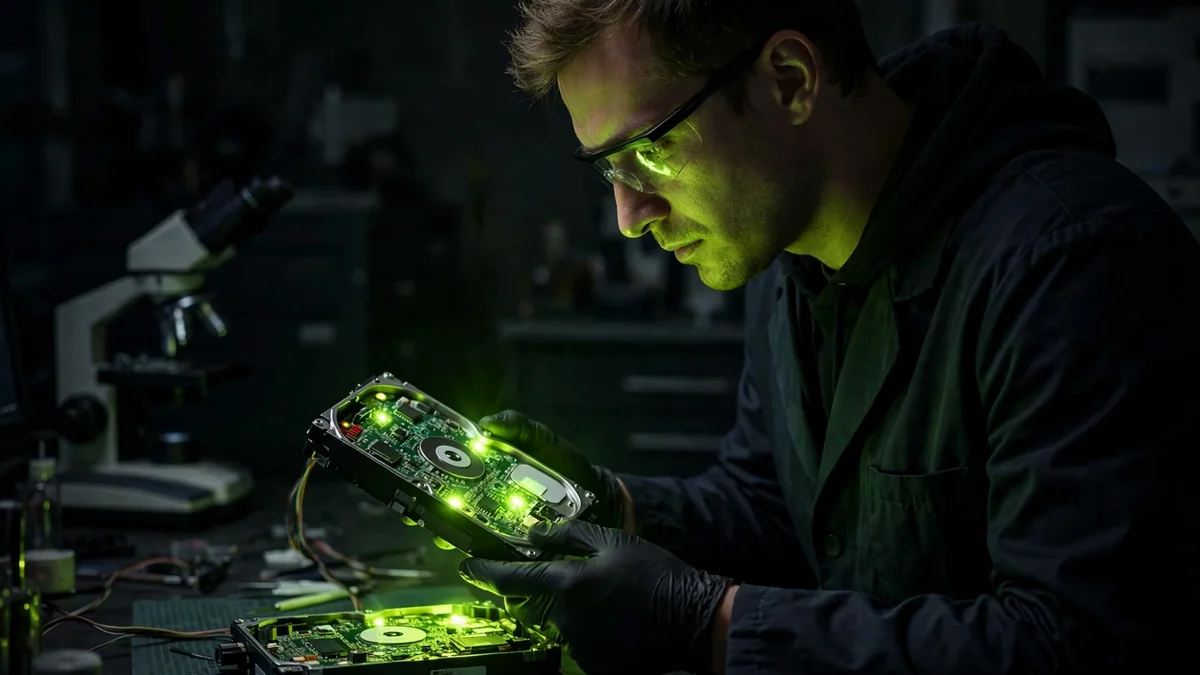
Digital forensics explained in plain terms means the science of finding, preserving, and analysing evidence on computers, phones, and networks. The central question is how an investigator can prove what happened on a device after the event, and the short answer is that computers leave traces everywhere, and a trained investigator knows how to read those traces without changing them.
Think of a detective arriving at a room where a crime took place. They photograph everything before touching it, they wear gloves, and they label every item they take away. Digital forensics applies the same discipline to data: nothing is examined on the original device, every copy is verified, and every step is recorded, so that the evidence can be trusted later.
It matters far beyond criminal cases. Companies use it to investigate breaches, to find out how an attacker got in and what they took. Employers use it in disputes over stolen data. And when a case reaches court, digital evidence is now as common as fingerprints, and just as dependent on careful handling.
Key takeaways
- Digital forensics is the recovery and analysis of evidence from digital devices.
- Investigators work on verified copies, never on the original device.
- Deleted files often survive and can be recovered from storage.
- Logs, metadata, and network records help rebuild a timeline of events.
- Every step must be documented, so the evidence stands up to challenge.
What digital forensics is
Digital forensics is the application of scientific methods to digital evidence. It covers computers, phones, tablets, servers, cloud accounts, and the networks that connect them. The work begins with identifying what might hold evidence, continues with preserving it exactly as found, and ends with analysis and a report that others can check.
Preservation is the first and most important rule. A running computer changes its own data constantly, writing logs, updating files, and overwriting deleted material. An investigator therefore captures a device carefully, often by making a bit-for-bit copy of its storage, and then works only on the copy. The original stays sealed and untouched.
That copy is verified with a hash, a fingerprint of the data that changes if even one byte is altered. If the copy’s fingerprint matches the original’s, the investigator can prove the evidence has not been tampered with. Any analysis done on a copy whose fingerprint does not match is worthless, and possibly inadmissible.
How digital forensics works
An investigation usually starts with triage: deciding which devices and accounts matter, and securing them before evidence is lost. Phones are kept charged and isolated from networks, so they cannot be wiped remotely. Computers are shut down carefully or captured while running, depending on what evidence is at risk.
Analysis then proceeds in layers. The file system is examined for documents, messages, photos, and browsing history, including files the user deleted, which often remain on disk until overwritten. Metadata, the data about data, reveals when a file was created, changed, and opened, and by whom. Our guide to encryption explains one of the investigator’s hardest problems: evidence locked behind encryption, which may be unreadable without the key.
Logs and network records add the timeline. A server log shows when an account was used, an email header shows the path a message took, and a network record shows which systems talked to each other. Pieced together, these traces let the investigator reconstruct what happened, in what order, and from where.
Finally, the findings are written up. A good report states what was found, how it was found, and what it does and does not prove, in language a non-specialist can follow. The investigator may then explain that report in court, where the other side is entitled to challenge every step.
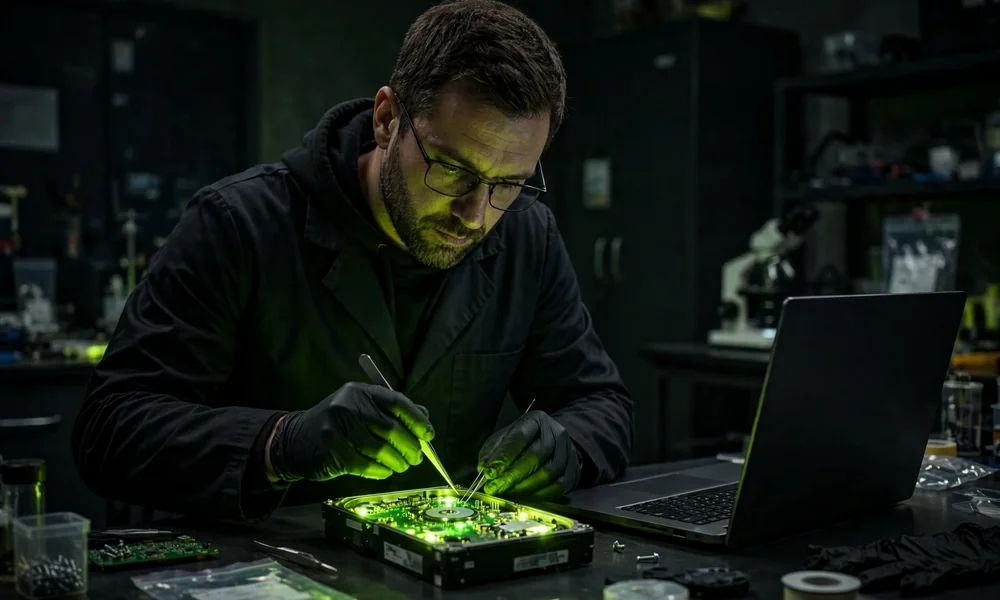
Comparing digital forensics with ordinary IT work
| Aspect | Ordinary IT work | Digital forensics |
|---|---|---|
| Goal | Fix the problem and move on | Prove what happened, step by step |
| What is touched | The live system, freely | Verified copies only, never the original |
| Deleted files | Gone, usually | Often recoverable and examined |
| Documentation | As needed | Every step recorded and checkable |
| Who checks the work | The team | Opposing experts and the court |
Where digital forensics is used
Criminal investigations are the best-known use. Police use forensics to recover messages, photos, and locations from phones and computers, to link a suspect to a device, and to build timelines of events. The evidence must be handled so carefully that it survives challenge in court.
Companies use it after security incidents. When a breach is discovered, forensic investigators find out how the attacker entered, what they accessed, and whether data left the company. That answer shapes everything that follows: what to fix, who to tell, and what the law requires. Our guide to network security explains the defences that should have stopped the attack in the first place.
It is also used in civil disputes, employment cases, and regulatory investigations, wherever digital records matter. A deleted email, a copied file, or a falsified document can decide a case, and forensics is how those facts are established reliably.
Strengths and limits
The greatest strength of digital forensics is the sheer amount of evidence computers leave behind. People delete files, clear histories, and empty bins, yet the data usually survives in some form: in unallocated space, in backups, in logs on other systems. A careful investigator can recover far more than most people expect.
It also brings rigour. The discipline of working on verified copies, documenting every step, and writing reports that others can check means that findings are testable, not just asserted. That rigour is what makes digital evidence trusted in court.
But encryption is a serious limit. When a device or a message is strongly encrypted and the key is unknown, the evidence may be unreadable, and no amount of skill can recover it. Investigators must then work around the gap, using metadata, logs, and other sources that were not encrypted.
Scale is another limit. A single phone can hold hundreds of thousands of messages and photos, and a company breach can involve terabytes of logs. Finding the relevant evidence in that volume takes time, tools, and judgement, and an investigator can miss what they do not think to look for.
Digital forensics checklist
- Stop using a device you suspect holds evidence, to avoid overwriting it.
- Keep phones charged and away from networks, so they cannot be wiped remotely.
- Never examine the original device; work on a verified copy instead.
- Record every step, including who handled the device and when.
- Verify copies with a hash, and check the hash before starting analysis.
- Preserve logs and backups, which often hold evidence the device does not.
- Separate what the evidence proves from what it merely suggests.
- Write findings in plain language that a non-specialist can follow.
- Seek professional help early; the first hours decide what survives.
Frequently asked questions
What is digital forensics?
Digital forensics is the science of recovering and analysing evidence from computers, phones, and networks. It involves preserving devices exactly as found, working on verified copies, and producing findings that can be checked and, if needed, presented in court.
Can deleted files really be recovered?
Often, yes. Deleting a file usually removes only the record of where it sits, not the data itself, which remains until something overwrites it. Forensic tools can recover that data, though the longer a device is used after deletion, the less survives.
What is a hash in forensics?
A hash is a short fingerprint computed from a set of data. If even one byte changes, the fingerprint changes completely. Investigators hash an original device and its copy to prove the copy is exact and the evidence has not been altered.
Why do investigators not work on the original device?
Because using a device changes it: files are updated, logs are written, and deleted data can be overwritten. Working on a verified copy keeps the original exactly as found, so the evidence remains trustworthy.
Can forensics break encryption?
Strong encryption cannot practically be broken without the key. Investigators work around it by using metadata, logs, backups, and evidence from other devices, or by obtaining the key through legal means.
Is digital evidence accepted in court?
Yes, routinely, provided it was collected and handled properly. The investigator must show the chain of custody, the methods used, and the limits of what the evidence proves, and the other side may challenge any of it.
The bottom line
Digital forensics explained in one line is this: the careful recovery and reading of the traces computers leave behind, done in a way that others can trust and check.
Computers remember far more than their users realise, and that memory can reveal the truth, or clear the innocent. But it only counts as evidence when it is preserved properly, from the first moment it is found.
This article is general information about how digital forensics works, not legal advice about any investigation or case.