CrewAI explained in one sentence: it is an open-source Python framework that lets you build a team of specialised AI agents, each with a defined role, and set them to work together on a task. CrewAI is built for multi-agent work, where several language-model agents cooperate instead of one model doing everything alone. The central question is whether that team model actually helps, and the short answer is yes when the work splits naturally into specialist roles, and no when a single agent with good tools would do the job faster and cheaper.
CrewAI is a standalone framework, not an extension of LangChain, and it is released under the MIT licence. You describe each agent by its role, goal and backstory, give it tools, and assign it tasks with a clear expected output. A crew then runs those tasks in an order you choose, passing results from one agent to the next.
The framework also includes Flows, an event-driven layer for work that needs branching, state and human checkpoints.
Key takeaways
- CrewAI explained simply: a Python framework for role-based multi-agent teams, where each agent has a role, goal, backstory and tools.
- Agents are grouped into a Crew that runs Tasks under a sequential or hierarchical Process, and Flows add event-driven control on top.
- CrewAI is independent of LangChain, MIT-licensed, and actively developed, with the 1.15 release line current in late 2026.
- It shines for structured business processes such as research, reporting and triage, where the work divides into specialist roles.
- It is less suited to work that needs fine-grained control flow, strict cost attribution or deep observability, where a graph-based framework fits better.
What CrewAI is
CrewAI is a framework for orchestrating role-playing AI agents. The idea is deliberately close to how a human team works: a researcher gathers material, an analyst makes sense of it, a writer drafts the result, and an editor checks it. Each agent is a language model given a job description, and the framework handles the handoffs between them.
The framework runs in Python 3.10 to 3.13 and works with many model providers, so you are not locked to a single model vendor. The open-source framework runs wherever your Python code runs, which keeps the barrier to trying it low.
Agents, tasks and crews: the three building blocks
An Agent is the basic unit. You define it with a role, such as research analyst, a goal, such as finding the strongest evidence for a claim, and a backstory, which shapes how the model approaches its work. You also give it tools, which are the functions or services it may call, and you can set limits on how it behaves.
A Task is a unit of work with an expected output. You write a description of what must be done and a description of what the finished result should look like, and you assign the task to an agent. Tasks can carry context from earlier tasks, so the writer agent receives the researcher’s findings rather than starting from nothing.
A Crew groups agents and tasks together and runs them under a Process. The crew is where the work actually happens: it takes the task list, executes it in the chosen order, and returns the final output. Best for: teams that can describe their work as a set of specialist roles with clear handoffs.
Sequential and hierarchical processes
A crew runs under one of two processes. In a sequential process, tasks run in the order you listed them, and each task receives the output of the previous one as context. It suits work where the steps are known in advance, such as gathering sources, then analysing them, then writing a summary.
In a hierarchical process, a manager agent plans the work, delegates tasks to the specialist agents, and checks the results. You set the manager with a manager language model or a manager agent of your own. This adapts better to vague goals, because the manager can reassign work when a result is weak.
The price is extra model calls for the manager, and runs that are less repeatable, since the manager’s decisions vary from run to run. Best for: sequential processes when the steps are fixed; hierarchical processes when the goal is open-ended and the manager can genuinely improve the plan.
CrewAI Flows: control flow beyond a single crew
A single crew is a straight pipeline, which is a limitation when real work branches, waits or loops. CrewAI Flows add an event-driven layer for that control flow. You define a flow with a typed state object and methods marked with decorators: one starts the flow, others listen for events, and routers decide which path to take next.
That gives you conditional branching, parallel paths and loops without abandoning the crew model.
Flows also support persistence, so a long-running flow can save its state and resume later, and human feedback steps, so a person can review or approve work before the flow continues. The practical pattern is a Flow as the backbone, with a Crew dropped in where agents need to reason together. For a broader view of how teams coordinate several agents, see our guide to AI agent orchestration.
Memory, knowledge and tools
CrewAI gives agents three kinds of support beyond the model call. Memory lets agents remember earlier interactions, so a crew can build on previous runs instead of starting fresh each time. Knowledge connects agents to sources such as documents and databases, so their answers can be grounded in your own material.
Tools let agents act, from searching the web to calling an internal API, and the framework supports the Model Context Protocol, so tools from MCP servers can be used directly.
These features are useful, but they are also where the cost of a multi-agent design shows up. Every agent in a crew makes its own model calls, and agents talking to each other adds tokens that a single-agent design would never spend, so the bill needs watching.
CrewAI compared with LangGraph and AutoGen
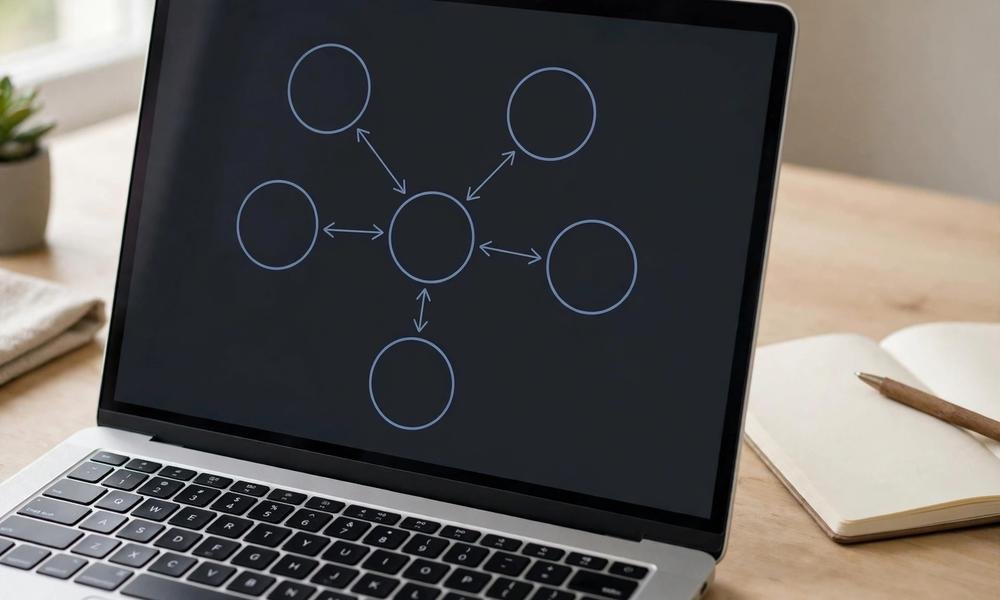
The three frameworks most often shortlisted for multi-agent work model coordination differently. CrewAI assigns roles and tasks to a crew. LangGraph wires agents into an explicit state graph, with nodes, edges and checkpoints, which gives the developer direct control over every path and makes runs auditable and resumable.
AutoGen lets agents talk to each other in a managed group chat, which is expressive but harder to control. Each model has a natural home, and the choice is usually about how much control you need rather than which framework is better in the abstract.
The maintenance picture also matters. AutoGen entered maintenance mode in October 2025, with Microsoft directing new work to the Microsoft Agent Framework, so it is a poor choice for a new project. LangGraph reached its stable 1.0 release in October 2025 and is actively developed.
CrewAI is actively developed too, with monthly releases through 2026. For the coordination patterns themselves, our guide to multi-agent orchestration explains how teams keep several agents working without stepping on each other.
| Feature | CrewAI | LangGraph | AutoGen |
|---|---|---|---|
| Coordination model | Roles, tasks and crews | State graph with nodes and edges | Conversation between agents |
| Control flow | Sequential or hierarchical process, plus Flows | Explicit graph, branches, loops, checkpoints | Group chat with speaker selection |
| Learning curve | Low: a small set of concepts | Medium: graph thinking required | Medium: conversation patterns to learn |
| Production control | Good with Flows; weaker observability | Strong: checkpoints, time travel, tracing | Weakening: no new features since 2025 |
| Licence | MIT | MIT | MIT |
| Status in late 2026 | Active development, 1.15 line | Active development, 1.x line | Maintenance mode |
The table shows the real trade-off. CrewAI wins on speed to a working prototype, LangGraph wins on control and auditability, and AutoGen’s conversation model is now a legacy choice. Pick the one whose coordination model matches the shape of your work, not the one with the liveliest demo.
Where CrewAI works well
CrewAI fits work that looks like a business process carried out by specialists. Content pipelines are the classic example: research, draft, edit and fact-check map neatly onto agents with clear roles. Support triage is another, where one agent classifies a request, another gathers the relevant records, and a third drafts the reply.
Market research, report generation and lead enrichment follow the same pattern.
It is also a strong choice for a first multi-agent project. A team can have a working crew in days, learn how agents actually behave on real tasks, and discover where the design needs tightening. That learning is valuable even if the team later moves part of the system to a graph-based framework.
Best for: content pipelines, research and triage work where roles are clear and the steps are known.
Where CrewAI struggles
The same abstractions that make the first day easy can fight you at production scale. Debugging a crew is harder than debugging a graph, because the path through the work is decided by the agents rather than written down. Observability is thinner, so tracing exactly why a run went wrong takes more effort.
Cost attribution is also harder: when five agents talk to each other, working out which conversation drove the bill is not straightforward.
There are also limits on branching. A crew is a pipeline, and even with Flows, complex conditional logic is more natural in a graph. If your system needs a human approval in the middle, a branch that depends on a tool result, or a step that must resume exactly after a crash, a graph framework will express that more directly.
For the state and memory side of that decision, see our guide to AI agent state management.
CrewAI checklist: before you commit
- The work splits into specialist roles with clear inputs and outputs for each step.
- A sequential process covers the happy path, and the branching you need fits inside Flows.
- Every agent has a narrow role, a clear goal and only the tools it actually needs.
- Each task states its expected output in concrete terms, so a weak result is visible.
- Token cost per run is measured on real tasks, with a budget and an alert when it is exceeded.
- There is a plan for tracing runs and for a human to review outputs before they reach users.
- A failed task has a fallback: a retry, a simpler agent or a human handoff.
Frequently asked questions
What is CrewAI in simple terms?
CrewAI is a Python framework for building teams of AI agents that work together on a task. Each agent has a role, a goal and tools, and a crew runs their tasks in order, passing results between them. It is designed for work that splits naturally into specialist roles.
Is CrewAI part of LangChain?
No. CrewAI is a standalone framework built from scratch and does not depend on LangChain. That independence means its object model stays small and its upgrade path is under its own control,
What is the difference between a Crew and a Flow?
A Crew is a team of agents running tasks under a sequential or hierarchical process. A Flow is an event-driven workflow that adds branching, state and human feedback around crews. Most real systems use Flows as the backbone and crews where agents need to reason together.
Is CrewAI free to use?
Yes, the open-source framework is free under the MIT licence. You pay for the language-model calls your agents make and for any managed platform or hosting you choose.
When should I choose CrewAI over LangGraph?
Choose CrewAI when the work divides into clear specialist roles, you want a working prototype quickly, and the control flow is mostly a pipeline. Choose LangGraph when you need explicit branching, checkpoints, resumability after crashes, or detailed audit trails for every step.