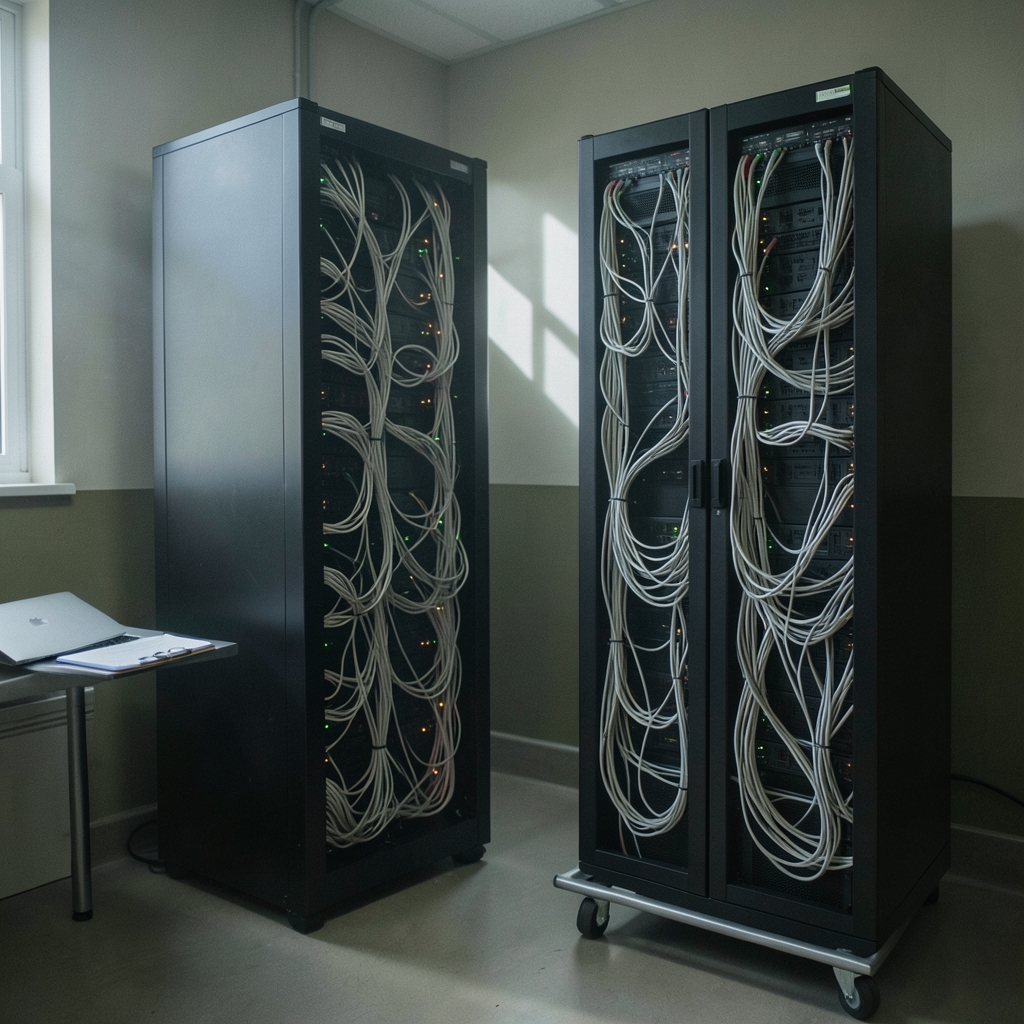
Quick Answer: What is cloud workload protection?
Cloud workload protection is the practice of securing the compute units that run inside cloud environments, including virtual machines, containers, serverless functions and Kubernetes clusters. In plain terms, it covers finding vulnerabilities, watching for threats at runtime, checking configurations and enforcing compliance on the workloads themselves rather than on the network around them. It differs from cloud security posture management, which looks at account-level misconfigurations, and from the provider-side controls that cloud vendors handle under shared responsibility. Before choosing an approach, compare coverage for containers and serverless, runtime detection depth, vulnerability scanning sources, integration with existing identity and logging tools, alert volume and staffing needs, and how well the tool separates genuine exceptions from platform defaults.
Why the Workload, Not the Network, Became the Front Line

Ask a security team where their cloud risk lives and few will point at the firewall. Most will point at a container image built six months ago, a virtual machine nobody patched, or a serverless function with permissions far wider than its job requires.
That shift explains the rise of cloud workload protection, usually shortened to CWP. The term describes a category of tools and practices aimed at the things that actually compute: virtual machines, containers, serverless functions and the orchestration layers that schedule them. It is not about the cloud account’s settings or the network perimeter. It is about what runs inside.
The underlying cloud model that makes this complicated comes from the National Institute of Standards and Technology, whose definition of cloud computing in NIST SP 800-145 sets out the service and deployment models everything else builds on. Published in September 2011, it also establishes the shared responsibility split: the provider secures the cloud, and the customer secures what runs in it. Workload protection sits firmly on the customer’s side of that line, though exactly where the line falls shifts between infrastructure, platform and software service models.
Where the Term Came From and Why Definitions Diverge
The phrase cloud workload protection platform, or CWPP, was coined by analyst Neil MacDonald of Gartner in a March 2017 research note. That origin matters for one practical reason: the note is paywalled, so most people reading about CWP today are reading vendor interpretations of it rather than the original framing.
The original framing was heavily virtual-machine and server-centric. Later revisions broadened the scope to containers, serverless and Kubernetes as those became mainstream. Because no formal standard defines the term, vendor definitions tend to expand to match whatever the vendor sells. A reader should treat any single definition as one framing among several, not as settled fact.
That is not a reason to dismiss the category. It is a reason to read product literature carefully and ask what a tool actually inspects.
What Cloud Workload Protection Actually Covers
In practice, CWP bundles several distinct jobs that are easy to confuse because vendors sell them together.
| Function | What it does | Typical failure mode |
|---|---|---|
| Vulnerability scanning | Matches installed packages and images against known vulnerability data | Scans on build only, so running workloads drift out of date |
| Runtime threat detection | Watches process, file and network behaviour for suspicious activity | Too many alerts, so real signals get ignored |
| Configuration and hardening checks | Compares workload settings against a baseline | Baselines copied wholesale without workload-specific tuning |
| Compliance reporting | Maps controls to frameworks and produces evidence | Reports look clean while exceptions go undocumented |
| Identity and network context | Ties workload activity to permissions and traffic | Missing context makes alerts impossible to triage |
The vulnerability side leans on public data. The National Vulnerability Database maintained by NIST explains the CVE and NVD programmes that most scanners consume, and it is worth understanding how those records are assigned and scored before trusting a scanner’s severity ranking.
The runtime side leans on behaviour taxonomies. MITRE ATT&CK is the public knowledge base of adversary tactics and techniques that many detection tools map their alerts against, which is why two products can produce very different alert volumes from the same underlying event.
Containers Deserve Their Own Section
Containers changed the workload protection problem because they are short-lived, numerous and built from layers nobody inspects by hand. The application container security guidance in NIST SP 800-190, first published in September 2017, catalogues the risks across the container lifecycle: vulnerable images, weak registries, orchestration gaps and runtime attacks. Most CWP container features map back to that list.
Kubernetes adds another layer. Government hardening guidance for Kubernetes sets out concrete controls around pod security, network policy and audit logging that align closely with what CWP tools check and enforce. If a platform team is building a baseline from scratch, that guidance is a better starting point than a vendor’s default policy set.
How CWP Differs From CSPM, and Why the Split Is Blurry
Cloud security posture management, or CSPM, focuses on misconfiguration and compliance across cloud accounts: public storage buckets, overly permissive roles, logging that was never switched on. CWP focuses on the workloads themselves.
Analysts and vendors increasingly treat the two as complementary rather than separate, and that is a reasonable position. A workload running in an account with a wide-open role is exposed regardless of how well the container is hardened. The practical question is not which category a tool claims but whether the findings from both land in one place where someone can act on them.
Related decisions tend to arrive at the same time. Teams planning a move often find that what to inventory before a cloud migration determines how much workload protection coverage they can realistically achieve on day one, because you cannot protect what you have not catalogued. Similarly, separating platform defaults from workload exceptions is the discipline that keeps a CWP baseline from either blocking legitimate work or quietly approving everything.
What Actually Works in Practice
A few patterns show up repeatedly in organisations that get value from workload protection, and a few mistakes show up just as reliably.
Start with visibility, not blocking. Teams that switch on enforcement in the first week usually roll it back within a month. Running detection-only for a few weeks reveals what normal looks like in that environment, which is the only way to tune alert thresholds sensibly.
Scan at build and at runtime. Build-time scanning catches most image problems, but it says nothing about what is running now. Long-lived virtual machines drift, and containers pulled from third-party registries may never have passed through your pipeline at all.
Treat alert volume as a design constraint. A tool that produces four hundred findings a week for a team of two is not providing protection. It is providing a backlog. Prioritisation by exploitability and reachability beats prioritisation by raw severity score almost every time.
Document the exceptions. Every environment has workloads that genuinely cannot meet the standard, usually legacy systems or vendor appliances. Writing those exceptions down, with an owner and a review date, keeps the compliance report honest.
Check the shared responsibility boundary per service. The split is not uniform. A managed container service may handle host patching while leaving image contents and runtime configuration to the customer. Assuming otherwise is one of the most common mistakes in cloud security, and it is invisible until an incident.
Cost tracking and workload placement decisions interact with all of this more than people expect. Understanding how to track cloud data transfer costs matters when a security tool ships telemetry across regions, and matching cloud regions to workload requirements affects which controls are even available in a given location. Reading a cloud region announcement carefully tells you whether a security service you depend on has actually launched there or is merely on the roadmap.
Building a Workload Protection Programme in Order
For teams starting from little or nothing, a sequenced approach works better than buying a platform and hoping.
- Inventory every compute resource across accounts and regions, including the ones nobody remembers creating.
- Establish a baseline for each workload type using published hardening guidance rather than vendor defaults alone.
- Turn on vulnerability scanning at build time and on running instances, and route findings to the team that owns the workload.
- Enable runtime detection in monitor-only mode, then tune thresholds against observed behaviour before enforcing anything.
- Connect findings to identity and network context so an alert names a workload, an owner and the permissions involved.
- Report against a framework and record exceptions with owners and review dates.
- Review quarterly, because workload populations change faster than most security programmes expect.
The scope question underneath all of this is organisational as much as technical: when to split workloads across cloud accounts determines whether a compromise stays contained, and it changes how many places a protection tool must reach. Enterprise programmes that combine AI-assisted triage with cloud security controls tend to find the enterprise AI and cloud security angle useful for framing how detection, identity and data protection fit together, while broader enterprise AI and cloud intelligence coverage helps teams keep workload decisions aligned with the rest of their cloud strategy. (Cloud computing security)
Conclusion
Cloud workload protection is less mysterious than its vendor-driven definition suggests. It is the set of practices that secure the compute you run in the cloud: finding vulnerabilities before attackers do, watching behaviour at runtime, keeping configurations close to a defensible baseline, and producing evidence that the whole thing works. The term came from an analyst note in 2017, the scope has widened since to containers and serverless, and no formal standard pins it down, which is exactly why the practical details matter more than the label. Start with an honest inventory, scan continuously rather than once, tune detection before enforcing it, and write down the exceptions. That combination does more for real risk reduction than any single product category, and it holds up whether the workloads are virtual machines, containers or functions nobody has looked at in months.
Frequently Asked Questions
Is cloud workload protection the same as cloud security?
No. Cloud security is the broad umbrella covering identity, network, data, account configuration and workloads. Cloud workload protection is one slice of that, focused specifically on the compute units themselves. A complete cloud security programme needs workload protection, but it also needs posture management, identity controls and data protection.
Does the cloud provider handle workload protection for me?
Only partly. Under the shared responsibility model, the provider secures the infrastructure underneath, but responsibility for what runs on top varies by service model. With virtual machines, the customer typically owns nearly everything above the hypervisor. With managed container services and serverless, the split shifts, but image contents, configuration and runtime behaviour usually remain customer responsibilities.
Do I need separate tools for containers and virtual machines?
Often not, but check carefully. Many platforms cover both, though depth varies considerably, and container coverage is sometimes bolted on rather than built in. Ask specifically whether the tool inspects image layers, enforces Kubernetes policy and detects runtime behaviour inside containers, rather than accepting a general claim of container support.
How is CWP different from CSPM?
CSPM looks at the cloud account: misconfigured storage, permissive roles, disabled logging. CWP looks at the workloads: vulnerable packages, suspicious processes, hardening gaps. They answer different questions, and mature programmes feed both into a single triage process rather than running them as separate silos with separate alert queues.
How many alerts should a workload protection tool generate?
There is no universal number, but a useful test is whether the team can triage everything within a working day. If not, the tool needs tuning or the scope needs narrowing. High-volume alerting that nobody reads provides no protection and actively erodes trust in the system, which is worse than having no detection at all.
Can small teams do workload protection without a dedicated platform?
Yes, up to a point. Cloud-native logging, built-in vulnerability scanning in the container registry and provider-supplied configuration checks cover a surprising amount of ground for a small estate. The gap appears as workload count and variety grow, when correlating findings across accounts and workload types by hand stops being feasible.