
What if the biggest hole in a cloud environment were not a clever attack at all, but a storage bucket someone left open on a Friday afternoon? That is the world cloud security posture management, or CSPM, was built for. Its job is to find the misconfigurations, drifted settings, and compliance gaps that attackers count on, and to find them continuously rather than once a year.
The tricky part is that “CSPM framework” means two different things. It can mean the structure of a posture management program inside a company. It can also mean the standards a tool checks your cloud against. This article covers both, with a practical view of what works, what fails, and what to expect from the tools.
What CSPM Actually Does
CSPM is an analyst category, not a formal standard. That matters because vendors stretch the definition to fit what they sell. In practice, CSPM continuously scans cloud accounts across infrastructure and platform services and compares the live configuration against a baseline. It flags publicly readable object storage, identity policies that grant far more access than needed, disabled audit logging, unencrypted volumes, and security groups open to the whole internet.
The term itself is generally credited to Gartner, which placed CSPM in its cloud security research as a defined market around the late 2010s. Because Gartner’s wording shifts between editions, quoting any single definition as final is a mistake. A more useful mental model is simpler: CSPM answers the question “is our cloud set up the way we said it should be, right now, across every account?” (A clearer way to track cloud data transfer costs)
That “right now” is the whole point. Cloud environments change constantly. A configuration that passed review in January can be wide open by March because a developer opened a port to debug something and never closed it. Posture management exists to catch that drift.
The Four Layers of a Workable Framework
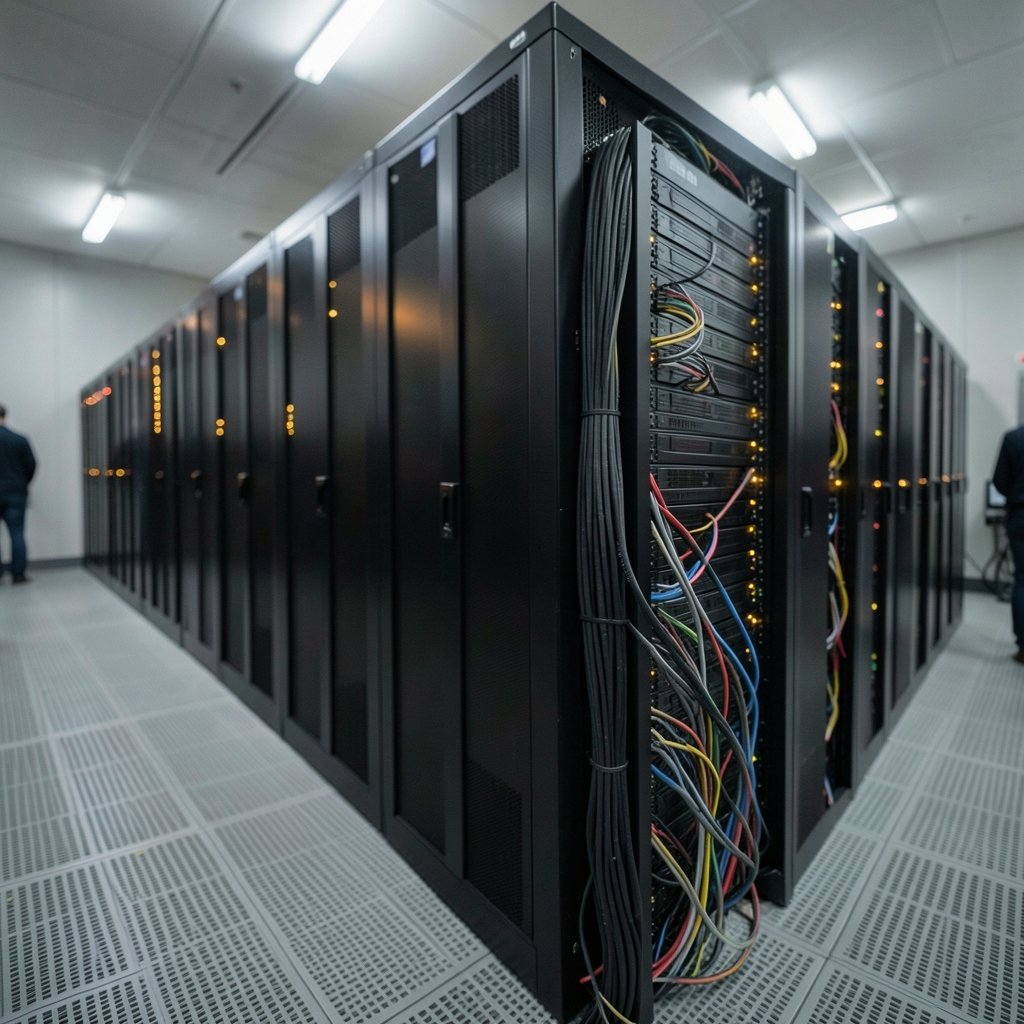
Most programs that hold up over time share the same four layers. Skip one and the rest gets weaker.
Layer 1: Inventory and Visibility
You cannot secure accounts you do not know exist. Shadow accounts, forgotten sandboxes, and projects spun up with a corporate card are the norm in most organizations. A posture framework starts with complete discovery: every cloud provider, every account, every region, every service in use.
This is the same discipline that shows up in migration planning, where knowing what you have before you move it is the difference between a smooth cutover and a mess. The inventory work done before a cloud migration is a good model for how thorough discovery should be.
Layer 2: Configuration Baselines
A baseline is the written answer to “what does good look like?” The most widely referenced source is the CIS Benchmarks, which publish hardening guidance for major cloud platforms and Kubernetes, versioned and updated continuously. A posture framework should name the specific benchmark version it enforces, because “we follow CIS” without a version number is not auditable.
Baselines should also reflect your own context. A benchmark written for a general audience may require controls that make no sense for a particular workload, and blind enforcement creates noise. The practical move is to start from the benchmark, document every deviation with a reason, and review deviations quarterly.
Layer 3: Detection and Prioritization
Detection is the part everyone buys. Prioritization is the part everyone struggles with. A first scan of a mid-sized environment can return thousands of findings, and a list of thousands is not a work queue, it is wallpaper.
What works in practice is scoring findings by exposure and blast radius rather than by count. A public bucket holding customer records outranks an unencrypted volume in a development account, even if both are “high” severity in the tool. Teams that treat every finding as equal burn out fast. Teams that rank by what an attacker could actually reach keep going.
Layer 4: Remediation and Prevention
The endpoint of the loop is a change: fix the resource, or better, prevent the next one. Prevention usually means policy-as-code in the deployment pipeline, so an insecure Terraform or CloudFormation template fails before it ever reaches production. This shift-left approach is where posture management overlaps with infrastructure-as-code scanning.
Remediation should also be tracked. Findings that get closed without a record of who changed what and when leave you unable to prove the fix happened, which is exactly what an auditor will ask for.
The Standards Your Tool Checks Against
CSPM tools map findings to compliance frameworks. The mapping is useful, but it is a starting point, not a certificate. A tool can show a green check for a control while the underlying process is weak.
| Standard | What it gives you | Watch out for |
|---|---|---|
| CIS Benchmarks | Specific, versioned configuration rules per platform | Requires you to pick and pin a version |
| NIST SP 800-53 | A broad security control catalog used for mapping | Controls are high-level; cloud specifics need translation |
| NIST Cybersecurity Framework | Governance language for program structure | Voluntary; not a configuration checklist |
| ISO/IEC 27001 | Management-system requirements for security | Certification covers process, not individual cloud settings |
| PCI DSS and SOC 2 | Sector and assurance frameworks for reporting | Scope decisions change what counts as compliant |
NIST SP 800-53 Revision 5, published in September 2020, is the version most current mappings reference. For governance language that executives recognize, the NIST Cybersecurity Framework is often used alongside CSPM output rather than instead of it.
Where CSPM Fits: CNAPP, CIEM, and the Scope Debate
CSPM does not live alone. Analysts and vendors increasingly group it into Cloud-Native Application Protection Platforms (CNAPP), which bundle posture management with workload protection, cloud infrastructure entitlement management, and infrastructure-as-code scanning. CNAPP is an analyst category too, and its boundaries differ between research firms and vendors.
The practical question is not what the platform is called but what gap remains. CSPM detects misconfiguration. It does not stop a runtime attack, and it does not by itself protect a running workload. If your program has strong posture scanning and nothing watching runtime behavior, buying a bigger CSPM license will not close that gap. (9481.org)
A related confusion is CIEM, which focuses on identity and permissions: who can do what, and whether that access is excessive. Identity misconfiguration is one of the most common cloud risks, so the two categories overlap heavily. What matters is that someone owns the permissions review, whatever tool label sits on it.
Regulatory Pressure Is Reshaping the Framework
Compliance used to be an annual exercise. It is becoming continuous, and that change is doing more to drive posture management adoption than any vendor pitch.
In the European Union, the NIS2 Directive, in force since January 2023 with a transposition deadline of 17 October 2024, imposes risk-management and incident-reporting duties on essential and important entities across many sectors. NIS2 does not name CSPM anywhere. The link is indirect but real: continuous monitoring and fast detection are hard to demonstrate with quarterly screenshots.
For security leaders, the takeaway is to design the posture framework so that evidence is a byproduct. If every finding, decision, and fix is logged as it happens, producing an audit trail becomes a report rather than a project. Programs that treat compliance as a separate workstream from day-to-day security end up doing everything twice.
Common Mistakes That Undermine Posture Programs
A few failure patterns show up again and again. Knowing them in advance saves months.
Scanning only the primary account. Multi-account structures exist for good reasons, and splitting workloads across cloud accounts is a common way to limit blast radius. But every account you add is another place posture can drift. Onboarding must be automatic, not a ticket.
Ignoring the pipeline. If developers can deploy an insecure template and fix it later, later never comes. Blocking bad configurations at merge time is cheaper than cleaning them up in production.
Alerting without ownership. A finding with no named owner is a finding that stays open. Route findings to the team that owns the resource, not to a central security queue.
Chasing a perfect score. A posture score of 100 percent usually means the rules are too loose. Some risk is accepted on purpose, and documented exceptions are a sign of maturity, not weakness.
Forgetting the humans. Tools generate findings; people decide what to do. A framework with no process for reviewing exceptions, no regular triage cadence, and no way to escalate will stall within a quarter.
Agentless Scanning and the Multi-Cloud Reality
Most organizations run more than one cloud, and many run Kubernetes on top. Modern CSPM emphasizes agentless, API-based scanning that reaches across providers and container registries without installing anything on workloads. Agentless scanning became a major marketing emphasis in the early 2020s and is now a common expectation, though it is a trend rather than a standard.
Multi-cloud support is where tools differentiate, and where buyers should test hard. Ask for a live demonstration against your actual account structure, including the awkward parts: nested organizational units, service accounts with unusual permissions, and regions you barely use. A tool that looks clean in a demo can drown in a real estate.
The same discipline applies to reading vendor claims about regional coverage. Announcements about new cloud regions often sound bigger than they are, and understanding how to read a cloud region announcement helps you judge whether a tool’s coverage actually matches where your data lives.
How to Build the Framework in Practice
A workable rollout follows a sequence. Trying to do everything at once is the most common reason programs stall.
- Discover every account and provider, then connect them all to scanning. No exceptions.
- Pick a baseline per platform, pin the version, and document deviations.
- Triage for two weeks before enforcing anything, so you learn what normal looks like.
- Rank findings by exposure and blast radius, and assign owners.
- Add policy checks to the deployment pipeline for the top recurring issues.
- Review exceptions and scores monthly, and report evidence continuously.
Expect the first month to feel noisy. That is normal. The signal comes from watching which findings recur, because recurring findings point to a process problem rather than a one-off mistake.
Conclusion
A cloud security posture management framework is less about the tool you buy and more about the loop you run: know every account, define what good looks like, rank what matters, fix it, and prevent the next one. The standards, from CIS Benchmarks to NIST control catalogs, give you a baseline to work from, but none of them replaces judgment about your own environment. Start with visibility, accept that noise is part of the learning curve, and build evidence collection into daily work so audits stop being a scramble. The organizations that get this right are not the ones with the most findings closed. They are the ones whose cloud stops drifting.
Frequently Asked Questions
What is the difference between CSPM and CNAPP?
CSPM focuses on configuration posture: finding misconfigurations and compliance gaps across cloud accounts. CNAPP is a broader analyst category that bundles posture management with workload protection, identity and entitlement management, and infrastructure-as-code scanning. In practice, many vendors sell CSPM as one module inside a larger platform, and the boundaries differ between research firms.
Is CSPM a formal standard?
No. CSPM is an analyst and vendor category, not a published standard. The standards a CSPM tool checks against, such as CIS Benchmarks, NIST SP 800-53, and ISO/IEC 27001, are separate documents with their own governance. That is why two tools can both claim CSPM coverage while checking very different things.
How often should posture scans run?
Continuous scanning is the norm, with most tools re-checking configuration whenever a resource changes and running a full sweep on a schedule. The more important question is how often findings are triaged. A daily review cadence for high-exposure findings works for most organizations; weekly is usually too slow for anything internet-facing.
Does CSPM stop attacks?
Not directly. CSPM reduces the attack surface by catching the misconfigurations attackers rely on, but it does not detect or block runtime activity inside a workload. A complete program pairs posture management with runtime protection, logging, and incident response. Buying more posture coverage will not substitute for those.
Can CSPM handle multi-cloud and Kubernetes?
Most mature tools support the major cloud providers and Kubernetes, usually through agentless API-based scanning. Quality varies widely, especially for nested account structures and less common services. Test any tool against your real environment before committing, rather than relying on a scripted demonstration.
How do you measure whether a posture program is working?
Look at trends, not scores. Falling counts of recurring high-exposure findings, shorter time from detection to fix, and a rising share of issues caught in the pipeline rather than in production are all good signs. A perfect compliance score with slow remediation times usually means the rules are too permissive.




