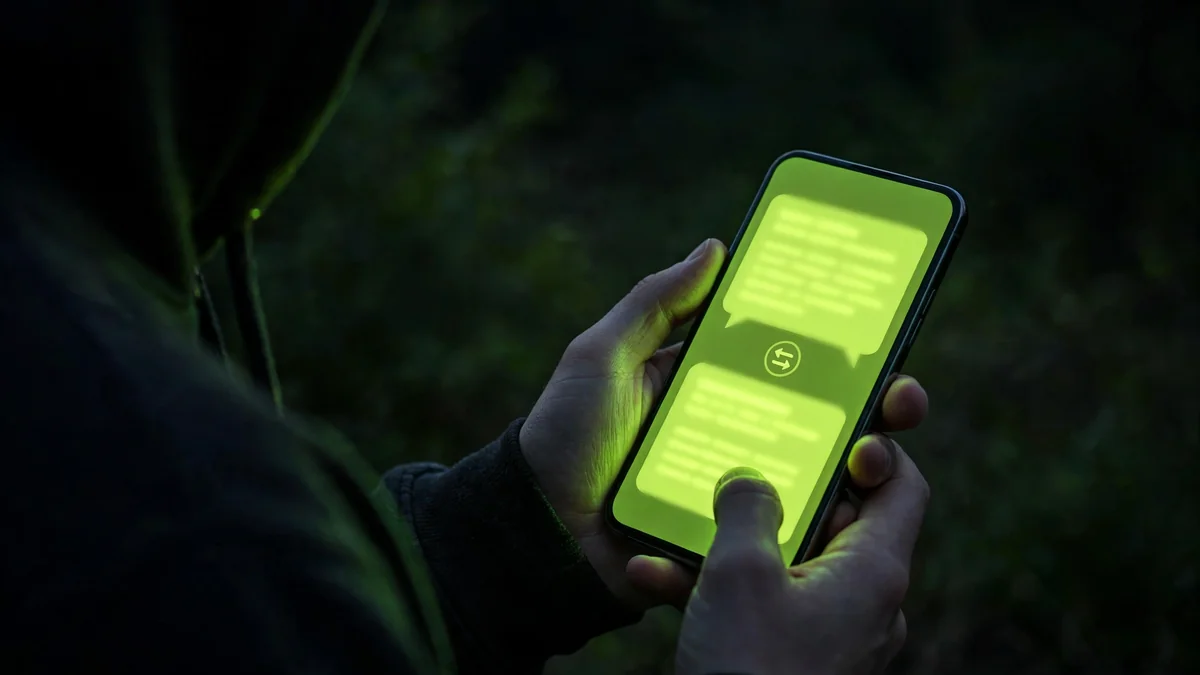
Machine translation explained in plain terms means using a computer to turn text or speech from one language into another without a human translator. The central question is how a machine can understand a sentence well enough to restate it in a different language, and the short answer is that it learns patterns from enormous collections of translated text, then predicts the most likely translation for each new sentence.
You have probably used machine translation without thinking about it. It powers the translate button in your browser, the subtitles on a foreign film, and the app that helps you ask for directions on holiday. What once took a bilingual dictionary and a great deal of patience now happens in less than a second.
Understanding machine translation matters because it shapes how people read, work, and travel across languages. It has opened up the web to billions of people, yet it still makes mistakes that a human translator would never make, and knowing where those mistakes come from helps you use it well.
Key takeaways
- Machine translation is the automatic conversion of text or speech from one language into another.
- Modern systems learn from huge collections of translated text rather than following hand-written grammar rules.
- Neural networks, especially transformer models, power the best translation systems today.
- Translation quality is highest between widely used languages and lowest for rare or low-resource ones.
- Machine translation is fast and cheap, but it still struggles with idiom, tone, and specialised subjects.
What machine translation is
Machine translation is any system that takes language in one form and produces the equivalent meaning in another, with no human in the loop. The input might be a sentence typed into a website, a document uploaded for translation, a spoken phrase captured by a microphone, or a page of text on a camera screen. The output is the same content expressed in the target language.
The earliest attempts, in the middle of the twentieth century, used dictionaries and hand-written rules. Engineers wrote rules for word order and grammar, and the computer looked up each word in a dictionary and rearranged the result. This worked for simple sentences but failed badly on anything complex, because languages do not map onto each other word by word, and the rules quickly became too many to manage.
A second generation, known as statistical machine translation, arrived in the late twentieth century. Instead of rules, these systems counted patterns in large collections of translated text, learning which words and phrases tended to correspond. They were better than rule-based systems, but their translations often read awkwardly, because they worked in short fragments rather than whole sentences.
The third generation, neural machine translation, began to dominate in the middle of the 2010s. These systems use neural networks trained on vast amounts of bilingual text, and they translate whole sentences at once, producing results that read far more naturally. Our guide to natural language processing explains the wider field that machine translation belongs to, including how computers learn the structure of language at all.
How machine translation works
A modern translation system starts by breaking the input sentence into tokens, which are pieces of words or short word groups that the model can handle. Common words become single tokens, while rare words are split into smaller pieces, so the system can cope with words it has never seen in full. Each token is then turned into a list of numbers, called an embedding, that captures something of its meaning and its relationships to other words.
Those embeddings pass through the neural network, which is usually a transformer model. The transformer reads the whole sentence at once rather than word by word, and a mechanism called attention lets it weigh which parts of the sentence matter most for each word it is about to translate. When translating a verb, for example, it can look back at the subject of the sentence even if many words separate them.
The model then produces the translation one token at a time, predicting the most likely next word given the input and everything it has already produced. This is why translation feels like writing: the system builds the sentence in the target language step by step, checking at each step that the growing sentence still fits the meaning of the original.
Training such a model takes enormous amounts of bilingual text, gathered from translated books, official documents, subtitles, and websites. The model is shown millions of sentence pairs and adjusts its internal settings to make its translations match the human ones. The process repeats until the model can produce translations that readers accept as natural, and larger models trained on more language pairs generally do better.
Our guide to transformers describes the architecture behind these models in more detail, including the attention mechanism that lets them follow meaning across long sentences. The same architecture powers chatbots and text generators, which is why translation improved so sharply once transformers arrived.
Comparing machine translation approaches
The three generations of machine translation differ in how they learn and how natural their output reads. Rule-based systems are predictable and easy to inspect, statistical systems learn from data but stay clumsy, and neural systems produce the most fluent results but are the hardest to explain. The table below sets out the main contrasts.
Almost every system in use today is neural, though rule-based tools still survive for small, tightly controlled jobs such as translating standard phrases in a manual.
| Aspect | Rule-based | Statistical | Neural |
|---|---|---|---|
| How it learns | Hand-written grammar rules and dictionaries | Counts patterns in translated text | Trains a neural network on sentence pairs |
| Output quality | Stiff, often word for word | Better, but awkward in places | Fluent, often close to human |
| New languages | Needs new rules for each language | Needs a large bilingual corpus | Needs a large bilingual corpus |
| Context | Very little, word by word | Short phrases only | Whole sentences and beyond |
| Main weakness | Rules cannot cover real language | Fragmented, unnatural phrasing | Confident errors and rare language gaps |
Where machine translation is used
The most visible use is on the web. Search engines and browsers offer one-click translation of whole pages, social networks translate posts and comments automatically, and online shops show product pages in the language of each visitor. For many people, this is the main way they read content written in languages they do not speak.
Businesses use machine translation to handle customer messages, translate support documents, and localise products for new markets. A company can answer a customer in another language within seconds, or draft a translation of a manual and have a human editor polish it, which is far faster than translating from scratch. Travel and hospitality rely on it too, from phrasebook apps to live conversation tools at hotel desks.
Public services and aid organisations use machine translation where human translators are scarce or too slow. It helps doctors communicate with patients, aid workers share information after disasters, and governments publish guidance in many languages at once. In these settings the stakes are high, so a human usually checks anything where a mistake could cause harm.
Strengths and limits
The greatest strength of machine translation is scale. A single system can translate between dozens or even hundreds of languages, handling millions of sentences a day at a cost close to zero per sentence. No team of human translators could match that volume, and for everyday reading, such as understanding a foreign news article, it is usually good enough.
Speed is the second strength. Translation that once took days now takes seconds, which changes what is possible: live subtitles for a broadcast, instant translation of a chat message, or a whole research paper rendered in your own language while you wait. This immediacy is something human translation cannot offer at all.
The main limit is meaning. Machine translation works by predicting likely word sequences, not by understanding the world, so it can mistranslate idioms, jokes, and cultural references, and it can produce sentences that sound fluent while saying the wrong thing. It also struggles with tone, sometimes turning a polite request into a blunt demand, or a formal document into casual speech.
There are practical limits too. Quality drops sharply for languages with little translated text available for training, which includes many languages spoken by millions of people. The systems also inherit biases from their training data, and they can mishandle names, dates, and numbers, which is why professional translators still check machine output for anything important.
Machine translation checklist
- Use machine translation for understanding, and a human translator for anything that must be exact.
- Write short, clear sentences before translating, and avoid idioms and jokes.
- Check names, numbers, dates, and technical terms in the output, since these are common error points.
- Translate back into the original language to spot sentences that have lost their meaning.
- Choose a system that supports both of your languages well, not only the popular ones.
- Do not paste confidential or sensitive text into a free online translator.
- Have a fluent speaker review translations for public pages, contracts, and medical information.
- Remember that tone can shift in translation, so check formal and polite wording carefully.
- Keep the original text alongside the translation, so errors can be traced and fixed.
Frequently asked questions
What is machine translation in simple terms?
Machine translation is software that converts text or speech from one language into another automatically. Modern systems learn from millions of translated sentences and predict the most likely translation for each new sentence they meet.
How accurate is machine translation?
It is very accurate for common language pairs and everyday text, where it often reads almost like a human translation. Accuracy falls for rare languages, technical subjects, poetry, and text that relies on humour or cultural knowledge.
What is neural machine translation?
Neural machine translation uses a neural network, usually a transformer, trained on large collections of translated text. It translates whole sentences at once, which produces far more natural results than earlier systems that worked word by word or in short fragments.
Can machine translation replace human translators?
Not for work where accuracy, tone, and cultural judgement matter, such as legal documents, literature, and marketing. It can replace them for quick understanding and for first drafts that a human then edits and checks.
Why does machine translation struggle with some languages?
It needs large amounts of translated text to learn from, and some languages have very little available. Languages with complex grammar or many dialects are also harder to model, and errors grow when the training data is thin.
Is it safe to use free online translators for private documents?
Not always. Text sent to a free online service may be stored or used to improve the service, so confidential, medical, or legal documents should be translated with a trusted tool or a professional translator instead.
The bottom line
Machine translation explained in one line is this: a computer learns from millions of translated sentences, then predicts the best translation for each new sentence, producing fast and often fluent results that still need a human eye for anything important.
The technology has moved from dictionaries and rules to neural networks that read whole sentences, and the next gains will come from better training data, more languages, and closer partnership between machines and human translators.
This article is general information about how machine translation works, not advice about choosing a translation service or translator for a particular document or project.