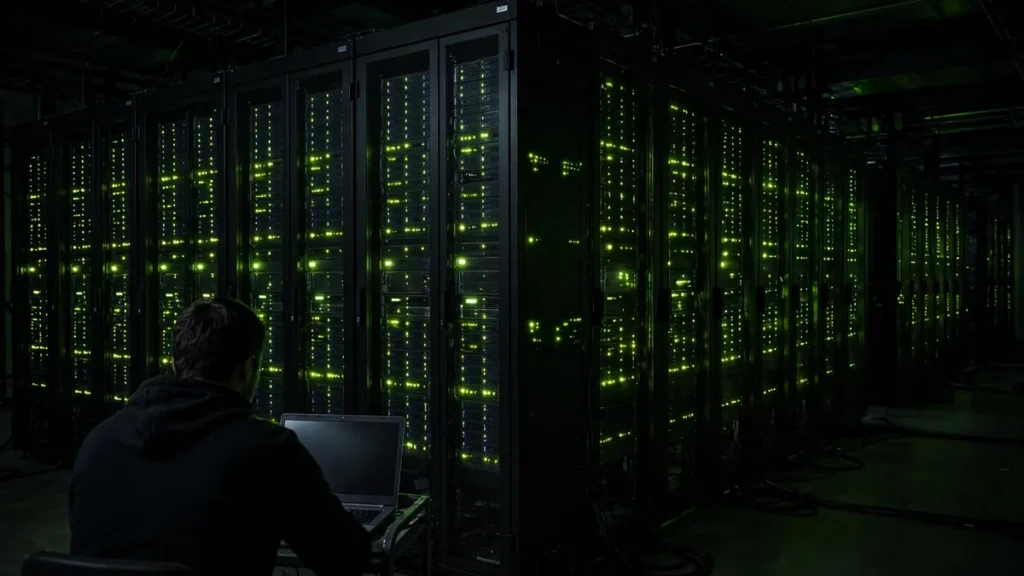
Data centres explained in plain terms means the large, secure buildings full of computers that store the internet’s data and run its services. The central question is where all the photos, videos, messages, and apps you use every day actually live, and the short answer is that they live in these windowless warehouses, on racks of servers that never switch off.
Think of a library that never closes, where every book is copied many times and spread across many shelves, so that no single fire or flood can destroy a title, and where a thousand librarians fetch any book in less than a second. A data centre is that library, rebuilt for the digital age, with electricity and cooling in place of quiet reading rooms.
You never see a data centre, but you use one constantly. Every search, every streamed film, every photo you back up, and every message you send passes through one, often in a fraction of a second. The cloud, for all its airy name, is mostly these very solid buildings.
Key takeaways
- A data centre is a secure building full of servers, storage, and networking equipment.
- It stores data and runs services for websites, apps, and businesses.
- Power, cooling, and connectivity are designed to keep running without interruption.
- Data is copied across many machines and sites, so no single failure loses it.
- The cloud is, in practice, rented space and computing inside data centres.
What a data centre is
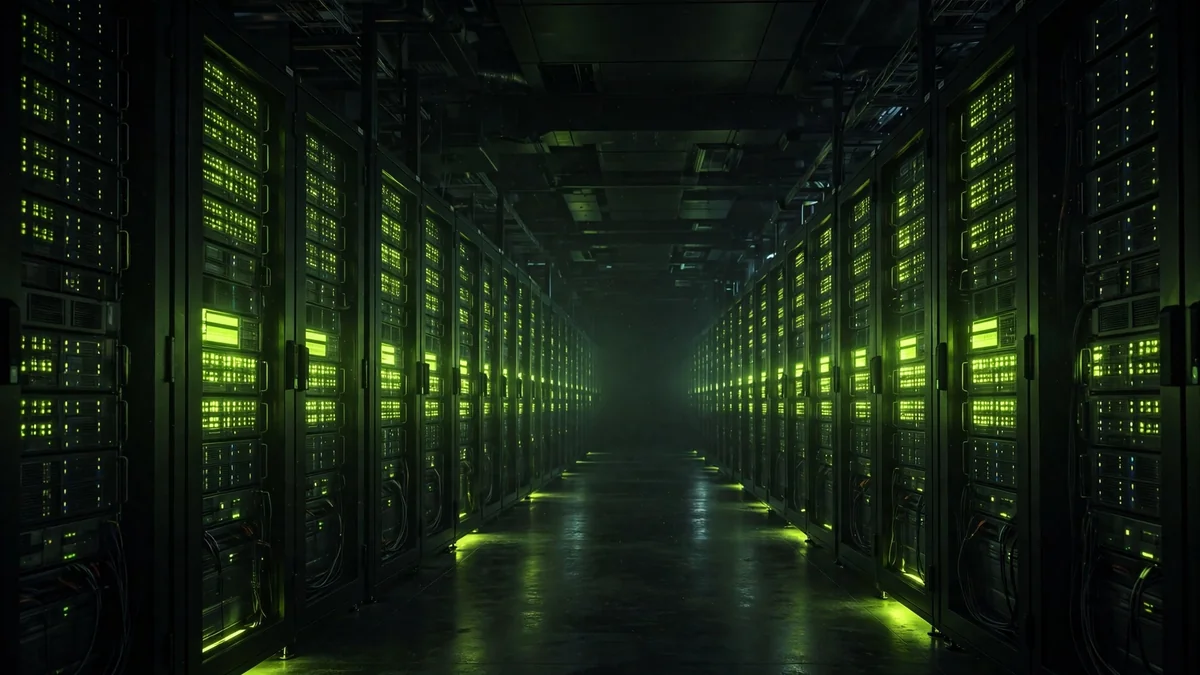
A data centre is a purpose-built facility that houses the computing equipment of the internet. Inside, rows of tall racks hold servers, storage drives, and networking switches, all wired together and connected to the outside world by high-speed fibre. The building exists to keep that equipment powered, cool, secure, and connected, day and night, year after year.
The scale varies enormously. A small company might run a single room of racks. A hyperscale data centre, the kind run by the largest cloud companies, can cover several football pitches, hold hundreds of thousands of servers, and use as much electricity as a small town. Between those extremes sit thousands of medium-sized facilities serving cities, regions, and industries.
What they share is a focus on reliability. A data centre is judged by uptime, the share of time its services are available, and the best ones aim for five nines, or 99.999 per cent, which allows only about five minutes of downtime a year. Reaching that standard shapes everything about how the building is designed.
How a data centre works
At the heart of a data centre are the racks, tall metal frames that hold servers like books on a shelf. Each server is a computer, and together they run the websites, databases, and applications that customers pay for. Storage systems hold the data, and networking equipment moves it between servers and out to the internet.
Power is the first challenge. Servers draw enormous amounts of electricity, and a data centre must keep them fed even when the grid fails. Backup generators, battery systems, and duplicate power feeds take over in seconds, and the largest facilities draw power from more than one substation, so that a single failure cannot stop them.
Cooling is the second challenge. Every watt of electricity a server uses becomes heat, and a room full of servers would overheat quickly without constant cooling. Data centres use air conditioning, chilled water, and, increasingly, liquid cooling that carries heat away directly from the chips. Our guide to cloud security explains how the services running in these buildings protect the data they hold.
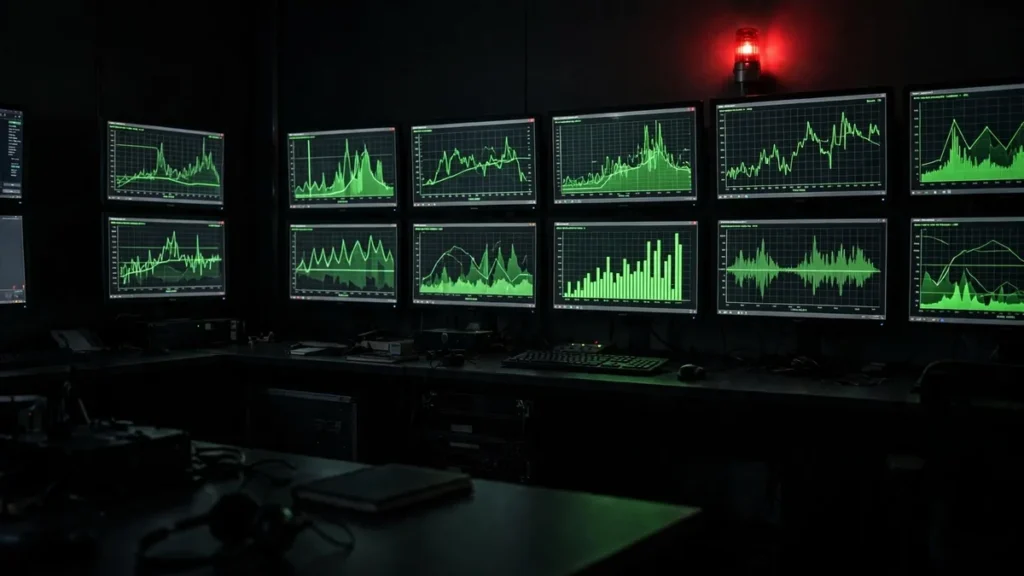
Everything is monitored. Sensors track temperature, humidity, power, and network traffic, and staff watch for anything unusual. When a server fails, its work moves automatically to another machine, and the broken one is replaced. That redundancy, having spare capacity everywhere, is what makes the whole system feel unbreakable from the outside.

Comparing data centre types
| Aspect | On-premises room | Colocation centre | Hyperscale cloud centre |
|---|---|---|---|
| Who owns it | The company itself | A provider, rented by many firms | A large cloud company |
| Scale | One room, tens of servers | One building, thousands of servers | Many buildings, huge fleets |
| Who runs it | The company’s own staff | The provider’s staff | The cloud company’s staff |
| Main advantage | Full control | Shared power and security | Enormous scale and flexibility |
| Main drawback | Costly to build and run | Less control than owning | Dependent on one provider |
Where data centres are used
Cloud computing is the largest use. When you rent computing from a cloud company, you are renting servers, storage, and networking inside its data centres, and you can scale up or down in minutes. The cloud’s flexibility comes directly from the scale of the buildings behind it.
Streaming and social media depend on them too. The films, music, and posts you consume are stored in data centres, often copied to several of them, so that a copy is always near you. Our guide to content delivery networks explains how that nearby copy reaches your screen so quickly.
Businesses use data centres for their own systems: email, databases, customer records, and the applications their staff rely on. Banks, hospitals, and governments run some of the most sensitive workloads in them, under strict rules about where data may be stored and who may touch it.
Strengths and limits
The greatest strength of a data centre is reliability through redundancy. Power, cooling, networking, and storage are all duplicated, so that the failure of any one part does not stop the service. That design is why a single broken server is an unremarkable event, fixed quietly while everything keeps running.
They also offer security that most companies could not build themselves: fences, guards, biometric locks, cameras, and strict rules about who may enter and what they may carry. For sensitive data, that physical protection matters as much as any software.
But data centres are expensive to build and to run. Land, power, cooling, and staff add up, and the electricity they use is a growing environmental concern. The industry is working on cleaner power, better cooling, and reusing waste heat, but the energy appetite of the internet keeps growing.
They also concentrate risk. When a major data centre has a serious outage, thousands of websites and services can go down together, as has happened more than once. Spreading work across several centres in different regions reduces that risk, but it costs more and takes more planning.
Data centres checklist
- Know where your data lives, and in which country, before choosing a provider.
- Check the provider’s uptime record, not just its promises.
- Keep copies of important data in more than one location.
- Make sure power and cooling are duplicated, not single points of failure.
- Confirm who can physically enter the facility and how access is logged.
- Plan for outages: decide in advance what happens when a centre goes down.
- Ask how the provider handles waste heat and where its power comes from.
- Test your backups by restoring them, not just by making them.
- Review contracts for exit terms, so you can move if you need to.
Frequently asked questions
What is a data centre?
A data centre is a secure building full of servers, storage, and networking equipment, designed to keep those machines powered, cool, and connected at all times. It stores data and runs services for websites, apps, and businesses.
What is the difference between a data centre and the cloud?
A data centre is a physical place. The cloud is a way of using the computing inside data centres, rented on demand over the internet. When you use the cloud, you are using someone else’s data centre.
How do data centres stay cool?
They use air conditioning, chilled water, and increasingly liquid cooling that carries heat away from the chips directly. Hot and cold aisles separate the air flowing into racks from the hot air coming out, which makes cooling far more efficient.
What happens when a data centre loses power?
Batteries take over instantly, and backup generators start within seconds. Power feeds are duplicated, and many facilities draw from more than one substation, so a single failure should not interrupt service.
Are data centres secure?
They are among the most physically secure buildings in commercial use, with fences, guards, biometric locks, cameras, and strict access logs. Digital security, such as encryption and access controls, protects the data inside as well.
How much energy do data centres use?
A great deal: the largest use as much electricity as a small town, and the total across the industry is a significant share of global demand. Providers are moving to renewable power and more efficient cooling to limit the impact.
The bottom line
Data centres explained in one line is this: the solid, guarded, always-on buildings where the internet’s data lives and its services run.
The cloud feels weightless, but it rests on concrete, copper, and cooling. Knowing where your data lives, and how well it is protected there, is the first step to using the cloud wisely.